
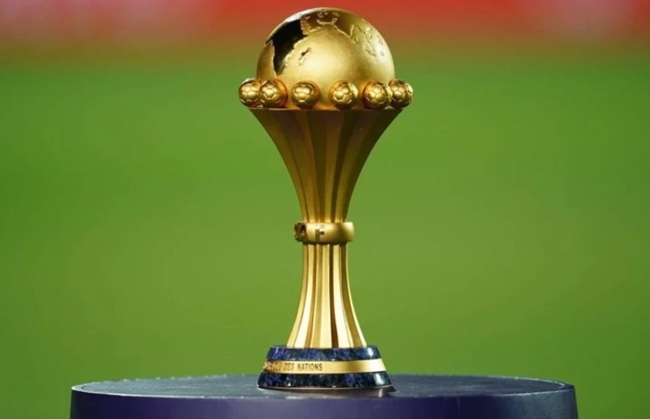
It is often framed, from a European vantage point, as a tournament that exists elsewhere.
A January interruption.
A different climate.
A different logic.
But elsewhere is only a word used when the heart has not yet travelled.
Because this… this is not an interruption.
It is a summons.
A call that rises from red dust and green grass, from oceans and deserts, from cities that breathe football like prayer.
A tournament that does not knock politely on the calendar, but arrives, unannounced, unavoidable, alive.
Here, the game does not whisper.
It sings.
It is felt, in the chest, in the spine, in the silence that follows the roar.
This is football unfiltered.
Football before it learned to apologise.
Football before it learned to explain itself with numbers.
Under skies heavy with heat and hope, time bends.
Ninety minutes stretch into eternity…
And then vanish in a heartbeat.
The favourite trembles.
The underdog dreams — and sometimes, impossibly, believes.
Here, reputation is fragile, history is negotiable, and destiny keeps changing its mind.
You will see chaos, they say.
But look closer…
And you will find rhythm.
A deeper order.
A logic written not in manuals, but in movement — in hips that sway, in feet that dance, in courage that refuses to wait its turn.
This is where joy and suffering share the same breath.
Where ecstasy arrives without warning…
And heartbreak lingers like a drumbeat in the distance.
Listen.
That sound you hear is not noise.
It is Africa speaking through football.
And once it begins
Once it takes hold
You will not want it explained.
You will not want it shortened.
You will not want it to end.
This is AFCON.
Not a detour.
Not a curiosity.
But a reminder —
That football, in its truest form, still knows how to make the world stop
Hold its breath
And feel
Language as a footballing inheritance
Language in football is often treated as a tool: functional, instructional, disposable. But in certain contexts, it becomes something else entirely. A shared grammar of understanding. A way of organising emotion. A rhythm that shapes how the game is imagined before it is played.
Portuguese, across parts of Africa, has evolved into precisely that. Not as an imposed structure, but as an inherited one, taken, adapted, warmed, and given new cadence. In AFCON, Portuguese is rarely rigid. It breathes. It bends. It carries humour, metaphor, exaggeration. It allows football to be spoken about as something lived, not merely executed.
This is why AFCON, for Portuguese ears, never feels fully foreign. The words are familiar, but the meaning has travelled. The language is the same; the feeling is freer.
And perhaps that is the awe of it: Portuguese football hearing its own tongue return transformed, less anxious, less burdened, more alive.
Cape Verde and the grace of unburdened identity
Cape Verde’s football never announces itself. It arrives quietly, organises the room, and then waits. Their teams play with a composure that feels deeply familiar to Portuguese eyes – positional awareness, calm circulation, emotional restraint – but without the tension that often shadows Portugal’s own expression.
There is no urgency to prove. No historical weight pressing down on each possession. Cape Verde play as if football does not owe them anything and as if they owe nothing to football.
In that freedom, Portuguese football glimpses a version of itself unencumbered by expectation. A reflection softened by distance. Not better. Just lighter.
AFCON becomes, briefly, a mirror that does not distort.
Angola and the grammar of resistance
Angolan football speaks Portuguese differently. Sharper. Louder. More urgent. Here, language is not poetic; it is muscular. Instructions are barked because they must be. The game is not something to be interpreted, it is something to be survived
And yet, even within that intensity, there is clarity. Portuguese provides structure amid collision. It allows teams to organise emotion without suppressing it. The pitch becomes a space where resilience is articulated rather than endured in silence
For Portuguese football, watching Angola at AFCON is a reminder of something fundamental: that tactics are not universal abstractions. They are responses to circumstance. Football intelligence begins with reality, not ideology.
The beauty of the unfinished
Guinea-Bissau. Mozambique. Teams whose football feels like a sentence still being written. Ideas appear, disappear, reappear differently shaped. Systems are hinted at, then abandoned. Confidence arrives in waves.
Here, Portuguese sounds unpolished. Honest. Direct. It is the language of effort rather than mastery. Of aspiration rather than arrival.
AFCON allows these teams to exist without resolution. It does not demand coherence. It grants permission to search.
There is humility in this. A reminder that football identity is not something inherited fully formed, but something assembled slowly, imperfectly, and in public.
Rhythm over control
European football, including Portugal’s, has spent decades chasing control. Control of space. Control of tempo. Control of narrative. It has professionalised uncertainty out of existence or tried to. AFCON resists this instinct almost instinctively.
Here, rhythm matters more than structure. Emotion interrupts patterns. The game shifts tone without warning. And yet, this is not chaos. It is responsiveness. Football played in dialogue with the moment rather than in obedience to a plan.
For Portuguese football, AFCON offers a reminder of something once intuitive: that pauses matter as much as movements, that hesitation can be a form of intelligence, that improvisation is not the enemy of organisation.
This is where the connection deepens, not tactically, but philosophically.
Saudade, without explanation
Portuguese football has always carried saudade. A longing embedded in style. A melancholy woven into beauty. AFCON does not name this feeling but it lives inside it.
Celebrations are communal, not performative. Disappointment is shared, not hidden. The game is allowed to be emotional without apology.
This openness does not weaken competition. It enriches it. Football becomes a lived experience rather than a managed one.
Portugal recognises this immediately. Not intellectually but viscerally.
Movement without extraction
African football has long fed European leagues. But AFCON resists being reduced to a marketplace. It is not a shop window. It is a home.
Portuguese language circulates within it without dominating. Coaches adapt. Players assert. The exchange is mutual, not extractive.
This is where pride becomes possible without possession. Portuguese football is present here, not as centre, but as participant.
When football chooses its own voice
Football, when left alone, chooses how it wants to be spoken about. AFCON has chosen warmth over rigidity, conversation over command, rhythm over prescription. Portuguese, within this space, has found a second life, not as a system, but as a sound.
To listen to AFCON closely is to hear Portuguese football echoing back at itself, changed and clarified. Less anxious. Less afraid of emotion. More at ease with uncertainty.
This is not a lesson. It is a reminder.
And perhaps that is the quiet awe AFCON offers Portuguese football each time it begins: that the game, when spoken in a familiar tongue, can still say something entirely new.
By Tobi Peter (X: @keepIT_tactical)
