Manchester City were in impressive form in the Champions League on Tuesday evening, making light work of a tricky away trip to Villarreal by cruising to a 2-0 victory in Spain.
As usual, prolific striker Erling Haaland struck again, opening the scoring for the English side, before captain and Portugal international Bernardo Silva nodded in a second. The win over Villarreal, who had Renato Veiga in defence, means that City have seven points from their first three Champions League games, putting them 5th in the table.
“I’m pleased Erling scored again and pleased Bernardo scored an incredible header,” said City boss Pep Guardiola after the match.
“Bernardo is like Mahrez and Messi. It’s like they have a hammer in the neck, they’re so good. They’re small but they’re so good in the head contact.
“If you analyse the first half and some moments in the second, we created some good chances. We made a good performance. I know perfectly and the Spanish people know that Villarreal is a top, top team.”
Guardiola was also asked about Bernardo’s future, after the Portuguese recently declared he knows what he will do at the end of the season. “He didn’t tell me,” Guardiola said. “He’s my captain, we love each other so much, but he didn’t tell me.”
A year is a long time in football… just ask Renato Paiva.
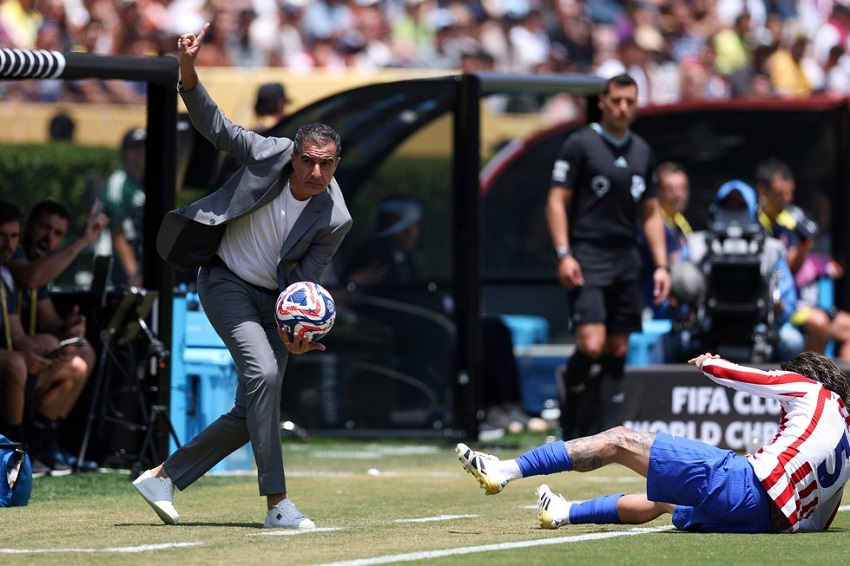
This time last year, Renato Paiva was managing Mexican side Toluca. Since then, he has coached two Brazilian teams (Botafogo and Fortaleza), made his intercontinental coaching debut in the FIFA Club World Cup, and been sacked for the first and second time in his career. In an interview with Zach Lowy, Paiva reflects on player development in Portugal, his career and a roller-coaster 12 months.
Born on 22 March 1970 in Pedrógão Pequeno, Portugal, Paiva grew up dreaming of becoming a professional footballer, only for his parents to insist he focus on school instead of sports. But whilst he wasn’t able to pursue his playing ambitions, he never strayed too far away from his passion for the Beautiful Game, playing at amateur level and avidly collecting football-related magazines, eventually leading him into the world of coaching.
***
“Inseparable” from a football
“It all started with a ball – I was inseparable from my football,” says Paiva. “I could barely walk and I already had a ball in my hands. I ate with the ball, I slept with the ball, I always had the ball in my hands. In my teenage years it was either studies or playing soccer, because training was in the morning and school was in the morning as well. My parents didn’t allow me to continue playing football, they forced me to follow the path of studies, and from that moment onwards I lost all possibilities of becoming a professional player – my footballing dreams went up in smoke.
“But I continued to play as an amateur and that’s where my desire to be a coach and to stay involved in football started. I devoured magazines and newspapers and all information about everything related to football that was well-documented and available, and from then on, my life followed the path of coaching, and that’s where I am today.”
Hands-on role in Benfica’s famed academy
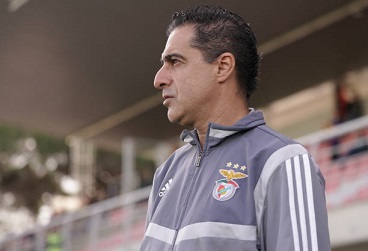
After patiently waiting for an opportunity in the coaching industry, Paiva finally got the shot that he was looking for after taking charge as the assistant manager of Benfica’s Juvenil B side in 2004. At the time, Benfica were entering a decade without a league title and in need of something extra to give themselves the edge on Porto and Sporting. They decided to pursue the mission of creating a world-class academy, with Benfica Campus opening in 2006 to the tune of €15 million. It has since undergone two different expansions to become a state-of-the-art football school.
Paiva proved instrumental not just in terms of coaching promising young talents but in helping the builders construct the academy in accordance with his own vision. Fast-forward to today, and it’s fair to say that this investment has paid off. According to a recent CIES study, Benfica has the most profitable academy in world football, having generated €516 million in transfer revenue from youth products over the past decade, far above second-placed Ajax (€376 million).
Playing catchup
“Let’s look at it chronologically. Sporting were the first team in Portugal to develop young players. We’re talking about Cristiano Ronaldo and Luís Figo, but without a clear commitment to developing young players. Aurélio Pereira was the benchmark for scouting and recruitment in Portugal, he discovered these players and they joined the Sporting first team, but there wasn’t a huge youth setup yet. Sporting built its academy before Benfica, but it wasn’t a project focused on the academy; a quality player would emerge, and that player would ascend to the first team, like Figo, Ronaldo and Emílio Peixe, among many others.
“Sporting is the first, in fact, to be recognised at that time, and it was considered the best academy in Europe alongside Ajax. Sporting then moved to a president who didn’t even care about the academy, he just wanted to win titles, and that’s when Benfica was building its academy. I was at Benfica before the Academy was built, I’d train the U-16s at one stadium, and then we’d drive across Lisbon to go to another stadium to train the U-10s. We didn’t have a work area at the Academy until two years into my tenure.”
Whilst Paiva was able to rack up plenty of silverware during his tenure in Seixal, he admits that it wasn’t until president Luís Filipe Vieira prioritised developing the club’s best youth prospects ahead of winning titles that Benfica managed to take the step up to becoming arguably the finest youth development centre in world football.
Benfica’s shift in focus from winning trophies to player development
“In the early years, you needed to win championships, so the bigger players would play ahead of the smaller ones because they didn’t immediately perform. When the president made this change, we started looking for and developing talents like Bernardo Silva and João Félix. João was a skinny little thing when he arrived at Benfica, but these were the players we had to invest in. There was a specific plan for them to go to the gym and gain muscle mass, they were given dietary supplements; everything was targeted for what we called the elite group, the players we thought would actually make it to the first team.”
“At the time, it was a huge change for not just the players, but the coaches, because at first it was all about winning championships and we had annual contracts. When the championship came to an end in June, you never knew if you’d lose the league and be fired, or if you’d win it and stay, but the president changed that mindset by offering us contracts of three years and even five years.
“From that point onwards, our evaluation focused on player development. We’d identify the player and say, ‘In three months, this player has to improve in these technical, tactical, and physical aspects.’ And after three months, we’d hold a meeting to see if the player had actually improved. That was the main assessment they gave the coaches. Of course, we also wanted to win games. Benfica are Benfica; you can’t constantly lose games; it’s a big club that exists to win.”
Renato Paiva during the FIFA Club World Cup 2025 as Botafogo take on Atletico de Madrid at the Rose Bowl Stadium in Pasadena, California. (Photo by Stu Forster/Getty Images)
***
Seleção reaps rewards of improved youth development
When Renato Paiva was growing up in Portugal, the Seleção was considered a footballing backwater that had never challenged for, much less won, a major trophy. In fact, across the first three decades of his life, Paiva saw his national team take part in just one World Cup – the disastrous 1986 campaign in Mexico when the team crashed out in the group stage.
However, the turn of the century would bring about a drastic change in fortunes for Portugal. The national team have qualified for every European Championship and World Cup from 2002 onwards, and won their first piece of silverware with the 2016 UEFA European Championship triumph, followed up by two Nations League trophies.
Benfica’s academy graduates have played a role in the success, notably Renato Sanches and André Gomes at Euro 2016, and the likes of João Cancelo, Bernardo Silva, Rúben Dias and João Félix later on. The first two developed under Paiva’s tutelage before exploding onto the global footballing scene.
Structural changes and Carlos Queiroz make all the difference
“Portugal’s footballing transformation is easy to explain. Portugal has always been a footballing country, culturally speaking. Our national team finished third in the 1966 FIFA World Cup in England with players like Eusébio, António Simões, Jaime Graça and Mário Coluna,” explains Paiva.
“We’ve always been a football-oriented country. As I often say, we are practically born with a ball under our arm. The problem is that everything was always very anarchic in terms of organisation and the training wasn’t geared towards player development. Only the high-level coaches were more capable – the youth coaches didn’t have this capacity. Sometimes the coach was the man who worked at the café, and he’d shut the café down early to go to training at 7.00 pm.
“There was no structured youth talent development programme. The most talented ones ascended to the top, but it was a natural selection, rather than a guided selection, until the 1990s or so. Then Carlos Queiroz arrived at the Portuguese Football Federation and revolutionised Portuguese youth football, winning back-to-back U-20 World Cups in Riyadh and Lisbon, but the federation was already working to produce well-prepared national team coaches.
Different approach
“The Federation and the clubs began to realise that despite the scarcity of money, they had to take a different approach to player development. So they started investing money in developing youth coaches, who started being process-oriented and who could plan a long-term project. Thanks to Queiroz, the Portuguese Football Federation (FPF) began offering coaching courses and the clubs and the FPF began working together because they needed each other to succeed.
“And from there, young footballers who already had talent and quality would develop within a path, a planned process, a methodology, a philosophy, and that’s when the great Portuguese youth teams began to emerge. That’s when the great boom in the export of young Portuguese players to the top European leagues began. To this day, it’s been a snowball of progression. As the coaches improve, so do the players who are being trained by them, because the quality of education is much higher.”
Broken promises at Benfica
Paiva spent 17 years at Benfica, coaching every single age group, moulding future Champions League winners like Bernardo Silva, Rúben Dias, Ederson, and Gonçalo Ramos, and eventually climbing his way up to professional football after taking charge of Benfica B in January 2019.
Whenever Paiva got an offer to leave Benfica for a head coaching role at another Liga Portugal club, president Luís Filipe Vieira dug his heels in to keep him at the club, pointing to his long-term contract and promising the chance to manage the first team one day. However, when Jorge Jesus was appointed as the successor to Bruno Lage in the summer of 2020, for his second spell at the helm, Paiva realised it was the right time to leave and start a new chapter elsewhere.
“I decided to leave because I had been at Benfica for 17 years, had been coaching the B team, and had been promised the job as first-team manager by the president, but when there was a coaching change, he opted for another coach. That wasn’t the problem; the problem was that I had opportunities to leave Benfica for good Liga Portugal clubs, and the president wouldn’t let me leave. He’d say: ‘You have a five-year contract; you’re not leaving because you’re going to coach Benfica’s first team… one day’.
“I missed out on big opportunities to coach other teams because of those constant promises from the president, and when Bruno Lage was sacked, he kept me on the B team and hired Jorge Jesus. I decided it was the right time to try becoming a professional football head coach and also to step out of my comfort zone.”
“Over the years, I have done internships with Pep Guardiola, Diego Simeone, Jorge Sampaoli, Luís Castro and Carlos Carvalhal. I saw all the Benfica coaches first-hand like Giovanni Trappatoni, Ronald Koeman, Quique Sánchez Flores, Jorge Jesus, and Fernando Santos. I carefully watched them work because I wanted to prepare myself to understand what professional football was like one day when I got there with that promise from the president.
Ecuador and instant success
“But after he chose another coach, I told the president that I wanted to leave as soon as a good opportunity came up. Invitations from the Portuguese first division kept coming in, but they didn’t appeal to me. And then came Independiente del Valle, with a long-term project and a very strong academy and great young players, and they came looking for me because they saw something very important in my work with young players.
“I really liked the project, and I enjoyed the selection process in terms of the academy players who were on the fringes of the first team. I did several interviews. The entire process lasted about two months, and there were three coaches competing for the same position, but they ended up choosing me.”
On Christmas Day 2020, at 50 years of age, Paiva began living outside Portugal for the first time in his life, enjoying immediate and tremendous success as he led Ecuadorian side Independiente Del Valle to their first-ever national championship.
Renato Paiva coach started his foreign adventures in Ecuador, enjoying success as Independiente del Valle coach. (Photo: Liamara Polli/Getty Images)
Mexico and Brazil to and fro
Paiva called it quits on his Ecuadorian adventure after 17 months and joined Mexican outfit León, but submitted his resignation after just half a year, and a week later took charge of Brazilian outfit Bahia. Paiva guided Bahia to the 2023 Campeonato Baiano but resigned after nine months at the helm. Four months later, Paiva returned to Mexico and took over Liga MX side Toluca, where he helped sow the seeds for their dominant title-winning displays of 2025 with 22 wins, 12 draws and 10 defeats across his year in charge.
Paiva then made the move from Mexico to Brazil again, taking charge of Botafogo who were coming off a historic season that saw them win their first-ever Copa Libertadores, qualifying them for the FIFA Club World Cup, as well as a first league title in three decades. After a shaky start to his tenure, Botafogo started to click under Paiva with five wins on the bounce, including a 1-0 victory against newly crowned UEFA Champions League winners PSG. Remarkably, only ten days later, after Botafogo fell to 1-0 extra time defeat to Palmeiras in the Round of 16, Paiva learned that he had been sacked by firebrand American owner John Textor.
Once again, he didn’t stay unemployed for long. Paiva was appointed manager of Brazilian side Fortaleza after just a fortnight out of the game. But after 10 winless matches in charge, Paiva was sacked again. He’s spent the last two months relaxing with his Brazilian wife in their home in Rio de Janeiro, rejecting offers from clubs in Egypt, Colombia, Paraguay and Portugal and taking the time to reflect on a turbulent 2025 and ponder on the next step in his burgeoning managerial career.
“I go to Portugal whenever I can to matar saudades, or the family come over here to Brazil, but we keep in touch by videocalls or phone. I’ll be going this week to Portugal to see my 27-year-old daughter as well as my parents (92 and 87) and my sister, brother-in-law, and niece, and my friends who are all from Portugal.
“Of course, it’s difficult being apart from them, but it’s the profession I chose. I want to work in Portugal one day, depending on the project that comes my way. I’d like to work in Portugal especially because I haven’t previously worked there as a head coach in the top flight.”
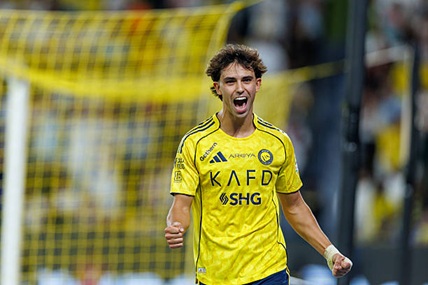
It was a busy weekend for the Portuguese contingent in Saudi Arabian football, led by João Félix continuing his incredible start to life at Al Nassr by scoring a remarkable hat-trick in their 5-1 hammering of Al Fateh on Saturday.
Félix’s treble was his second hat-trick of the season and sees him become the top goalscorer in the Pro League with eight. The pick of his goals was the opener, struck from outside the box to give Al Nassr the lead, while his second saw him beat a defender and finish expertly from a tight angle, before Félix completed his hat-trick from a rebound after Sadio Mane drew a save.
Arguably the best goal of the game was scored by Portugal captain Ronaldo, who struck at the perfect time for Al Nassr to re-establish their lead on the hour after Al Fateh had made it 1-1 early in the second half. Ronaldo left fly from distance with a shot which flew into the top corner, making it four goals in his last three matches for the club.
Benzema misses penalty as Conceição not happy with debut
The victory for Al Nassr maintains the 100% start made by Jorge Jesus’ side as they hope to finally deliver a Pro League title during the Ronaldo era. Their cause was given a minor boost by champions Al-Ittihad failing to win on Sérgio Conceição’s first league match on the bench, during which they were held to a 1-1 draw at Al Fayha.
Conceição’s side, which included Portugal international Danilo Pereira, went behind on the stroke of half time, but levelled on 64 minutes through Ahmed Al Ghamdi. The chance to secure all three points and make it a winning start for the former Porto boss arrived just a few minutes from time, but Karim Benzema saw his late penalty saved by Al Fayha goalkeeper Orlando Mosquera.
“I arrived a few days ago, and we need to change a lot of things, including our physical preparation,” Conceição said after the match. “At our current level, we’ll have difficulties. Our spirit isn’t enough, and there are tactical issues we need to work on. We saw improvements in the second half; the team managed many attacks.
“Benzema missed a penalty? The decision on who should take it is up to the players. I have three players capable of taking penalties,” added Conceição, who has since won his first match with his new club, securing a 4-1 win over Iraqi side Al Shorta in the Asian Champions League on Monday.
Neves spot-on for Al Hilal
Al Hilal, who won the title under Jorge Jesus in 2024, look a strong competitor again this year under esteemed Italian manager Simone Inzaghi. Despite the absence of João Cancelo, Al Hilal crushed Al-Ettifaq 5-0 away from home on Saturday, with former Benfica players Marcos Leonardo and Darwin Nunez both getting braces. Portugal international Ruben Neves also got his name on the scoresheet, converting a penalty which made it 3-0 for his side.
At the end of Matchday 5, Jorge Jesus, Ronaldo and Félix sit top of the table with the full 15 points, two points ahead of Al Qadisiya in second. Al Hilal in in 5th place with 11 points, while Conceição’s Al-Ittihad are in 5th with 10 points.
Rafael Leão was the star of the show with two goals as AC Milan came from behind to beat Fiorentina 2-1 at San Siro, moving top of Serie A on Sunday evening.
The brace represents Leão’s first goals of the campaign, which was disrupted early on by injury, but were a much-needed confidence boost for the Portuguese. His first was an impressive low drive from distance not long after the hour mark to level the scoring, before Leão kept his nerve from the penalty spot (86’) to secure the points.
“We knew this was a difficult match, even though Fiorentina are having a tough time, as they have quality players like Moise Kean who can hurt us,” Leão said of Milan’s opponents, who had taken a surprise lead early in the second half through Robin Gosens.
“We worked as a team, it was difficult and we didn’t create many chances, but once we broke the deadlock, the team emerged,” Leão continued. “I dedicate the goals to my family, my teammates who helped me and kept me in a good mood in the locker room. We must continue like this, collectively and individually, as we can do great things this season.”
Modric salutes Leão
The arrival of veteran midfielder Luka Modric at San Siro has proved a huge boost for the Rossoneri. The Croatian, who turned 40 this year, shows no signs of slowing down as he regularly plays the full 90 minutes for Milan. It was the case again on Sunday, after which Modric was high in praise of teammate Leão.
“Rafa is really amazing,” Modric said. “I was looking forward to playing with him, unfortunately he got injured quickly, but now he’s getting back to fitness. This is the Rafa that we need.
“He’s an amazing talent, from outside when I used to watch him and now when I train with him, I see he is one of the best players in the world. The incredible thing is that he can still improve, it just depends on him. I hope these two goals can help him grow his confidence and be the main guy for us, he will be very important and we will depend a lot on him. He showed why tonight.”
From his end, Leão reciprocated the admiration, telling reporters: “When Modric arrived at Milanello, he gave me a hug and said he wanted to help me. It is great playing alongside him and I hope he can give me many assists!”
Ruben Amorim paid tribute to the Manchester United fans after guiding the Red Devils to their first victory away at bitter rivals Liverpool in almost ten years.
United ran out 2-1 winners at Anfield in the Premier League on Sunday afternoon, securing Amorim all three points in back-to-back games for the first time since taking charge. Amorim’s side move up to 9th with the result, but more importantly are just three points off 2nd place in the English top flight.
United’s goals came at each end of the match, starting with Bryan Mbeumo’s opener after just a minute of play. Liverpool levelled through Cody Gakpo on 78 minutes, but United captain Bruno Fernandes picked out Harry Maguire with a superb cross (84’) to give the visitors a memorable win.
“I think we started really well,” Amorim said in his post-match press conference. “I think we had a great spirit during the game. I think we didn’t play well with the ball, just certain moments. We created chances, we suffered some chances. We lost some composure in the second half. We managed well after suffering a goal, which is a key point for out team.
“It was a great win. Not a very well-played game from our part, but a great spirit and that is the only thing I can ask.”
Amorim deployed both of his Portuguese internationals, with Bruno Fernandes continuing in midfield and Diogo Dalot selected at left wing-back, before moving to the right midway through the second period. Fernandes struck the post in the first half and was due to be substituted before Maguire’s goal as he tired, but fortunately for Amorim and United he remained on the field to produce the assist for Maguire’s header.
Fans’ support not normal - Amorim
United’s fans were in strong voice as usual and once again Amorim was serenaded with supportive chants from the away section. The Red Devils fans are renowned for their rare levels of loyalty to managers during testing times and Amorim has regularly admitted that the backing he has received leaves a mark on him.
“It’s not normal,” said the former Sporting boss. “It’s hard to find something like this. So many bad moments, then to have the fans always supporting the manager. When every one of you [journalists] is saying by Christmas, I’m gone. So that is not normal, I’m so lucky to have the fans. But again, let’s focus on the next one.
“Is the storm over? I have no idea. If we show the spirit we showed today every day, in training and in games, I think we are going to win so many games. But for that we need to take action, not speak about it. Good day today. Let’s focus on Brighton and we’ll see.
“What we need to do is try to win three games in a row. We already said we need to go to Europe. But this doesn’t change anything. We are the same team as we were 90 minutes ago. The way people see the team is different, but we are the same team. We have a lot to do. We had some luck in a few moments, we had amazing spirit. We need to take all of that to the next games, so the goal is always the same.”
United host Brighton and Hove Albion, a side with an excellent recent record against the Red Devils, at Old Trafford on Saturday evening.


 Villarreal 0-2 Manchester City
 A year is a long time in football… just ask Renato Paiva.
 Paiva spent 17 years at Benfica, coaching every single age group, moulding future Champions League winners like Bernardo Silva, Rúben Dias, Ederson, and Gonçalo Ramos, and eventually climbing his way up to professional football after taking charge of Benfica B in January 2019.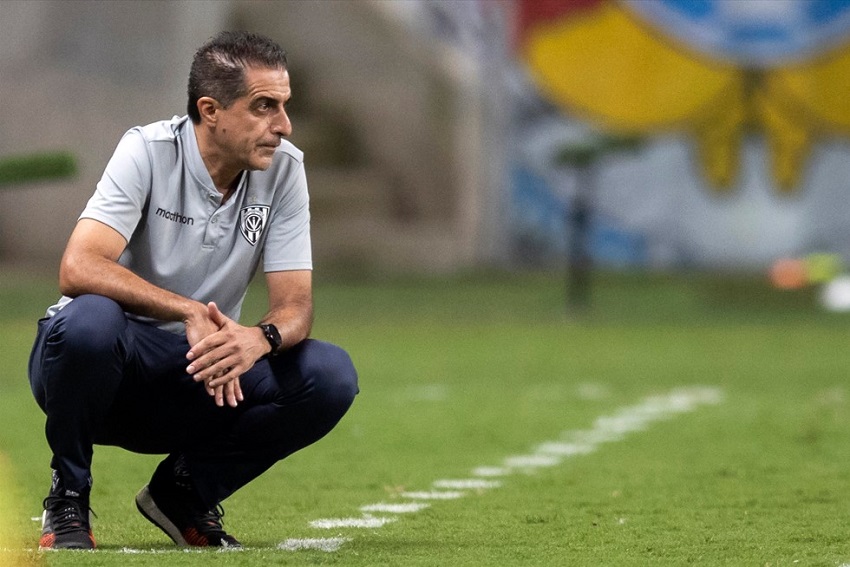
 It was a busy weekend for the Portuguese contingent in Saudi Arabian football, led by João Félix continuing his incredible start to life at Al Nassr by scoring a remarkable hat-trick in their 5-1 hammering of Al Fateh on Saturday.
 Milan 2-1 Fiorentina
 Liverpool 1-2 Manchester United