Portugal youngster João Neves was the star of the show as European champions Paris Saint-Germain made light work of host side Inter Miami in the last-16 knockout round of the FIFA Club World Cup.
Neves struck twice in the first half to set PSG on their way to a comfortable afternoon in Atlanta, which saw the Ligue 1 side four goals up at the break. Coach Luis Enrique also fielded Seleção stars Nuno Mendes and Vitinha at the Mercedes-Benz Stadium, as PSG set up a quarter-final meeting with Flamengo or Bayern Munich.
The first goal was provided by Vitinha, whose free-kick met Neves’ clever run to the far post, leaving the midfielder free to score with a diving header. The second came after some slack possession play by legendary Inter Miami midfielder Sergio Busquets, who was caught in possession and punished when the French side worked the ball across to Neves for a simple finish.
GOOOOAL! Brilliant set piece by Vitinha and Neves gives @PSG_English the lead!
The match became somewhat embarrassing for the American host representative, who had star man Lionel Messi in the ranks, as PSG made it 3-0 thanks to an own goal by Tomás Avilés, before the ever-impressive Achraf Hakimi ventured forward from right-back and found himself on-hand to make it four in first-half stoppage time.
As such, PSG boss Luis Enrique was afforded the luxury of making changes during the second period, with both Neves and Nuno Mendes replaced during the second half. Gonçalo Ramos did not emerge, however, spending the entirety of the match watching from the substitutes bench.
“It was positive,” Neves, who was named Player of the Match, said in the mix zone after the final whistle. “It is the first time I have scored two goals in one game, so I am very happy. But I am happier for the win.
“We have the same confidence [as before]. We will play our game, no matter against who. We are tired now, but we will recover [before the quarterfinal].”
It has been 25 years since the first-ever edition of the FIFA Club World Cup was held in Rio de Janeiro. Back then, it was known as the FIFA Club World Championship, it was held in January, and it featured eight teams from all across the world. Whilst Vasco da Gama finished ahead of Real Madrid, Al-Nassr, and Raja Casablanca, Corinthians finished ahead of Necaxa, Manchester United and South Melbourne, setting up an all-Brazilian clash in the final, where Corinthians prevailed 4-3 on penalties after a 0-0 draw.
Fast forward a quarter-century, and it’s clear that plenty has changed. The new FIFA Club World Cup kicked off on 14 June, and this time it featured not eight teams, but 32. This time, it didn’t last a mere 10 days, but an entire month. And this time, the matches were held across the United States of America.
However, one thing that hasn’t changed is the potency of the Brazilian teams. While Spain, Portugal, Italy, Germany and England each had two representatives, Brazil had a whopping four teams (Botafogo, Fluminense, Flamengo and Palmeiras) qualify for the FIFA Club World Cup. What’s more, each of those teams have finished in the top two positions of their respective groups and qualified for the knockout round. As for Portugal, meanwhile, only Benfica managed to qualify for the Round of 16 in contrast to Porto who suffered a humiliating group stage exit.
But whilst the Brasileirão has certainly upstaged Liga Portugal this summer, it cannot be denied that there has been a certain Portuguese influence behind the Brazilian teams’ renaissance. Between 2014 and 2018, only one Brazilian side (Grêmio) managed to win the Copa Libertadores, the highest prize in South American club football.
Since then, Flamengo won it in 2019, Palmeiras won the 2020 and 2021 editions, Flamengo won it in 2022, whilst Fluminense claimed their first-ever Libertadores in 2023. And in 2024, Botafogo reached the apex of South American football. So that is six consecutive Brazilian champions, with four of the last five finals all-Brazilian clashes. Perhaps most surprising of all, four of those six times when a Brazilian team lifted the ultimate prize in South American club football, they did so with a Portuguese coach at the helm.
Jorge Jesus the trailblazer
The inflection point of Brazilian football’s turnaround came precisely six years ago, when Jorge Jesus came to Flamengo. Derided as a washed-up foreigner upon his arrival, Jesus was not exactly welcomed with open arms, with many local pundits suggesting Flamengo would be better off with a Brazilian coach leading them. “I did not come to take anybody’s place or to teach anyone. I am neither better nor worse, I work according to a methodology,” argued Jorge Jesus in his defence.
“I would like to remind my Brazilian colleagues that we had a Brazilian [manager] in the national team, Luiz Felipe Scolari. He was admired by the Portuguese managers. He and many others who worked in Portugal. All of us in Portugal tried to learn from them, there was never this verbal aggression that there is against me. I don't understand these closed minds.”
He talked the talk, and pretty soon, he would walk the walk. Over the course of a year, Jesus won five trophies with Flamengo, winning 43 out of 57 matches in charge of the Rubro-Negro and becoming the first foreign manager to win an international trophy with a Brazilian side. It wasn’t long before more Brazilian teams tried to recreate Flamengo’s magic by hiring Portuguese managers. Coaches like Jesualdo Ferreira (Santos), Pedro Caixinha (Red Bull Bragantino and Santos), Armando Evangelista (Goiás) and Paulo Gomes (Botafogo-SP) suddenly found themselves inundated with offers to manage Brazilian teams.
Brazilian clubs “go Portuguese”
Botafogo enjoyed a seismic rise from Brazil’s second tier to the upper echelon of South America thanks to their trust in Portuguese coaches like Luís Castro, Bruno Lage, and Artur Jorge, the latter guiding them to their first-ever Copa Libertadores title as well as their first league title in 29 years before heading to Al-Rayyan. Corinthians appointed current Wolves coach Vítor Pereira in 2021, whilst Vasco hired Ricardo Sá Pinto in 2020 and Álvaro Pacheco in 2024. Flamengo, for their part, tried to repeat the formula by hiring Portuguese coaches Paulo Sousa and Vítor Pereira, albeit to little avail. In December 2022, Ivo Vieira replaced his compatriot António Oliveira at the helm of Campeonato Brasileiro Série A side Cuiabá Esporte Clube, where he won the first trophy of his career: the Campeonato Mato-Grossense. And shortly after Vieira was sacked, they naturally went with yet another Portuguese coach in Petit.
Such is Brazilian football’s economic superiority compared to Portuguese football that many top players and managers have decided to depart their Liga Portugal clubs midway through the campaign in order to try their luck in the Brasileirão.
As Miguel Lourenço Pereira stated in his 2024 book Bring Me That Horizon, “Of all the former European imperial states, Portugal is the only one that ended up being culturally colonised by its former colony. Turn on the radio and you will likely end up listening to the newest Brazilian funk hit. Watch television after dinner, and there’s your colourful Brazilian soap opera waiting for you. Check your holiday calendar and discuss it with friends, and someone surely will be heading to the tropical Brazilian shores. Everywhere you look, Brazil is present in day-to-day life. It’s impregnated in Portugal’s culture like no other country.”
Portugal’s coaching school
But whilst Brazil’s tantalizing salaries have made it a welcome destination for Portugal’s various footballers and coaches, it cannot be denied that Brazilian football needed to import Portuguese coaches in order to become the dominant force it is today. Whereas Brazil has struggled to produce top-class coaches in the start of the 21st century and has even taken the unusual step of appointing a foreigner (Carlo Ancelotti) as the national team manager, Portugal has managed to spread its tactical influence throughout the globe thanks to a number of shrewd coaches prospering in a variety of leagues. José Mourinho’s CV speaks for itself, while the likes of Paulo Fonseca, Nuno Espírito Santo and Marco Silva have earned fine reputations and enjoyed success in some of the most high-profile leagues in Europe.
Brazil certainly are not done with Portuguese coaches. After guiding Paços de Ferreira and Vitória S.C. to European football, Pepa tried his luck at Cruzeiro before being sacked after a couple of months; one year later, he was appointed as the coach of Sport Recife, where he achieved promotion to the top-flight and won the Campeonato Pernambucano.
Today, there are three Portuguese coaches managing in Brazil’s top-flight. Abel Ferreira is in the dugout at Palmeiras, Leonardo Jardim is overseeing the coaching duties at Cruzeiro, whilst Renato Paiva is coaching Botafogo. And with Botafogo and Palmeiras continuing to wave the Brazilian flag high at the FIFA Club World Cup (alongside Fluminense and Flamengo), there’s reason to believe that Portuguese coaches will continue to trickle into Brazil’s storied football leagues.
Alberto Costa has been forced to be patient since moving to Juventus from Vitória de Guimarães in January. Initially overlooked by both Thiago Motta and his replacement in the dugout Igor Tudor, the young Portuguese full-back now appears to finally be making strides in Turin, having earned Tudor's trust.
Juventus paid a transfer fee of €12.5m rising to €15m for the right-back, 21, who had been with Vitória since he was 10 years old. Costa’s integration under then boss Motta was gradual, spending the first few weeks as an unused substitute while adapting to life at one of the world’s biggest clubs.
Cristiano Ronaldo will remain with Saudi Arabian club Al Nassr for at least the next two years, after signing a lucrative contract extension in Riyadh.
The news was confirmed on Thursday afternoon with Ronaldo joining club chairman Abdullah Almajed for a press photoshoot to celebrate his new contract. The Portugal captain then posted on social media: “A new chapter begins. Same passion, same dream. Let’s make history together.”
The emerging details for the new deal for Ronaldo produce some eye-waterings figures. The yearly salary is reported as being worth €400m. The wages work out at € 33m per month, €7.6m per week, €1.1m per day, €772 per minute…..and €13 per second. By the end of the deal, Ronaldo will have been in Saudi Arabia for four-and-a-half years.
Ronaldo has scored a remarkable 99 goals from just 111 matches for Al Nassr, albeit the period has not been successful for the club. Al Nassr ended last season 3rd in the Pro League last term, following two successive 2nd-place finishes previously. Manager Stefano Pioli has now been fired, with speculation mounting over who will fill the vacancy.
Portuguese coach Renato Paiva secured one of the biggest results of his managerial career on Thursday night, when South American champions Botafogo beat European champions Paris Saint-Germain 1-0 in the FIFA Club World Cup.
A first-half goal by Igor Jesus gave Botafogo not only leadership of Group A with a 100% record, but a monumental victory at the Rose Bowl in Pasadena which is already being described as historic for the club.
Competitive meetings between the champions of South America and Europe are taken extremely seriously in Brazil. Indeed, when a club wins the Copa Libertadores, the prospect of taking on the kings of Europea is regarded as one of the biggest aspects of the success, with the allure of competing in such occasions shared throughout the continent.
Despite having just 25% possession on the day, Botafogo held strong to defend after lone frontman Igor Jesus’ strike on 36 minutes. The feverish celebrations from all players, staff and fans at full time said everything about what the victory meant to the Rio de Janeiro club, while after the match Luis Enrique paid tribute to the Brazilian side.
"They were the team that defended best against us this season, it was difficult to create goalscoring opportunities at every moment,” said the Spaniard. “We knew it would be a tough match, they defended very well. We had a few chances to score, but it was a tough game. We know how difficult this competition is."
This is for everyone – Paiva
Botafogo’s Portuguese coach Renato Paiva has been speaking at length since the victory, which has been major news in Brazil. A former Benfica youth coach of many years, Paiva has since been associated with Latin American football, enjoying a highly successful spell in Ecuador with Independiente del Valle, as well as terms with Toluca of Mexico and Bahia in Brazil.
“The least important thing is me,” he said. “This club and this team are too big for me to talk about myself. It’s not a victory for Renato. It’s a victory for the security guard who opens the door for us in the morning at the training centre, for the man who does our check-ups, for the man who takes care of the pitch, for the directors, the nutritionist, the doctors, everyone.
“Botafogo is very big, but it’s a family, and that unites us and makes us all work towards the same goal. So it’s a victory for Botafogo and for all the people who work every day so that this group of players has nothing else to do but train and play. And that’s something that was already done when I arrived. I just arrived and adapted to what was there. And, of course, I’m doing my part to make sure that this work continues as good as it was last year, especially.”
“Tactically perfect”
“Of course, in football, there is always a chance of winning a game like this,” Paiva continued. “The history of football says so and the football graveyard is full of favourites. It was proven once again. One of the priorities of this group and this coach is to shield themselves from the outside and work according to their ideas, their philosophies, their knowledge of their players. It was a question of believing, sincerely, because it is not the outside that defines us. We closed ourselves off from the outside, because after our first match everything was negative.
“We played a game in which, tactically, we were perfect. Flawless. PSG didn’t have all those clear chances. They had the ball a lot, but we were very united. When I left the pitch, I said: we made PSG drink their own medicine. We were what PSG have been lately. A real team, and it wasn’t the first time.
“We all attacked, we all defended. We all moved to the right, we all moved to the left. We all went forward and we all went back. It was the only way to match them. From then on, it was also down to the talent of our players, because they have a lot of quality. It was a strategic game, we knew how it was going to be.”
The tournament has proved fruitful for Brazilian sides so far. Abel Ferreira’s Palmeiras top Group A, while Flamengo have already secured qualification for the knockouts after a stunning 3-1 victory over Chelsea in Group D and Fluminense held Borussia Dortmund to a goalless draw in their only game so far in Group F.
“I think that people underestimate a little what football is like in Brazil and the quality of the Brazilian championship,” Paiva said. “Only those who are there and who follow it understand how difficult it is to play in that championship. You play 10 matches a month, you play every three days... The teams are good, the Brazilian players are still very good, the coaches are very good, the Brazilians and those who arrive try to give their best.
“And the reality is that the competition in the calendar is so tough that it forces you, as a coach, to have a thousand strategies to manage a group, to manage the physical, technical, tactical and psychological planning, so that you play every three days without being able to train. And that is a very big problem, as I have said many times.
“The biggest problem in Brazilian football is that there is little training and more games, and this is linked to not developing the players better, because they grow through training, in my opinion. So, those who know and follow the Brazilian championship know that it is one of the toughest in the world, one of the most competitive. The last team easily beats the first. There are always five, six, seven teams competing for the title.
“This is the 13th consecutive game; of those, we won 10. We lost two and drew a competitive game with Flamengo. There is a lot of work involved, but there is also my work and that of the coaching staff.
“There are many opinions about many things. Just today I was watching the Seattle game against Atlético de Madrid and I thought: "when Botafogo wins, the opposition are always bad, they are always weak, they are not good." And today I was watching Seattle share the game with Atlético de Madrid, their chances to score more goals. In the first half Atlético de Madrid was winning 1-0, Seattle had more shots on goal than Atlético de Madrid. "But no, Botafogo won because Seattle is...
“Today Ancelotti is in the national team, which is, for me, an extraordinary achievement for Brazilian football. I don’t think it is necessary for all four [Brazilian] teams in this competition to be successful for people to say: “Wow, after all, Brazilian football is top class”. I am not at all surprised by what is happening, not at all. You have to come and say, gentlemen, that Brazilian football has a lot of quality.”
Despite being at 100% after two matches, Botafogo must still secure a draw against Atletico Madrid to be sure of qualification for the next phase, due to the potential for all three sides ending on 6 points, given PSG are expected to beat Seattle Sounders, which would make goal difference the deciding factor.


 Paris Saint-Germain 4-0 Inter Miami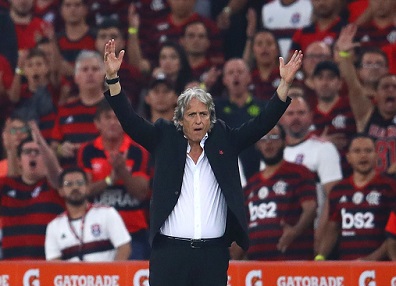
 It has been 25 years since the first-ever edition of the FIFA Club World Cup was held in Rio de Janeiro. Back then, it was known as the FIFA Club World Championship, it was held in January, and it featured eight teams from all across the world. Whilst Vasco da Gama finished ahead of Real Madrid, Al-Nassr, and Raja Casablanca, Corinthians finished ahead of Necaxa, Manchester United and South Melbourne, setting up an all-Brazilian clash in the final, where Corinthians prevailed 4-3 on penalties after a 0-0 draw.
 Alberto Costa has been forced to be patient since moving to Juventus from Vitória de Guimarães in January. Initially overlooked by both Thiago Motta and his replacement in the dugout Igor Tudor, the young Portuguese full-back now appears to finally be making strides in Turin, having earned Tudor's trust.
 Cristiano Ronaldo will remain with Saudi Arabian club Al Nassr for at least the next two years, after signing a lucrative contract extension in Riyadh.
 Portuguese coach Renato Paiva secured one of the biggest results of his managerial career on Thursday night, when South American champions Botafogo beat European champions Paris Saint-Germain 1-0 in the FIFA Club World Cup.