
Rankings by trophy count are easy. Portugal has zero World Cup titles, so the conversation shifts to finishes, and finishes tell a strange story: the country’s best tournament came six decades ago, before most of its fanbase was born. Nine appearances, 40 matches, 19 wins, eight draws, 13 losses, 69 goals scored and 44 conceded. Those are the totals through 2026, and they contain one third-place finish, one fourth, and a lot of near-misses.
The exercise resembles ranking the best CS2 teams in that you have to decide whether a single peak outweighs sustained depth (a 1966 side carried by one legendary scorer versus a 2006 squad built on balance). Placement settles most of it. The arguments underneath placement are where it gets interesting.
1966: Third place and the Golden Boot
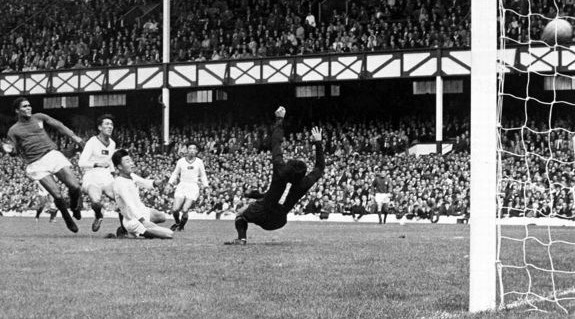
Nothing Portugal has done since matches it. Third place at the 1966 tournament in England remains the best result in the country’s World Cup history, and it came in their very first appearance. The opening match set the tone: a 3-1 win over Hungary in Manchester on 13 July 1966.
Eusébio is the reason this campaign sits alone at the top. Nine goals made him the tournament’s top scorer, a Golden Boot that still defines Portuguese football’s founding World Cup myth. The run ended in a semi-final defeat to eventual champions England, followed by a third-place finish secured by beating the Soviet Union. A debut tournament, a semi-final, a medal, and the best player in the competition - no later side has managed to combine all four at once.
2006: Forty years later, fourth place
It took the Seleção 40 years to return to the semi-finals. The 2006 campaign in Germany delivered fourth place, still the second-best finish Portugal has managed, built on a pragmatic 4-2-3-1 that paired the flair of Figo, Deco and a young Cristiano Ronaldo with the defensive grit of Costinha and Maniche.
The route matters when you rank this team. Wins over the Netherlands and England, the latter on penalties after a scoreless quarter-final, carried them to a semi-final against France. Portugal then lost to France and to hosts Germany in the third-place match. So the campaign was less dominant than the placement suggests; it was a tournament of structure and situational execution rather than control. Whether you call that resilience or limited dominance depends on what you value, and honest rankings should admit the question exists.
There’s also the scoring distribution. Where the 1966 side was Eusébio-centric, 2006 spread goals across Pauleta, Maniche, Simão and Ronaldo, which makes it the more balanced squad even though it finished one place lower.
2022: The quarter-final that cut both ways
Qatar was Portugal’s deepest run since Germany. They finally broke through the knockout barrier that had held them in 2010 and 2018, only to be stunned by Morocco in the quarter-finals on 10 December 2022.
The exit split opinion immediately. On one reading, this was an attacking breakthrough: Portugal entered the quarter-finals averaging three goals per game, and eight different players had scored for Fernando Santos’s side, a breadth no previous Portuguese tournament squad had shown. On the other, the Morocco match exposed everything the earlier games had flattered. Possession without composed chances, no ball progression through midfield, no pressing intensity, and shots with more desperation than composure. Santos’s game management in the crucial moments took the blame.
Both readings are true, which is why 2022 is hard to rank. By finish it sits third among Portugal’s campaigns. By quality of the exit, it might sit lower than 2010 or 2018, where the defeats came against eventual champions Spain and a strong Uruguay rather than a side defending deep for 90 minutes.
The rest: near misses and group-stage wrecks
The round-of-16 exits bookend a decade. In 2010, Portugal were eliminated by eventual champions Spain. In 2018, they fell to Uruguay at the same stage. Between those, the 2010 group stage produced the biggest win in the country’s World Cup history, a 7-0 dismantling of North Korea in Cape Town on 21 June 2010.
Then there are the campaigns nobody ranks fondly. Group-stage exits in 1986, 2002 and 2014 mark the floor, and 2014 included the heaviest defeat: a 4-0 loss to Germany in Salvador on 16 June, a tournament remembered mostly for that opening humiliation.
The most recent entry belongs to 2026. Roberto Martínez’s side beat Croatia 2-1 in the round of 32 before losing 1-0 to Spain in the knockout round on 6 July. Another Spain, another exit, and a campaign that slots in below 2010 and 2018 on placement alone despite the knockout win.
The final order
So: 1966 first, without serious dispute, because third place plus a Golden Boot has never been approached. 2006 second, with the caveat that penalties and pragmatism carried it. 2022 third by finish, contested by the quality of its ending. The last-16 campaigns of 2010, 2018 and 2026 follow, with 2010 earning a nudge for the seven goals against North Korea. Group-stage exits fill the bottom.
Cristiano Ronaldo’s era produced consistency but just one final-four finish. The best campaign remains the one nobody under 60 watched live, and until Portugal win the tournament outright, the debut generation of 1966 keeps its throne.
