
Come the 1970s, and Portugal was changing fast as a nation. The Carnation Revolution in 1974 drew a line between a decades-long fascist regime and a country that longed for a more modern, democratic and European society. The change was not immediate and, far from a straight line, it proved to be a trickier road to journey, but in the end, tectonic plate shifts contributed to Portugal becoming something different from what it had once been.
The same applied to football. After the revolution, progressively, the all-dominant southern sides started to lose sporting relevance. The Lisbon and Setúbal-based clubs suffered as the sphere of influence began to drift north. The shift was slow, with stops along the way, but football was in tune with a country that was rediscovering the importance of its multiple provinces and regions, where the new main industrial and economic vessels were harboured. In the following decade, everything changed, and some football clubs enjoyed their sole moment under the sun for the joy and amazement of their fanbase.
***
 Grupo Desportivo Riopele: 1977/78
By 1977, it was clear Portugal was never going back in time, but they had also left behind the tumultuous battle cries of the Revolution. The 25th of November marked the end of the so-called PREC – the Ongoing Revolutionary Process led by the left-wing military – and by the following year, it became clear the country would be ruled either by the Socialist party of Mário Soares or the Partido Popular Democrático of Francisco Sá Carneiro. Both the military and Álvaro Cunhal’s Communist Party lost influence, but the changes they helped promote were already bearing fruit.
The textile industry north of Porto was booming, and with it, the Minho and Douro region became decisive if the nation wanted to reduce the economic gap in relation to its European neighbours. The dream of joining the EEC was still years afar but steps were being taken in the right direction.
A club of factory workers
One of the companies that most benefited from the changing of the guard was Riopele. A textile family-run company based in Famalicão, it was extremely popular in the region for decades, and in the late fifties, an agreement between the workers and board led to the establishment of a football club where the employees were also the squad players. The club was financially backed by the company as a way of encouraging the workers to enjoy their workload during the week, a not-so-different take of what had happened years prior with CUF in Barreiro, and similar to the stories behind the founding of clubs like Bayer Leverkusen, Wolfsburg or even Juventus.
The Grupo Desportivo Riopele was a multi-sports club, but football became the main attraction, naturally, and steadily they climbed divisions to establish themselves between the third and second tier from the late sixties onwards. The company would hire workers who were known to be good at football so that they could join the team and even set up a youth squad, from which came the future Portuguese international Vítor Paneira, for instance.
 In 1972, the club was on the brink of promotion to the first tier but was eventually beaten in the final play-off. However, six years later, things turned out for the best. Riopele fought neck and neck with Sporting Espinho in the second-tier northern group and came out on top in the last weeks of the season, becoming only the second club founded by a company to play in the top tier. Curiously, the other one, CUF, a historical club over the previous three decades, had only recently been relegated to the second tier, a long fall down that would take them to the brink of disappearance altogether.
Jorge Jesus in the ranks
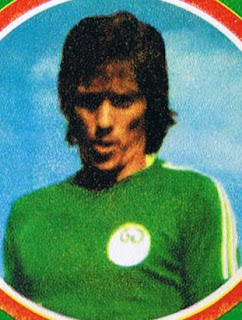
Despite the surprising success in the 1976/77 campaign, the board, led by the company owner José da Costa Oliveira, son of José de Oliveira, the company founder, decided to change the manager, hiring the more experienced Ferreirinha, a former Vitória SC legend. Few new players were brought in, as the bulk of footballers who had competed in the second tier were deemed good enough to remain part of the squad. Only goalkeepers Matos and Carlos Padrão, winger Orlando Fonseca, a former Beira-Mar player, midfielder Jô, who came from Tirsense, and, of course, a young Sporting graduate by the name of Jorge Jesus (pictured, left) were signed in the summer transfer market.
Future managerial legend Jesus joined Riopele after a short spell with Olhanense once he left the Sporting academy and quickly turned out to be a local fan favourite. There were no huge expectations about how Riopele would perform. The club officially had 700 club members and was not even the most successful club in the municipality – that honour still belonged to Famalicão – but they soon became a favourite among Portuguese football fans. Their predominantly green shirts, with white shorts – curiously the same kit used by CUF – and their small and cosy home ground, the Parque de Jogos José Dias de Oliveira, a dirt pitch christened with the name of the company founder, were an exotic addition to a sixteen-club league campaign with Benfica and Porto favourites for the title.
Flying start
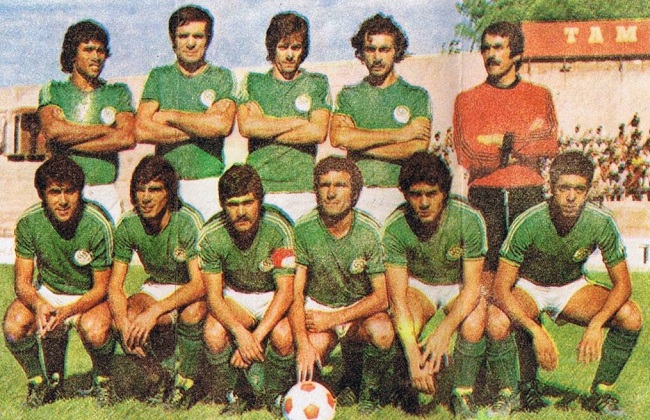
They couldn’t have enjoyed a better start. In the first four matches, Riopele won both home games against Académica and Vitória FC, two prestigious teams from the past decade, and drew away against Braga and Estoril. Then Porto came to town, and Pedroto’s men ruthlessly racked up a 2-0 win. Until the end of the first round of matches, Riopele won against Varzim and drew against Boavista and Portimonense, losing all the other matches in between. Around the same time, their Cup run was also being lauded as extraordinary after thrashing the likes of Barreirense, Bragança and favourites Boavista before they were eventually beaten by Joaquim Meirim’s Varzim in the quarter-finals.
A win against Estoril restored some hope to supporters, but then came an away trip to Porto’s Estádio das Antas and a 6-0 demolition. Wins against Feirense and Belenenses were not enough, even if they had a late penalty that could have earned them a precious draw against Sporting. It wasn’t to be. The ball went wayward, and so did their hopes of remaining in the top tier. In the penultimate round of matches, an away defeat against Portimonense sealed their fate.
They had one last match at home, but they were facing a Benfica side that still harboured hope of stealing the title from Porto, who were playing at home against Braga at the same time. Riopele needed a win but lost 4-1, ending the campaign with 22 points, ten more than Feirense, who finished last, but two below Marítimo, who escaped relegation by finishing above Portimonense on goal-average. Had Riopele beaten the Algarve side, they would have been off the hook. The outcome was not totally unexpected, but the club never again punched as high as during that season. In 1984, the company disbanded the professional football team altogether and there hasn’t been a Riopele side competing professionally ever since. They remain a crucial part of a transitional period, still, a memory of a time when football looked north, and the power of textile companies was starting to shape a new Portuguese landscape.
***
 Ginásio Clube de Alcobaça: 1982/83
In 1981, Riopele were relegated to the third tier for the first time in more than a decade. The following season, Ginásio Alcobaça won the second-tier central region championship for the first time in their history, booking a place in the following season’s first division campaign. Alcobaça, known primarily for its famous monastery, is located not far from where the Portuguese warriors defeated a Castilian force far superior in number in the famous Aljubarrota battle. To celebrate the win, the future king, João I, paid for a monastery to be built in honour of the divine forces who had helped out that afternoon.
For centuries, Alcobaça remained a religious site, situated on the road between Leiria, the region’s main city, and Lisbon. Not far from the famous Nazaré beach, where some of the most remarkable surf records are broken, it is as quiet a place today as it was in 1982. On the banks of the Alcoa, few believed the local club would ever be able to compete shoulder to shoulder with the likes of Benfica, Sporting and Porto.
Football in the Leiria region bloomed late. Ginásio Alcobaça had only come into being after a merger between two smaller clubs in 1948. União de Leiria, the big guns from the region, had debuted in 1979 in the first tier but could only manage a season at the top flight before being duly relegated. Football in Leiria, like in most parts of Portugal, grew exponentially after the April 1974 Revolution, but even accounting for the heightened local interest in the game, few were able to explain the memorable 1981/82 campaign that ended with Alcobaça topping the second division under the guidance of Dinis Vital and reaching the Portuguese Cup semi-finals, which they lost 2-1 against Sporting.
Backroom shenanigans, riots and an about-turn
The club was presided over by Guerra Madalena, who, years later, tried to become Benfica president several times. Ginásio Alcobaça surprisingly came above the likes of Académica, Águeda, Beira-Mar and Oliveira do Bairro. They finished on the same 48 points as the Coimbra club, and promotion came after a series of riots by the locals who protested the FPF decision to allow Académica to replay a match they had drawn against Guarda. This after Ginásio has seemingly sealed promotion fair and square on the pitch. They accused the authorities of preferring a much-fancied Coimbra side in the top flight and even interrupted a cycling stage of the famous Volta a Portugal to show their discontent.
It became known as the 10th June riots, and A Bola made the affair known nationwide by interviewing the referee of the Académica match, who publicly stated he saw no reason for the match to be replayed. Suddenly, everyone took sides, and the temperature rose as the issue was even debated on national television. The game went ahead, Académica won, and Ginásio were forced into a promotion play-off, which they lost against Salgueiros.
Preparations wrecked
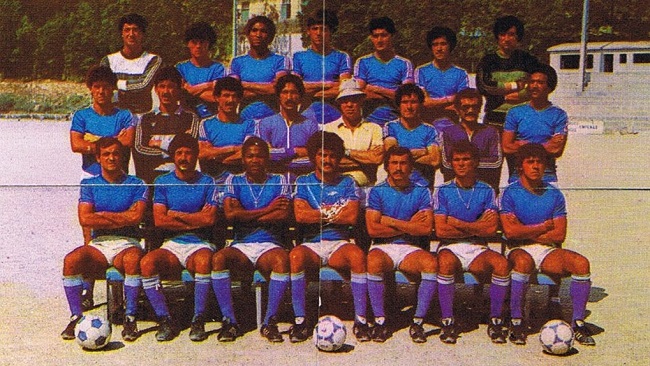
Then came an unexpected turn of events. The FPF reversed their decision, and on 23 June, they finally claimed Ginásio were right all along and they were the ones who got promoted to the top flight. The town partied like never before. However, all the events had crippled the preparations for the following campaign, with the board not knowing where they were going to compete and proving unable to sign players or even to pay pending salaries and bonuses from the previous campaign. A sign of what was to come.
The lack of funds prevented Ginásio, who played at the Municipal de Alcobaça, a dirt pitch, from properly working the transfer market. The Blue and Whites had some well-known players in their ranks such as José Romão – the team captain and later famed coach – António Teixeira and Américo, but unlike Riopele, there was no powerful financial backer to assist them in bridging the gap to the top sides. But the deficient preparations were made clear when the 1982/83 first division season kicked off.
Zero wins in the primeira volta but champions elect Benfica are held!
Despite a promising home draw against Rio Ave on the opening day, they didn’t win a single game during the first half of the season. Draws against Varzim, Portimonense, Marítimo, Espinho and Boavista preceded the highlight of the season, when Benfica came to town. The Sven-Göran Eriksson-led side were on their way to a brilliant championship win, but they were held to a 1-1 draw, with Nelito scoring in the dying minutes to cancel a Nené opener.
By then, Edmundo Duarte had already replaced Orlando Duarte, who in turn took the place of Vital in the dugout, but it wasn’t enough. Alcobaça did beat Amora, Sporting Espinho, Vitória FC and Estoril under Duarte’s guidance, but they already lagged too far behind in the table to give supporters real hope.
Painful end
Four matches before the end of the season, Ginásio visited Benfica at the Luz and suffered an 8-1 defeat that defined their fate, as they were officially relegated. Ginásio lost all three of their remaining matches, finishing their campaign with a 5-1 home defeat against Porto. They ended dead last in the league table with just 15 points, ten behind Sporting Espinho, who had to play a salvation play-off to guarantee a place in the top flight.
Alcobaça’s solitary season at the top was followed by a long and steady decline that saw the side return to the regional divisions by the end of the decade. The region of Leiria would have to wait more than a decade to enjoy top-flight football once again, but by then, in the central region of Portugal, something was brewing further north in Aveiro.
***
 Recreio Desportivo de Águeda: 1983/84
Beira-Mar is and remains the most important club in the Aveiro district. Portuguese Cup winners in 1999, finalists in 1991, a club that included Eusébio in their ranks in the 1970s, the Alvinegros rose to prominence between the 1980s and 1990s before eventually disbanding once again. The region, much like the Ave, was economically turning from a rural and agricultural background into a more industrial, redeveloped area. The change happened not only in Aveiro but also in the area surrounding Santa Maria da Feira, Vale de Combra, São João da Madeira and Oliveira de Azeméis. Yet, it was in the south, in Águeda, that one of Portugal’s most remarkable and forgotten football fairy tales took place.
Águeda is a beautiful place, small but familiar, which sits on the road that links Aveiro to Coimbra. One year after Alcobaça surprised Portuguese football, the Recreio de Águeda side did the same by winning the central Portugal division. The side had already hustled Ginásio Alcobaça de previous campaign. One season on and they went head-to-head with Académica de Coimbra and União de Leiria, finally clinching promotion on the last day of the season. The Red and Blues ended last in the play-off championship against Penafiel (north division) and the eventual winners Farense (south), who were both promoted from the other two regional divisions.
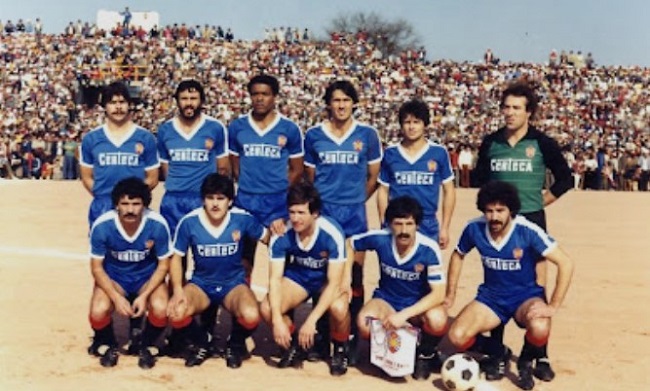
But expectations were high for the following campaign as they joined Sporting Espinho as the two representatives of the region in the top flight. José Carlos coached a side that included captain Isalmar, Tibi and Vata, who later became famous for a handball goal that sent Benfica to their last European Cup final in 1990. Former Porto great Vermelhinho and the promising young midfielder Bobó, later of Boavista, left the side that had won the second tier the season before. Nevertheless, there were still some high hopes that Águeda could punch above their weight.
Like Ginásio Alcobaça, they started the campaign with a promising draw, against Estoril, but only grabbed their first win in week seven, against Varzim. They had been beaten by Porto and Benfica and would later lose to Sporting as well, but triumphs against Salgueiros, Vitóra SC and Portimonense looked promising for the second half of the campaign. When they beat Rio Ave at home, at the end of January, they had 13 points, almost double Espinho’s tally, who were last, and two points clear of the drop zone.
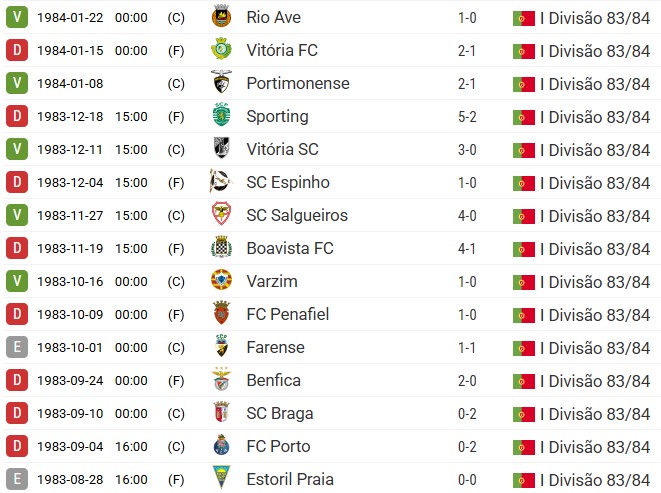
(V = Victory; E = Draw; D = Defeat). (Image: zerozero.pt)
What few expected was that the nightmare segunda volta for Agueda’s aspirations. They won only twice, back-to-back against Farense and Penafiel, and managed to get only two points from the last ten matches, ending the season with a hammering at the hands of Rio Ave away. A win would have been enough for them to finish in the play-off positions, as they had a better goal-average and summed 19 points, two below Salgueiros, Farense, Penafiel and Estoril, with only the Canarinhos relegated due to goal-difference. The poor performance and 6-1 defeat in Vila do Conde sealed their fate.
Quick return quashed by bureaucratic error
Despite the disappointment, Águeda were primed to return to the top tier at the end of the following season as they won the second division once again in 1984/85, but Elvas accused them of fielding an ineligible player, Gerúsio, and the Portuguese Football Federation sided with the Alentejo club. The two points from a win against Viseu were stripped from them, and Elvas got promoted instead, forcing Águeda into a promotion play-off they couldn’t handle, losing against Varzim, Aves and União da Madeira.
Five years later they were included in the first ever national second division campaign but were quickly relegated and have never been promoted back to the second division. Beira-Mar became the football powerhouse in the region at the end of the 1980s, and clubs like Feirense and Arouca have since had their shot at the top. But in Águeda, nobody forgets the day when the Big Three came to town and halted traffic and the hearts of the local faithful, an experience everyone knows will almost certainly never be repeated again.
Related: One-season wonders series – Part I: União Lisboa, Oliveirense, União de Coimbra
