
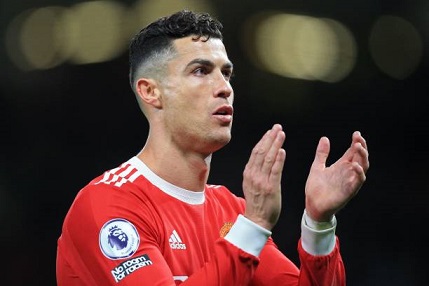
On 6 July 2026, the curtain fell on Portugal’s FIFA World Cup campaign in Dallas as Mikel Merino’s stoppage-time strike handed Spain a 1–0 victory and secured their place in the quarter-finals. For Cristiano Ronaldo, who had already become the first man to score in six different FIFA World Cup editions, the Round of 16 defeat may have marked his final appearance on football’s biggest stage, although he has not officially announced his retirement from international football.
As one remarkable chapter in Portuguese football comes to an end, the legacy of the nation’s greatest players continues to inspire fans around the world. Portugal has consistently produced footballers who have shaped the game far beyond its borders through their talent, achievements, and influence. This article, prepared by the sports analysts at Ice Casino, ranks the 10 greatest Portugal national football team players of all time based on peak ability, major honours, international impact, and cultural legacy-not statistics alone. When discussing the greatest footballers in history, Portugal has produced several names that deserve a place in the conversation.
The Undisputed Legends of Portuguese Football
The first three names supplied Portugal with its lasting icons: a 1960s phenomenon, the leader of a gifted generation, and the record-breaker who delivered major international silverware.
1. Cristiano Ronaldo: The Ultimate Goalscorer
Cristiano Ronaldo rose through Sporting CP before transforming Manchester United, Real Madrid, Juventus and Al-Nassr. His five Ballons d’Or, five Champions Leagues and league titles in England, Spain and Italy make him Portugal’s most decorated attacking figure. The national-team peak was UEFA EURO 2016, Portugal’s first major trophy, followed by the 2019 Nations League; the 2022 World Cup quarter-final loss was a painful late-career setback. The Cristiano Ronaldo stats remain extraordinary: UEFA recorded 233 caps and a world-record 146 international goals in July 2026. Reuters reported that his Al-Nassr extension brought estimated annual earnings of about US$275 million. His legacy is a new benchmark for finishing, conditioning and longevity.
2. Eusébio: The Black Panther’s Enduring Legacy
Eusébio da Silva Ferreira rose from Sporting Lourenço Marques to become Benfica’s great forward, before late spells in North America. With Benfica he won 11 league titles and the 1962 European Cup; he also received the 1965 Ballon d’Or. His defining Portugal World Cup history moment was 1966: nine goals, the Golden Boot and a third-place finish . Knee problems increasingly restricted his later career, showing that even the “Black Panther” had limits. Eusébio made Portugal a football power and established an African-born Portuguese player as a global sporting icon.
3. Luís Figo: The Golden Generation’s Leader
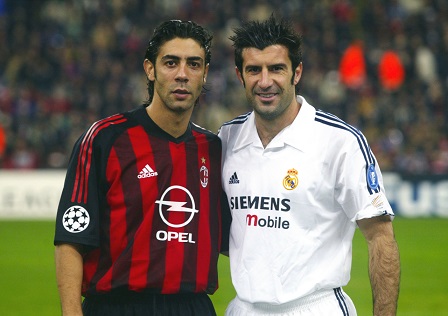
Luís Figo developed at Sporting CP, became a superstar at Barcelona, crossed the divide to Real Madrid and finished at Inter Milan. He won four La Liga titles, four Serie A titles and the 2002 Champions League, alongside the 2000 Ballon d’Or and 2001 FIFA World Player of the Year. His elegant wing play led Portugal’s “Golden Generation” to the EURO 2004 final. The controversial 2000 move from Barcelona to Madrid brought lasting hostility, but his response showed rare composure. A contemporary report estimated his 2005–06 Inter salary at €4.5 million gross per year. Figo proved that a Portuguese playmaker could become central to world football’s biggest clubs and transfers.
Legends Statistical and Financial Summary
The statistical contrast between these three icons is revealing: Eusébio provided the original international benchmark, Figo led a transitional generation, and Ronaldo transformed Portugal’s ceiling.
|
Player |
Portugal Caps / Goals |
Defining international achievement |
Key clubs |
|
Cristiano Ronaldo |
233 / 146 |
UEFA EURO 2016 winner |
Man Utd, Real Madrid, Juventus, Al-Nassr |
|
Eusébio |
64 / 41 |
1966 World Cup Golden Boot |
Benfica |
|
Luís Figo |
127 / 32 |
UEFA EURO 2004 runner-up |
Barcelona, Real Madrid, Inter |
Defensive Titans and Midfield Maestros
Portugal’s greatest sides were also built on defenders who read danger early and midfielders who controlled the rhythm.
4. Pepe: The Unyielding Defensive Wall
Pepe’s path ran from Marítimo to Porto, Real Madrid, Beşiktaş and back to Porto. He won three Champions Leagues and three La Liga titles at Madrid, plus four Primeira Liga titles across his Porto spells. His international high point was a Man of the Match display in Portugal’s EURO 2016 final victory . A 10-match ban after a 2009 incident against Getafe was a serious self-inflicted setback, but he rebuilt his reputation through leadership and sustained elite form. Media reports estimated his 2017 Beşiktaş salary at €5 million gross per season. The Pepe Portugal legacy is longevity and defensive authority: he made aggression work with intelligence.
5. Rui Costa: The Elegant Playmaker
Rui Costa moved from Benfica, via a loan at Fafe, to Fiorentina, AC Milan and a final Benfica return. He was the classic number 10: composed in traffic and exceptional at finding the final pass. His honours include the 2003 Champions League, the 2004 Serie A title, two Coppa Italias and the 1991 FIFA World Youth Championship. Winning the decisive youth-final penalty announced his rise; injuries and Kaká’s emergence at Milan reduced his later role. He belongs in debates about the best midfielders of all time for his technical influence. In 2006, Record reported that he accepted a Benfica wage of roughly €500,000 per year.
6. Deco: The Tactical Genius
Brazil-born but naturalised for Portugal, Deco built his reputation at Porto before starring for Barcelona, Chelsea and Fluminense. He won the Champions League with Porto in 2004 and Barcelona in 2006, adding league titles in Portugal, Spain, England and Brazil. Porto’s 2004 final was his defining performance, a masterclass in tempo and decision-making. A difficult 2008-09 at Chelsea, shaped by fading form and managerial change, checked his momentum. Press reporting estimated his Chelsea salary at about £5 million gross annually. Deco’s legacy is strategic as well as stylistic: he supplied the creative connections that helped Portugal reach the EURO 2004 final.
7. Ricardo Carvalho: The Cerebral Centre-Back
Ricardo Carvalho started at Porto, developed through loans at Leça, Vitória Setúbal and Alverca, then excelled at Chelsea, Real Madrid, Monaco and Shanghai SIPG. His breakthrough was Porto’s 2003-04 UEFA Cup and Champions League double under José Mourinho. He later won three Premier Leagues with Chelsea, La Liga with Madrid and returned for Portugal’s EURO 2016 victory. A public clash with Mourinho at Chelsea was his major professional setback, but his anticipation and composure restored his value. UEFA’s account of his Madrid move captures a trophy-rich Porto and Chelsea career. Ricardo Carvalho remains the template for the intelligent, quietly dominant modern centre-back.
Modern Stars Shaping the Future
The modern generation complements Portugal’s tournament pedigree with sustained success in the sport’s most demanding club environments.
8. Bernardo Silva: The Creative Dynamo
Bernardo Silva emerged at Benfica, developed at Monaco and became a Manchester City cornerstone. His pressing, close control and positional flexibility overcame early doubts about his physical suitability for England. Across nine City seasons, he made 460 appearances and won 20 major trophies: six Premier Leagues, five League Cups, three FA Cups, three Community Shields, the Champions League, UEFA Super Cup and FIFA Club World Cup. He also won the 2019 Nations League with Portugal. Capology lists an estimated 2026–27 gross fixed salary of €16.04 million, excluding bonuses. His legacy is proof that tactical intelligence and tireless work can be as decisive as pace or power.
9. Bruno Fernandes: The Attacking Engine
Bruno Fernandes learned at Novara, Udinese and Sampdoria before becoming Sporting CP’s creative leader and Manchester United’s attacking reference point. His honours include Portugal’s 2019 Nations League, United’s 2023 League Cup and 2024 FA Cup. After joining United in 2020, he became the club’s 100-goal midfielder and set a Premier League single-season record with 21 assists in 2025-26. Criticism after a subdued EURO 2020 was a genuine setback, but he matured into a more authoritative Portugal leader. Capology estimates his 2026–27 fixed gross pay at £15.6 million, excluding bonuses. Fernandes embodies the risk-taking modern playmaker: demanding, productive and fearless with the difficult pass.
10. Paulo Futre: The 1980s Prodigy
Paulo Futre came through Sporting CP, became a sensation at Porto, then played for Atlético Madrid, Benfica, Marseille, Reggiana, AC Milan, West Ham United and Yokohama Flügels. His acceleration and close control helped Porto win the 1987 European Cup; second place in that year’s Ballon d’Or vote made him Portugal’s first post-Eusébio international superstar. He added two Copa del Rey titles with Atlético and became a Madrid cult hero. Recurrent knee injuries, especially after his Italian move, cruelly cut short the peak his talent promised. Futre’s legacy is audacity: he embodied the belief that Portuguese wingers could enchant Europe.
Did You Know?
Beyond the trophies and transfer fees, Portugal’s greatest players share several revealing historical footnotes. Eusébio’s most famous rescue act came when Portugal trailed Korea DPR 3-0 after 25 minutes in the 1966 World Cup quarter-final; he scored four times, including two penalties, in a 5-3 comeback. Ronaldo’s first international goal was a 90+3-minute header against Greece at EURO 2004, assisted by Luís Figo-a symbolic handover between two generations. Bruno Fernandes scored his 100th Manchester United goal across all competitions during his 200th Premier League appearance for the club. And Paulo Futre finished second in the 1987 Ballon d’Or vote at just 21, underlining how early his European peak arrived.
FAQ
Who is the best Portuguese footballer of all time?
Cristiano Ronaldo is the strongest overall choice thanks to his national-team records, five Ballon d'Or awards, and Portugal’s first major international title. His longevity, consistency, and success at both club and international level have made him one of the greatest players in football history.
Did Eusébio win the World Cup?
No. He won the 1966 FIFA World Cup Golden Boot and led Portugal to a third-place finish. His outstanding performances at that tournament established him as one of the greatest footballers of his generation.
Why was Figo’s Barcelona-to-Real Madrid move important?
It made him a symbol of football’s fiercest club rivalry and a central figure in the global transfer market. The transfer remains one of the most controversial and influential deals in the history of the sport.
Which Portuguese club has won the most league titles?
Benfica has won the most Primeira Liga titles in Portuguese football history. Along with Sporting CP and FC Porto, Benfica is considered one of the country's "Big Three" clubs and has played a major role in shaping Portuguese football.
