
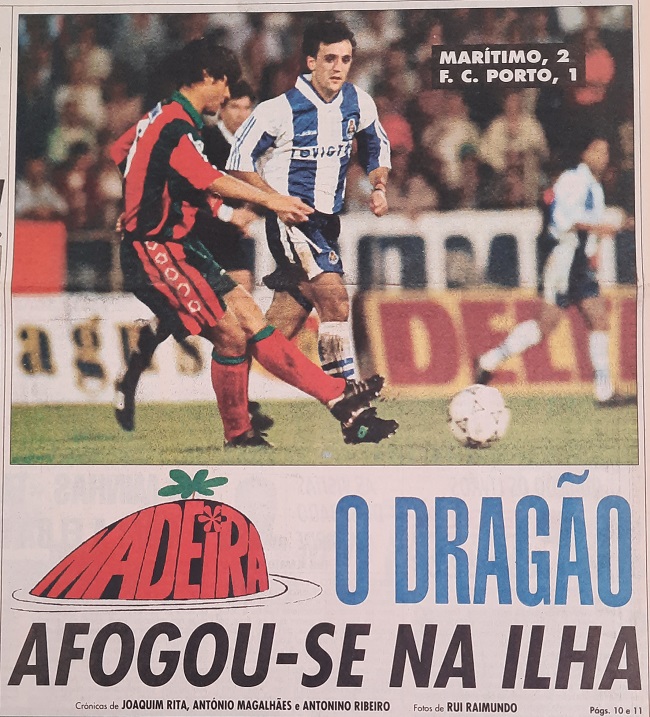
Death. Taxes. Losing at Funchal. For a short period of time, when Porto was becoming the ruthless and unchallenged powerhouse of Portuguese football, there was always an away trip that supporters dreaded. Panicked about. It was not Alvalade. It was not the Luz. It was Barreiros. Marítimo was the Dragons’ worst nightmare during the 1990s.
They failed to get the better of the islanders at their Atlantic home not once, not twice, nor thrice, but on four different occasions, some with more devastating effects than others. In 1993, they began to dismantle Porto’s title aspirations at the very beginning of the season. Two years later, they prevented them from reaching the Cup final. In 1991, they were one of the few sides to beat Carlos Alberto Silva’s well-oiled defensive machine.
Yet the defeat that resonated the most was when the team that was about to embark on a historical penta-championship run travelled to Madeira only to be hammered by the locals.
***
Early humiliation handed out to Porto
They had been warned. They always were. Still, it didn’t matter. Somehow, regardless of whatever they did, things usually went wrong. Now, this was a side that famously had already beaten Porto at the height of their powers, on their way to the surprise Campeonato de Portugal win in 1926. Seven goals to the Madeira side destroyed a much-fancied Porto squad as Marítimo became the first and only team from the islands ever to win a national trophy.
Porto got even by bringing the young Artur de Sousa “Pinga” two years later to their side, but Salazar’s harsh policies on the island after an attempted coup in 1931, organised from Madeira and the Azores to oust him from government, meant Marítimo, as well as the other island clubs, were forbidden from competing in national competitions for decades. They could only send one representative to play in the Cup, but the side had to travel to Lisbon and play their home ties there, matches that usually ended in defeat.
The ban was eventually lifted and by 1977/78 Marítimo made it to the top division. They were beaten 3-1 by Porto, who were on their way to their first league win in two decades. For the following seasons, whenever the two sides met at Funchal, it usually went the way of the visitors although a couple of draws seemed enough to bring joy to the local crowd, who were now getting used to playing against the very best on a regular basis.
Porto’s kryptonite
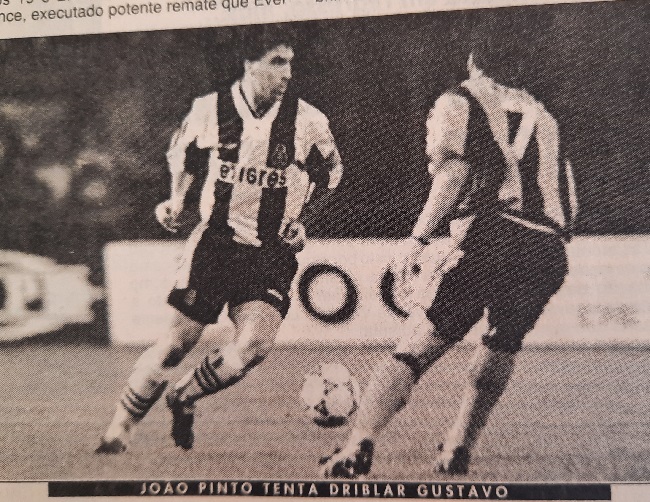
Then came the 1991/92 win, their first against the Dragons in the league, a stain in what was an almost perfect season for the Carlos Alberto Silva-led side who beat Benfica to the title. Two years later, Porto were coming off a home draw with Benfica in the opening round of the 1993/94 league, and travelled to Barreiros only to be beaten by an early goal that confirmed something was going on the island that proved there was a sort of kryptonite waiting for the Dragons. It was the beginning of the end for Tomislav Ivic’s second stint as Porto manager.
Come the following year, Porto were well aware of the dangers of travelling to the island so soon in the campaign. But in round seven they landed in Funchal, and sure enough, another terrible away experience lay in wait. They were still hurting from the loss of midfielder Rui Filipe, who had tragically died in a car crash only weeks before, on the eve of a match against Beira-Mar, which he couldn’t play in because of suspension.
Despite Filipe’s tragic passing, the season had started brilliantly. Five straight league wins against Braga, Beira-Mar, União da Madeira, Vitória Setúbal and União Leiria was followed by an away draw against Benfica, a side they had already beaten in the Portuguese Super Cup weeks earlier. That meant that by round six, Bobby Robson’s Porto shared the lead with Carlos Queiroz’s Sporting, with 11 points each, while Artur Jorge’s Benfica lagged two points behind the league leaders. Many were expecting Porto to find some difficulties in Madeira, but they were still seen as heavy favourites to stay top of the table for another week when the side left the local airport for the hotel. Yet, an uncomfortable feeling was already brewing in the air, even if they couldn’t understand why.
European participants Marítimo struggle domestically
Marítimo, on the other hand, had not started the season spectacularly. Paulo Autuori’s men only had five points to show for their efforts and sat tenth in the table. Perhaps their European exploits had something to do with it. The side had enjoyed a brilliant campaign two seasons earlier that allowed them to qualify for the UEFA Cup for the very first time in their history, followed by another strong season that saw them make Europe again. They, like Porto, started the season well, with home wins against Leiria and Vitória FC – with Barreiros once again working in their favour – followed by a respectable away draw at Amadora.
But then came a tough European tie against Swizz outfit Aarau, sandwiched in the middle of two very difficult matches against Sporting and Boavista away. Beating Aarau was hard enough, but to travel twice to two of the most difficult venues in the league in the middle of it made that double-header a titanic task, so the points in the league table didn’t show the whole picture. Also, the side had been playing away from home for three weeks now, and they were dying to return to the stronghold of Barreiros to host Porto.
No rotation ahead of European commitments
There was also an important question to be answered. Both sides would be playing in Europe four days later, and while Porto were considered heavy favourites in their tie against Ferencvaros, Marítimo would be hosting the mighty Juventus, one of Europe’s top sides, and there were expectations about the possibility of Autori rotating some of his team to welcome the Vecchia Signora to Madeira. In the end, he didn’t.
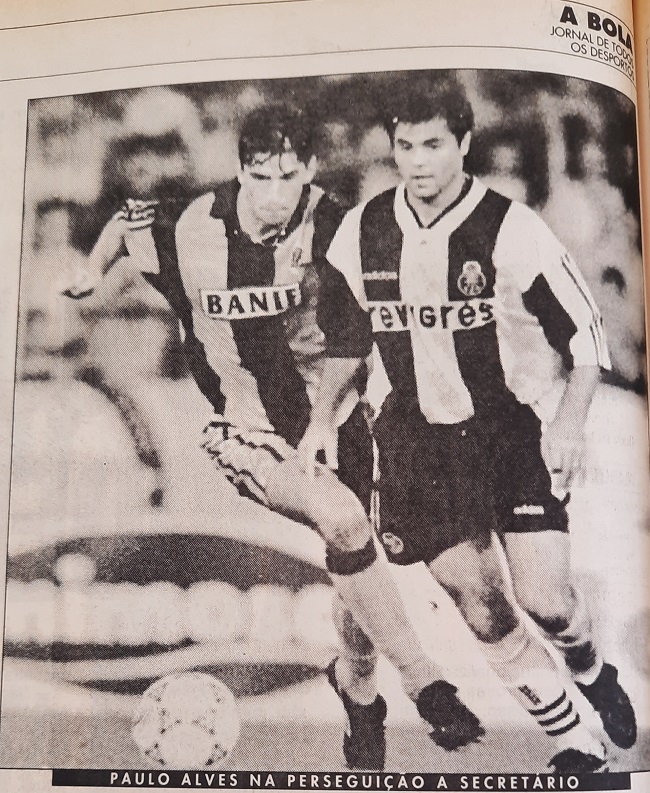
The Brazilian manager picked his strongest eleven, with Ewerton in goal, as always, followed by Paulo Duarte, Carlos Jorge, Zeca and Humberto in defence, while Flores, Vado, Gustavo and José Pedro supported the dynamic striking partnership of young striker Paulo Alves and Canadian international Alex Bunbury. The long-serving Brazilian midfielder Heitor was on the bench, alongside Jorge Andrade, Rebelo, João Luis and Bizarro, a former Porto graduate in goal.
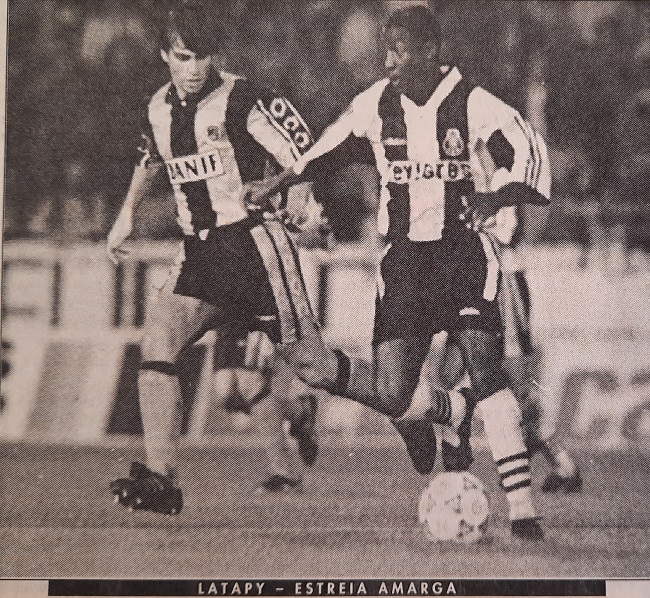
Bobby Robson was also not one for rotation, particularly for difficult away matches. The man who had followed Ivic at the later stages of 1993 managed to win a Cup for Porto as well as playing a Champions League semi-final in just five months and was now focused on winning the league. Assisted by Augusto Inácio and a young José Mourinho as deputies, he summoned up Vítor Baía, captain João Pinto, Aloisio, José Carlos and Rui Jorge in defence, while Secretário and Drulovic operated from the wings. Latapy, Kulkov and veteran André gave muscle to the midfield, in support of the sole striker Domingos, now that his long-term partner Emil Kostadinov had finally moved to Spain. Cândido, Jorge Costa – who had been loaned to Marítimo years prior – Jorge Couto, Semedo and Baroni were on the bench for the night.
Goalkeepers shine in lively start
With the cauldron of Barreiros fully packed, the match started with both sides measuring each other up. Opportunities came at both ends with Baía and Ewerton showing their best versions early on. Porto looked for speed on the counter and tried to take advantage of Marítimo’s will to have more of the ball, but neither side could really entirely control the events during the first half.
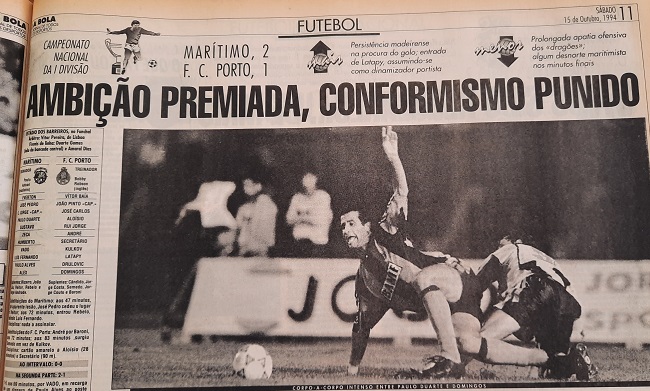
It all changed in the second half as Marítimo pressed for the win. The locals became more dominant with the ball at their feet and soon started to harass Baía’s goal more. It was on one of those occasions that Vado netted the side’s first, leading to ecstasy in the crowd. Not content, seven minutes later, he assisted Rebelo, who had just come in for Flores, to score Marítimo’s second, as the side ran riot all over Porto’s defence. Baroni was by then on the pitch, but he performed poorly, as he usually did, and not even bringing Semedo on for Kulkov helped Porto’s chances.
Domingos would claim a late goal, with five minutes to spare, but Porto never really looked the menacing side it had been so far in the league and ended up well-deserved losers on the night. It was their first defeat of the league campaign, and it meant they now trailed Sporting by two points, with Benfica’s surprise defeat in Barcelos keeping them alone in second place. Marítimo, on the other hand, climbed to ninth only two points behind the Eagles, as their European prospects reignited.
Juventus given a run for their money
Four days later, Funchal hosted Juventus in a memorable match that the home team were unlucky to lose 1-0. They would then be beaten again 2-1 at the Dell Alpi, thus ending their second European campaign in honour. Porto, on the other hand, thrashed Ferencvaros on their way to a Cup Winners’ Cup last eight appearance. Although considered among the favourites, they were beaten in a penalty shoot-out by Sampdoria, who would then lose against Arsenal in the semis before the Gunners ended up beaten by a dramatic late Naym goal of Zaragoza in the Paris final.
Marítimo beat Porto again to book berth in Portuguese final
Porto did claim the league title, the first of the famous Penta five-in-a-row sequence. The championship was clinched with a penalty scored in Alvalade of all places, much to Robson’s joy. He was also hoping to face Sporting in the Cup final for a second season in a row, but in the semis, the Dragons were bound to travel to Funchal and once again, things didn’t go their way. As a reprise of the league match, Marítimo played better than the league champions elect and a single goal was enough to win, on their way to their first-ever national final since the Campeonato de Portugal days. They lost against Sporting, but it made for a memorable campaign, nonetheless, with Autuori’s men finishing seventh in the league table, two points shy of Farense and a return to Europe.
The Brazilian manager was rewarded later with a ticket to Benfica, where he wasn’t up to standard and later returned to Brazil. Marítimo remained Porto’s bogeyman team, however, and claimed another win later in the decade before becoming one of the few sides to ever claim a triumph against José Mourinho’s Porto in their 2002/03 title campaign.
As time went by, Porto started to improve their away record at Funchal, although they also had struggles when visiting Nacional. The travails of the Blue and Whites in Madeira may now seem like a distant nightmare compared to what they once were, but for hardcore supporters of the Dragons, an away trip to Marítimo is the sporting equivalent of a late afternoon session with the dentist.
By Miguel Lourenço Pereira, author of “Bring Me That Horizon – A Journey to the Soul of Portuguese Football”.
