

One city. Two clubs. One stadium. Before the Alvalade. Before the Luz. Before each Lisbon giant enjoyed its state-of-the-art football ground, there was the Campo Grande, a place where both clubs enjoyed and suffered the good and the bad at a time when the game was rapidly evolving.
Few football stadiums have been so decisive in shaping the identity of two different clubs as the Campo Grande did for so long. Even if today it remains almost a hidden memory in both Benfica and Sporting’s history.
***
Football emerges as Portugal transitions from monarchy to republic
It was 1911, and Portugal was just coming out of centuries of monarchic rule as the new and fragile Republic tried to impose itself. There were still military coups and revolts, particularly in the rural north in favour of the old days. The new green and red flag was not to everyone’s liking but it was starting to be an important part of a newfound identity. Football was helping as well, as it became more popular beyond the old British and merchant colonies in both Lisbon and Porto.
It was in this backdrop that the Campo Grande ground came to life. Located in what was still an underdeveloped urban area, far from its current status as a cornerstone of central Lisbon, the stadium was built to accommodate a series of sporting events, with football as its main attraction. The game was already able to muster some sizeable crowds, as the recently founded Benfica and Sporting knew. It was a time when the new powers-to-be were still fighting against the breakthrough sides that would soon disappear.
Sporting anger their benefactor and are forced to find a new home
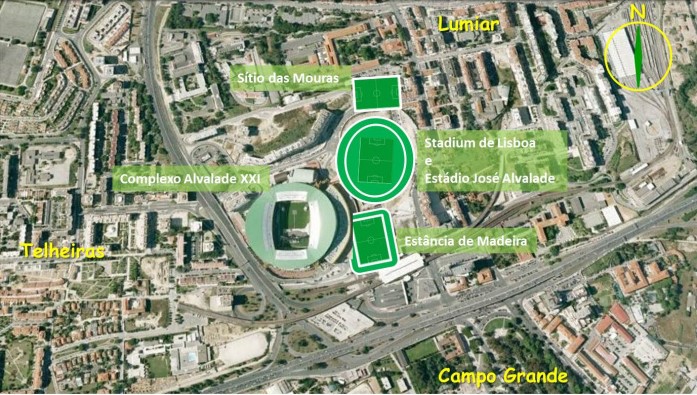
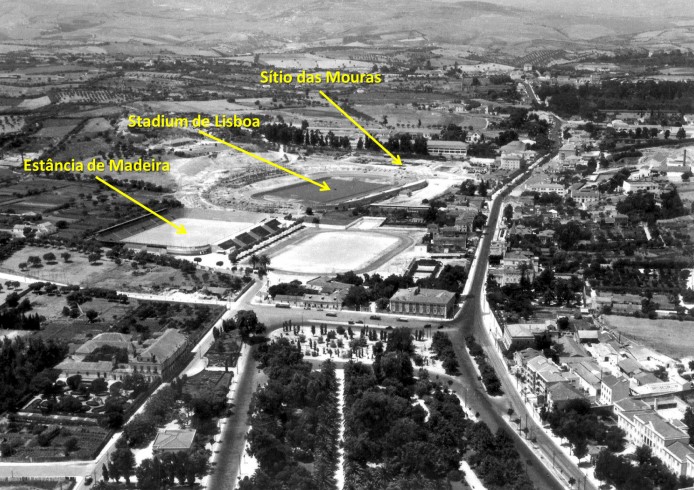
Lisboa FC was one of those, and they became the ground’s first tenants of the family Pinto da Cunha, who owned the land. But by 1917 the club was forced to move out and merge with Império and move to the Palhavã area. Hence Sporting comes into the picture. The Lions had been playing nearby since their foundation in Sitio das Mouras, which later became popularly known as the ground of Lumiar just a few metres north, but by 1916 the Viscount of Alvalade, who bankrolled the club, decided to create a bigger venue that he would call the Stadium of Lisbon. That meant destroying part of the stands of the Sitio das Mouras, which was disapproved by many Sporting club members, despite the ground being on his lands and which he had loaned to the club at no cost years before.
The Viscount of Alvalade felt insulted by it and withdrew his support and distanced himself from the club, immediately forcing Sporting to find new accommodation. They didn’t have to look much further away. The Campo Grande was close by and, in fact, at that moment, Lisbon had three different football grounds side by side: the Lisbon Stadium – on the same land where the future José de Alvalade stadium was built – separated the Sitio das Mouras and the Campo Grande pitch in a huge sporting area north of Lisbon’s downtown.
The Wooden Venue
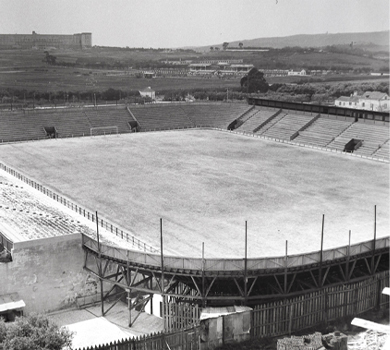
It needed some work done, though, and the architect António Couto, with the financial backing of Mario Pistacchini, remodelled the place, making it the best sporting venue of its time. However, the Sporting supporters quickly baptised it as the Estância de Madeira (The Wooden Venue) because all the stands were made of wood, which sometimes caused issues with cleaning and security, as they were easily destroyed by weather, small fires and worn out by the regular use of the ever-growing club faithful. The club were paying tenants at the venue from 1917 onwards, and it was there that they became one of the greatest football forces in the history of the Portuguese game.
It was Sporting’s home up until the late 1930s. Yet, it was not all a bed of roses. Come the 1920s, the city of Lisbon was expanding greatly to the north and started to surround the Campo Grande area, so the owners of the land tried to evict Sporting to make way for a new housing block. The club, in turn, fought back, and it all ended up in court, during the Estado Novo dictatorship.
City hall steps in
That’s when the club’s influence stepped in, as they managed to get the city hall to enter the discussion, and it would be they, eventually, that became the official owners of the terrains, lending it immediately to the club for fifteen years. However, Sporting had bigger plans. There had always been an idea to build the biggest football ground in the land, and by the 1930s the Campo Grande was becoming too small for the club’s own ambitions, so the Alvalade project was first drafted precisely where the Stadium of Lisbon, or Lumiar, had originally been built, although nobody actually played often in it.
The club decided to rent it before officially owning it, while plans for the complete refurbishment of the place took place, but kept the lease on the Campo Grande as well, as they used it for training, youth and reserve matches and the occasional friendly. The investment in the stadium stopped and it quickly deteriorated. When all seemed lost, that was when the Campo Grande enjoyed a second life with different colours.
Sporting move out, Benfica move in
It was 1939, and Salazar decided, as part of the new urban design of the capital, that all the football clubs in Lisbon would be moved to Monsanto, where a huge national ground would be built. They would be evicted from their own lands to pave the way for highways, monuments and housing. That was the plan drafted by Duarte Pacheco, his infrastructure minister, and would have meant all three big city sides – Belenenses, Benfica and Sporting – would be forced to share the same ground that was, in fact, the blueprint for the future Jamor stadium.
However, it was then that politics came in, as very influential members of the regime who were also die-hard supporters of both Sporting and Belenenses actively campaigned so that both clubs would be able to remain in their current locations, with plans for Sporting to expand the Lumiar stadium already in place. Benfica weren’t so lucky. The most popular club in Lisbon played in Amoreiras, and they didn’t have the same core political influence as their city rivals, and their ground was also exactly where Duarte Pacheco’s new highway – whose bridge now carries his name – stands today. So they were forced to leave their ground with nowhere to go.
After leaving the Belém area for Benfica, and then the Benfica area for Amoreiras, it was now time once again for the Eagles to fly to a new home. It was then that they approached the city hall for a solution. As owners of the Campo Grande, they were ready to lend it to Benfica for a time, but there was already a contract signed with Sporting for the next twelve years that needed to be addressed. Benfica didn’t want to ask their rivals personally if they would help them out, so it was the city hall that made a deal with the club instead. They would cancel the lease, but Sporting had an option to buy the land from the Lisbon municipality after the Stadium of Lumiar construction works started. Until then, Benfica would be able to play there before moving somewhere else, as the club supporters kept on pressing the board about the need to have their own football stadium.
Benfica’s new home
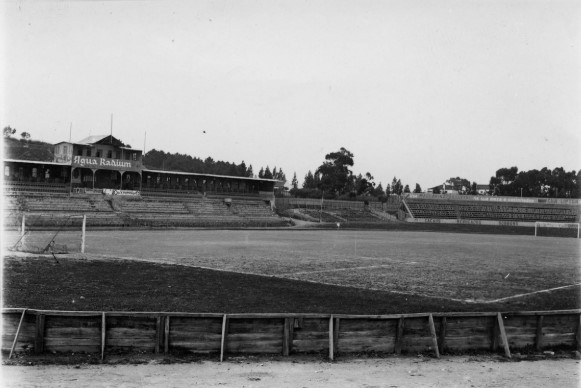
The deal went through in 1940, and Benfica became the sole tenants of the Campo Grande, but the ground was by then in such a mess that it needed extensive refurbishment works that lasted a few months.
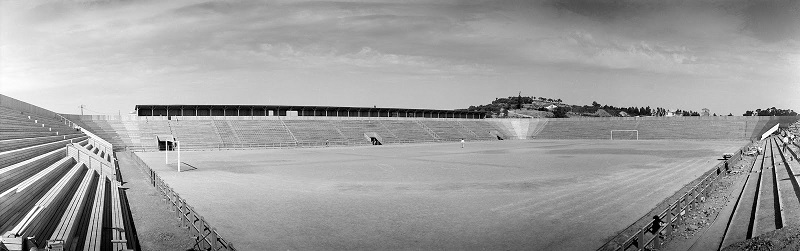
It was officially re-inaugurated in 1941 with a friendly match against Sporting, as a token of goodwill from both sides. For the following thirteen years it became Benfica’s home, despite some matches being played at the Jamor national stadium when it was finally inaugurated, not at Monsanto but in Oeiras.
As the years went by, Benfica suffered from the same maintenance issues that Sporting had, but with less funding. With the club saving for building their own ground, the board decided not to reinvest in their current home, and the conditions at the Campo Grande deteriorated once again at a time when the side was now definitively becoming a major force, claiming their first league title once the new competition kick-started in 1939. In 1946, the club and the city hall finally agreed that they would be able to buy land in the Luz area, but the Eagles would still need to fund the construction of the stadium and that forced them to stay another eight years at Campo Grande.
Campo Grande witnesses Benfica’s first international exploits
The successive works on the stands meant matches at Jamor or even Lumiar with Benfica as the home side happened in that period, but were not as common as one would expect, taking into consideration how poorly built the ground was. In 1950, as Benfica claimed the Latin Cup trophy in Jamor, they became the first Portuguese side to claim an international trophy. By then they had also become serial winners in the Portuguese Cup and League. In 1954, Benfica played their last match at the Campo Grande as the inauguration of the new Estádio da Luz finally allowed them to enjoy their first owned football ground, one that would become synonymous with Portuguese football worldwide for the years to come.
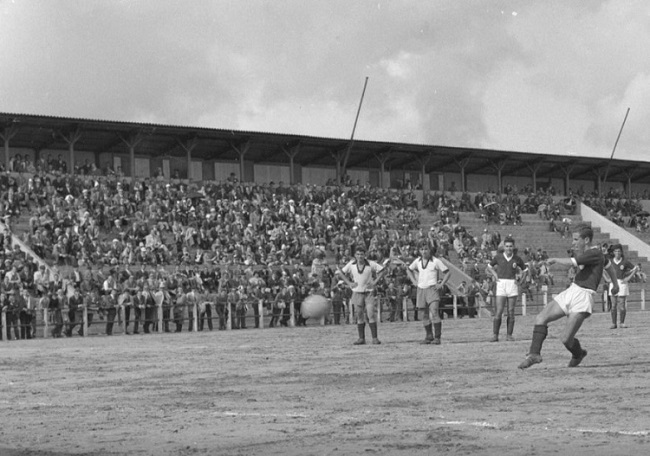
Despite Benfica moving out that year, the club continued to rent the stadium until 1971, as they often used it for practice or reserve matches, which was funny since it was only a few metres from the new José Alvalade stadium, where Sporting played. In 1971 they finally left altogether, as the city hall planned to build a brand-new avenue that would lead directly to the Alvalade stadium, a plan that was never put in place, which in turn led some Benfica supporters to claim it had only been an excuse for Sporting to come back and take control of the land, as had been promised to them in 1940.
Utilisation switches from Benfica back to Sporting
Sporting now used the land as part of their training facilities and also built new infrastructure where the club bingo was placed. It was later part of the new Alvalade sporting complex as well. It was finally demolished to partly give way to the east access to the new Alvalade XXI entrance gates, while its old south stand was demolished to build a parking lot that serves the Campo Grande metro station. A plot of land that actually entered Sporting’s life when they turned their backs on their founder and main financial backer in the end became part of the modern infrastructure that took the viscount’s name, an irony if there ever was one.
Still, despite being no more, the Campo Grande is a fundamental setting in the history of both Sporting and Benfica, as the two Lisbon giants called it home at a time when they were defining their identities and started to become the immense sporting forces that would dominate Portuguese football until the 1980s.
By Miguel Lourenço Pereira, author of “Bring Me That Horizon – A Journey to the Soul of Portuguese Football”.
