
Few sides have represented so well the highs and lows of the industrial north football community as Paços de Ferreira. Here is a club that was competing at the bottom of the football pyramid five decades ago and ended up playing in the Champions League playoffs. Only to be demoted to the third tier against all the odds.
***
Flying the banner for the north of Portugal
When the April 1974 Revolution paved the way for the flourishing of the textile industry in the north to be in a position to replace the dominant South Bank district, it also helped Portugal’s northern clubs to grow under the shadow of FC Porto’s success. Paços de Ferreira understood better than most what they needed to do to get things right, and by 2012 they finally had all the pieces of the puzzle ready to complete the job. And it was glorious to behold.
Ever since the Champions League expanded to welcome more than just league champions, Portuguese football has drifted between having no team qualifying for the group stages and enjoying the presence of three. In the early days it all depended essentially on how they fared in the playoffs. During that 25-year spell, only seven clubs have earned the right to hear the competition’s famous anthem. One of them was Paços de Ferreira. How they got there is a story worth knowing about.
The team were only promoted to the top tier for the first time in 1991, a side led by local football hero Jaime Pacheco, a former European Cup winner with Porto and one of the most remarkable Portuguese midfielders of his day. The club, which had started life as Vasco da Gama FC and then reformed as a feeder side of FC Porto, wearing the same blue and white stripes for a while, only managed to reach the third tier well into the 1960s. It was a small local club, like so many in the Porto and Braga district, more used to enjoying local rivalries with the surrounding towns than to imagine they would someday climb up to the top division.
Ascension crowned with European football
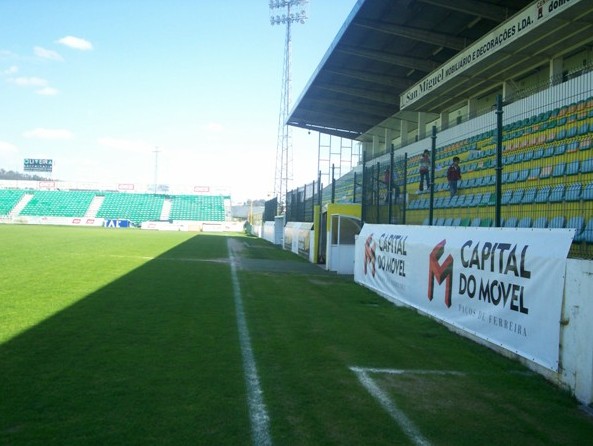
The 1980s brought a boom to the local economy in the furniture and textile companies, which in turn lead to an influx of money into the club, as they started to dream of first-division football. Few thought what had happened in 1991/92 was sustainable over time. But Paços became a household name in the 1990s, and in 2007 they finished a league campaign in the top five for the first time, thus qualifying for the group stages of the UEFA Cup. Two seasons later, after booking a place in the Portuguese Cup final in 2009 against Porto, the side proved to be a tougher bone than the Dragons might have expected and they were rewarded with a second qualification for European football. This, after finishing in a relegation spot, saved only by the late Boavista disqualification due to the Golden Whistle affair.
The Castores (Beavers in English) were capable of impressive seasons followed by disappointing ones with astounding regularity, so it wasn’t a big surprise that they ended the 2009/10 campaign midtable or that in the following campaign they finished just one point clear of returning to Europe in a toe-to-toe fight against Nacional and played the League Cup final, losing against Benfica. That side, coached by Rui Vitória, who had succeeded the likes of José Mota and Paulo Sérgio, lost its manager to Vitória Guimarães the following summer and once again spent a season almost unnoticed. So there wasn’t much expectation when the 2012/13 campaign started at the Mata Real. Few would imagine the rollercoaster ride that awaited them.
Board take a punt on Paulo Fonseca
The board decided to replace the old-fashioned Henrique Calisto with an up-and-coming but largely unknown manager by the name of Paulo Fonseca. He had just coached Aves and mounted an unexpected promotion challenge that. In the end, Aves missed out on promotion, but only a few kilometres away, people at Paços de Ferreira had taken notice and called him in for a job interview. They were impressed and offered him the job on the spot, stating the club’s expectations were to finish in the top ten places regularly over the upcoming seasons. They felt they had the players and the conditions to do it, and only needed the right sort of leadership to make it happen. Fonseca embraced the challenge and was soon working the transfer market to bring in key players to a side that already contained mature and experienced first-division footballers like Manuel José, André Leão, Filipe Anunciação, Tony, Javier Cohene, Nuno Santos and Cássio.
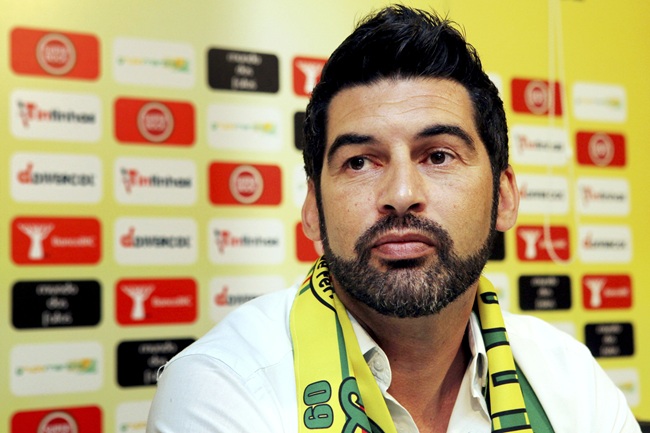
Left-back Antunes, forwards Cícero and Paolo Hurtado, alongside Tiago Valente, proved to be inspired choices as they were all immediately granted a first-team rank. Fonseca, who was fond of the 4-2-3-1, took a more reactive approach that explored the speed of Cícero and Hurtado on the break and the ability of his midfield to cook up deadly plays. Young Josué and veterans Manuel José, Vitor Silva, Luís Silva and the former Sporting player André Leão became the cornerstones of the side while Tony, Diogo Figueiras, Ricardo and Valente were the backbone of his defensive line. A mix of promising youth players, die-hard veterans and unknowns who were ready to prove to everyone they could hack it at the top.
Solid start precedes stupendous run of form
Paços started the league without making a fuss with a draw at home to Moreirense. Then they visited Estoril, who would also have a hell of a season under Marco Silva, and left the Lisbon coast with another 1-1 draw to make it two points. The first time people realised this Paços side had something special was the next game, a 2-0 home win against José Peseiro’s Braga, with an early Cohene goal followed by a late effort. It was impressive, but was followed by a draw against Nacional and a defeat versus Jorge Jesus’ Benfica. After five rounds of matches Paços had three draws, a win and a single defeat and were seventh in the table. Nothing too fancy, but all according to the board’s plan and expectations.
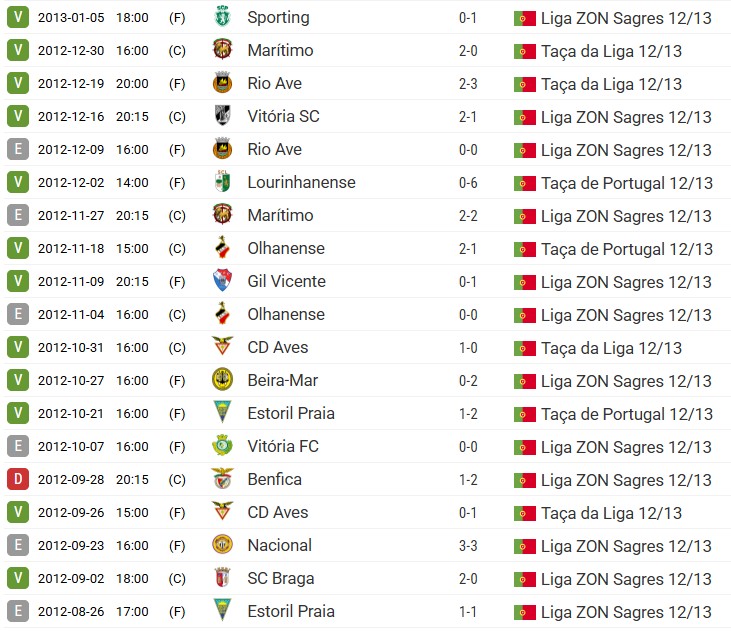
Then something remarkable happened. Fonseca’s men did not lose a single game from that late September match against Benfica all the way until late January of 2013 when they travelled to Estádio do Dragão to face Porto. In between, they played eleven matches, won five and drew four, which took them to 25 points and fourth place in the table, four points behind Braga and fourteen behind the league leaders Porto and Benfica, who were yet to lose a game. It was the club’s best-ever undefeated streak in their league history and included an iconic 1-0 win away at Alvalade against a Sporting side who were languishing way down the table, seven points behind the Beavers.
It can’t last… can it?
With Rio Ave fifth on 21 points and Vitória SC sixth on 20, it started to feel like a real possibility that Paços had a shot in returning to European football for the following campaign. But few imagined it could include Champions League football. Some expected Sporting to bounce back while others trusted Braga to keep on improving. Neither of those scenarios materialised.
A thrashing of Moreirense away and a win against Estoril at home sandwiched a painful defeat against Benfica in the Portuguese Cup semi-final, ending another brilliant run by Paços in the competition. Then came the trip to Braga. The locals were heavily fancied, but Fonseca’s crew proved much the superior side and ran riot with a 3-2 victory propelling them four points clear of the Guerreiros do Minho in third. Another expected defeat against Benfica followed, allowing Braga to narrow the gap, but as happened in the first half of the season, Paços went on a magnificent unbeaten run, all the way to the final day of the season, when they hosted Porto.
Completing the double over Sporting
Draws against Nacional, Beira-Mar, Marítimo, Vitória SC and Académica were followed by impressive wins against Vitória FC, Olhanense, Gil Vicente, Rio Ave and, decisively, Sporting. When the Lions visited the Mata Real, there wasn’t much they could do to stop the locals from an inspired win. In what became Sporting’s worst season ever – the side finished seventh – the Yellow and Greens showed their worth to maintain their 4-point advantage over Braga with two games to spare. José Peseiro’s team needed Paços to lose both matches and win both of theirs. It didn’t happen. Paços didn’t even have to sweat. With Braga’s home defeat against Nacional, Paços automatically became a Champions League side for the 2013/14 season.
The city partied like crazy, as they should. It became the best result ever not only for the club but for all the numerous clubs who got promoted for the first time to the top division from the late eighties up to the early 2000s on the back of the economic revolution in the region and the success of FC Porto, which emanated a positive influence on the region, sometimes by loaning players, other times by using their muscle to support their northern neighbours. While there had been glorious seasons by the likes of Gil Vicente, Tirsense and Rio Ave, not to mention Vitória’s and Braga’s role in the consolidation of the region in football terms, nothing had ever come close to Paços’ achievement.
Party time all round
A 1-1 draw against Académica anticipated a wild party and the feeling that history had been made. What few expected was the role Paços would play in the title run-in. With Paulo Fonseca already on his way to coach FC Porto in the following campaign – the worst-kept secret in the league – the Beavers had to host the Dragons for the final-day showdown. Porto arrived in town on the back of their most memorable comeback ever the previous weekend. Kelvin’s late goal against Benfica meant a win for Porto in Paços de Ferreira would allow them to conquer a third league title in a row.
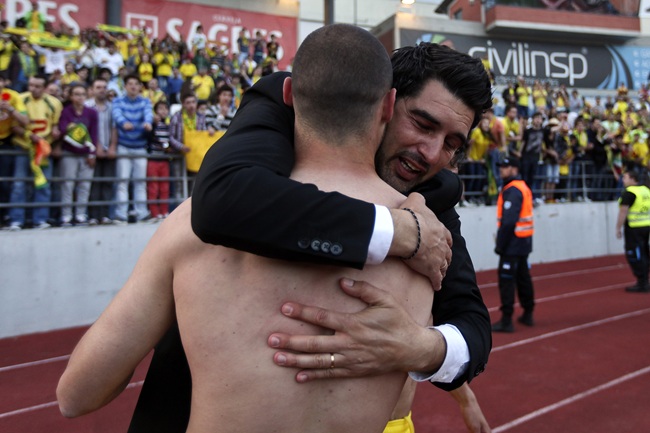
Many expected Paços, who had been Porto’s feeder club, to go easy, but the match was nothing of the sort. They held their heads high and were only beaten by a penalty scored by Lucho González and a late effort by Jackson Martínez. It was a win-win day for both sides. Porto got to celebrate the league title, while Paços fans were also partying thanks to their Champions League ticket, finishing the league on 54 points, two above Braga and nine ahead of Estoril, who finished fifth to complete the European places.
***
Nobody knew what to expect in the following season. Neither the board nor supporters had ever imagined the side could book themselves a place in the Champions League. They were now a play-off away from doing so. Paços would need to beat a seeded opponent to get all the way to the group stage alongside Porto and Benfica. With UEFA vetoing the home match to be played at the Mata Real, the match was moved to Porto’s Dragão stadium.
Zenit too powerful for Paços
For a while it seemed the Beavers were up to the challenge. Zenit St Petersburg were the worst possible opponent, a side that had won the UEFA Cup only a few seasons earlier and were still surfing the wave of money pouring into the Russian league by oligarchs close to Vladimir Putin. The visitors opened the scoring, but André Leão equalised in the 58th minute and fuelled a sense of hope. It didn’t last. Another two goals by Roman Shirokov to complete a hat-trick, followed by a fourth own goal by goalkeeper Mattias Drega left the knockout round practically decided.
Zenit won again in Russia, 4-2, and Paços were relegated to the Europa League group stage, where they ended up playing Fiorentina, Pandurii and future finalists Dniepr in the group stage, finishing with three draws, three defeats and no wins to their name.
Relegation avoided by a whisker
Worse was to follow. The energy expended playing the group stage left them knackered in the league. Costinha, the former Porto Champions League winner chosen to replace Paulo Fonseca, didn’t last long. Fonseca was also a victim of a too-soon move for his career as he resigned as Porto manager before mid-season, one of Pinto da Costa’s most disastrous choices that paved the way for Benfica to start building their iconic Tetra period.
Henrique Calisto came back to help Paços escape relegation, but he too was soon out of a job. In came Jorge Costa, and the former Porto captain wasn’t able to avoid the side finishing a poor 15th, but he then steadied the ship during the promotion play-off against Desportivo das Aves. After a goalless draw away, Paços clinched a precious 3-1 win with goals from Bebé (the side’s star signing of the season alongside Sérgio Oliveira), Jean Seri and Minhoca, to remain in the top tier for another season.
Fonseca’s return alongside Diogo Jota brings back the good times, albeit briefly
Costa didn’t stay for long as Paulo Fonseca was welcomed back like a prodigal son for the 2015/16 campaign, leading Paços to a comfortable eighth with a young Diogo Jota getting all the headlines.
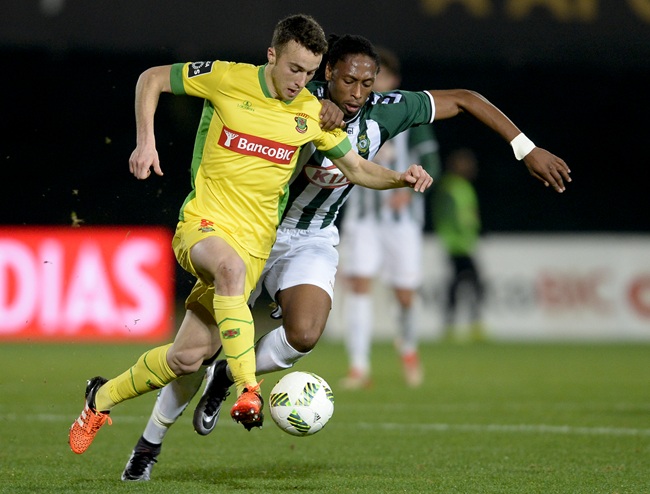
Few expected back then that Paços, who had played thrice in Europe, reached a Cup final and had competed in a Champions League playoff in quick succession, would ten years later end up relegated to Liga 3, in the 2025/26 season after having fallen out of the Primeira Liga three seasons earlier.
It was a disappointing end to a brilliant spell in the professional leagues that lasted decades and served as the perfect example of how a small side can touch the sky if everything goes their way, but is also close to falling into the pit if a couple of wrong decisions are made. Despite (or because of) the tough times being experienced at the Mata Real lately, none of their fans will ever forget how they became Portugal’s most fashionable underdog story during the 2012/13 campaign, their best season ever.
By Miguel Lourenço Pereira, author of “Bring Me That Horizon – A Journey to the Soul of Portuguese Football”.
