
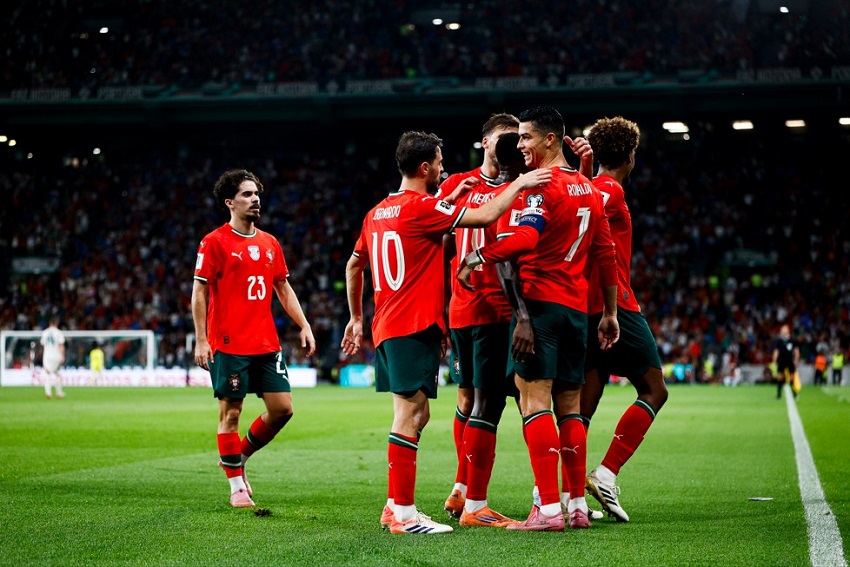
In the modern footballing world, Portugal is widely regarded as one of the biggest sporting nations, despite its smaller size compared to many others. The progress has been most notable in the 21st century, with Portugal becoming a consistent competitor at major competitions, with some of the best talents emerging during this period. The rise is a product of steady planning centred on the development of youth academies and a nationwide shared passion for the sport.
A strong football culture in a small nation
Football holds an important place in Portuguese society and everyday life. Many children grow up playing the sport in the streets, schools and local clubs. This early exposure helps to build natural comfort with the ball and game situations. Communities strongly support local teams, which helps create a competitive environment from a young age. The sport is seen as both a shared identity and a pathway to opportunity. This strong culture has helped Portugal produce talent far beyond what its size might suggest.
Domestic clubs and academy system
The foundation of Portuguese success lies in its domestic clubs and their youth systems. Major clubs such as SL Benfica, FC Porto and Sporting CP have built highly effective academies. These footballing academies place a large emphasis on the development of technical ability, whilst also maintaining high mental standards regarding discipline and tactical awareness. Young players who progress through the ranks and show promise are trusted at their respective clubs, with academies being required to ensure talent is ready for professional football.
Coaching excellence and tactical growth
Portugal is also known for some of its incredible football coaches and managers, who are respected for their success across Europe. One of the most notable is José Mourinho, regarded by many as one of the greatest managers in the sport’s history. Mourinho has had numerous successful campaigns in his career, including leading Portuguese club Porto to the UEFA Champions League title. On top of this, he has had numerous successful years in other European countries, underscoring his dominance in English, Italian and Spanish football. José Mourinho’s methods have demonstrated how to win as a manager, inspiring many coaches to follow similar paths.
Cristiano Ronaldo and global inspiration
One of the most important figures in Portuguese football history is Cristiano Ronaldo. His career has had a major influence on the sport in Portugal and beyond. He developed from a young player in his home island of Madeira, then at Sporting CP and evolving into one of the greatest footballers in the world. His success has shown that determination and discipline can lead to exceptional results. Many young players in Portugal view his career as a model to follow. His global impact has also helped increase respect for Portuguese football worldwide.
Modern methods and football science
Portuguese football has fully embraced modern training methods and sports science. In recent years, the footballing world has taken a more data-driven approach, employing specialised data analysts to aid performance and prevent injury. Training sessions are planned with greater care for players’ health and sharpness, with extensive use of data.
Financial model and player exports
As with many European footballing giants, the financial structure of Portuguese football has shaped its development. Despite being smaller than some other countries, Portugal is home to some of the largest clubs in the world, a result of smart, savvy business over the years. These Portuguese giants operate on a more limited budget than some larger European teams, which has led to a greater focus on smart business deals and the development of youth academies.
Rather than purchasing elite talent, Portugal has decided to develop it, as showcased by the strength of the men’s national team. As a result of becoming one of Europe’s biggest talent hubs, some of the brightest youth players over the years have left Portuguese football to seek further opportunities at incredible fees. This model offers mutual gain, as the players continue to develop on a larger scale and the clubs receive significant funding. In wider entertainment markets, similar structured formats can also be seen in how audiences engage with live interactive experiences such as Crazy Time.
National team success and identity
The Portuguese national team has benefited greatly from its strong domestic foundation. Players enter international football with good technical training and tactical awareness. The team achieved a major milestone by winning the European Championship in 2016. This success confirmed Portugal’s position among Europe’s elite football nations. It also showed the strength of teamwork and organisation at an international level. The national identity in football is built on resilience, skill and unity across generations of players.
Conclusion
Portugal’s rise in European football is the result of long-term planning and consistent development. Strong clubs, skilled coaches and modern methods have all played important roles. The country has shown that success does not depend only on size or population. Instead, it depends on structure, belief and commitment to improvement. Portuguese football continues to influence the global game through players, coaches and ideas that shape modern football.
