
Control, Invention, and the Responsibility of Being Good
Introduction
Portuguese football right now sits in an unusual space. On the surface, the story is familiar: the Seleção are still winning, still competing for trophies, still carrying that “we’ll find a way” feeling that makes neutral fans quietly annoyed and Portuguese fans quietly certain.
But under the surface, it’s more interesting than “Portugal are strong again.” The national team is no longer just a tribute act to one legend. It’s something like an ecosystem — a balance between a 40-year-old global icon who refuses to fade, a fearless new generation raised without fear of big moments, and domestic clubs that treat talent development like a national industry, not a side project.
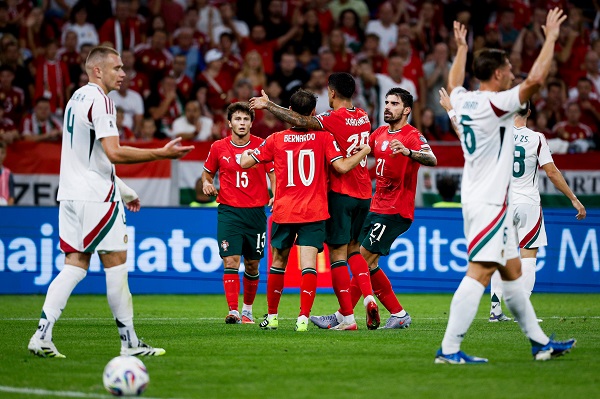
Portugal are still lifting trophies. The talent conveyor belt is still running. And the rest of Europe is still watching.
Why the World Is Watching Portugal
That reliability is also why so many people outside Portugal talk about Portuguese football the way they talk about smart risk. The league is competitive and tactically mature, but it still leaves just enough room for a moment of brilliance to completely change a match. You see it in the Taça, you see it in European nights, and you see it in the way fans constantly look for an edge before everyone else notices it.
The same mindset explains the popularity of comparison platforms in other industries. Australian players researching casino promotions often use resources like CasinosAnalyzer to compare bonus terms, eligibility requirements, and licensing details before making a decision. One example is the golden crown casino no deposit bonus, which is frequently discussed by players looking to understand exactly what an offer includes before claiming it. The appeal isn't just the headline promotion itself—it's having enough information to judge whether the opportunity is actually worth pursuing.
The point isn't glamour. The point is that Portugal feels like a market where risk can be intelligent. Success usually comes from understanding the details better than everyone else, whether that's spotting a tactical weakness before kickoff or recognizing value where others only see uncertainty.
Cristiano Ronaldo: Burden, Blessing, or Something Else?
The Outside View
From the outside, the Ronaldo conversation is predictable.
One camp: “It’s time to move on.”
The other: “You don’t bench a legend.”
Both are easy takes. Neither is totally true.
The Internal Reality
Under Roberto Martínez, Ronaldo is not just a striker. He’s gravity.
He remains a source of goals — that part hasn’t actually stopped. But more than that, he’s a stabilizer in big moments and a reference point in the dressing room and anything like karmic signs meaning for everyday activities . He’s not being used as nostalgia. He’s being used as structure.
There’s a difference between playing a veteran for sentiment and playing a veteran as a bridge. Martínez is clearly doing the second thing.
The Team Around Him Hasn’t Frozen
Here’s the important part: Ronaldo’s presence hasn’t stalled Portugal’s evolution. In a strange way, it’s accelerated it.
Instead of keeping the system built around one man, Martínez has leaned into depth. He’s rotated profiles. He’s built a squad that can switch from patient, controlled possession to direct, vertical punches in one match without losing its identity. The team looks less like “Ronaldo plus supporting cast” and more like “Portugal, with Ronaldo still in it.”
That’s a big shift.
The New Core: Portugal’s Next Spine
João Neves: Urgency in Midfield
João Neves is not “one more promising midfielder.”
He’s 21, constantly switched on, fearless in tight pockets, and already behaves like a senior player in high-stakes matches.
He represents a new archetype in Portuguese football: position-flexible, intense, tactical, emotionally cold in pressure moments. For Portugal he’s even been trusted out of position when needed — not because that’s ideal, but because he reads danger fast and doesn’t rattle.
That’s not hype. That’s culture. You can feel Benfica’s academy in him. You can feel the expectation that you’re not “in development,” you’re “needed now.”
Gonçalo Inácio: The Modern Defender
Gonçalo Inácio, at Sporting CP, is another example of how Portugal is shaping the modern player.
Left-footed centre-back. Calm. Progressive. He doesn’t just defend and clear; he steps into midfield, starts play, dictates tempo from the back. He’s not treated as a defender who happens to pass — he’s treated as the first playmaker in possession.
That’s where European football is going, and Portugal is producing that profile on repeat.
Depth and Balance: Portugal’s Real Upgrade
There were years when Portugal felt lopsided: brilliant up front, fragile at the back. Or organized defensively, but totally reliant on one creator to make anything happen.
That version is gone.
Now Portugal can rotate centre-backs, full-backs, midfielders, wide forwards, and still look like Portugal. The level doesn’t fall off a cliff when a starter sits. You don’t watch them and think, “If this one player goes down, it’s over.”
The squad, right now, looks layered. It has options. Plan A dies? There’s a Plan B that doesn’t feel desperate.
That’s what makes them dangerous in knockout football: they can suffer without breaking.
Life After Ronaldo: The Question Everyone Circles
We have to talk about it.
What happens when Cristiano Ronaldo finally isn’t there?
Here’s the quiet answer: you can already see it.
The most important change is emotional, not tactical. Portugal no longer relies on a single scorer for psychological stability. Other players are allowed to take decisive shots in decisive moments. Other players are allowed to decide games.
That matters more than people admit.
There was a time when taking a shot Portugal “owed” to Ronaldo felt like stepping out of line. Miss it and you hadn’t just missed; you had broken the narrative.
That’s different now. You can feel younger attackers and even full-backs playing with permission. Portugal don’t just have a Plan B on paper. They have a Plan B in personality.
That’s how eras survive endings.
The Portuguese System Behind All of This
The Pipeline Mindset
To really understand why this keeps working, you have to leave the national team and look at the clubs.
In Portugal, player development isn’t romantic. It’s industrial.
Benfica, Sporting, Porto, Braga — these are more than clubs. They’re finishing schools. By the time a Portuguese player is 19 or 20, they’ve usually had at least some exposure to real consequence: league matches that actually matter, European nights with real cameras, and cup games in hostile environments where one mistake becomes tomorrow’s headline.
That kind of early pressure creates players who aren’t afraid of the stage. They’re already used to it.
The Financial Reality
Part of that is necessity. Portuguese clubs rely on selling players. They can’t just hoard talent the way Premier League clubs can. So kids don’t sit. Kids play.
The result: Portugal keeps handing 20-year-olds responsibility that 24-year-olds in other leagues are still waiting for. The rest of Europe, understandably, is watching.
The Standard Now
So what is Portugal in 2025, really?
It’s not just:
- A national team carried by an ageing legend.
- A hype cycle about “the next João whoever.”
- A highlight reel of late goals and penalty shootouts.
It’s this:
- A national team that still wins things and doesn’t panic in big moments.
- A veteran who still matters, but no longer needs to carry the entire emotional weight of the shirt.
- A 21-year-old midfielder who already plays like it’s his team.
- A league that keeps behaving like a talent lab for the rest of Europe.
- A culture that treats pressure as normal, not exceptional.
That’s the responsibility of being good in Portugal now.
It’s not just to reach a level.
It’s to stay there.
