
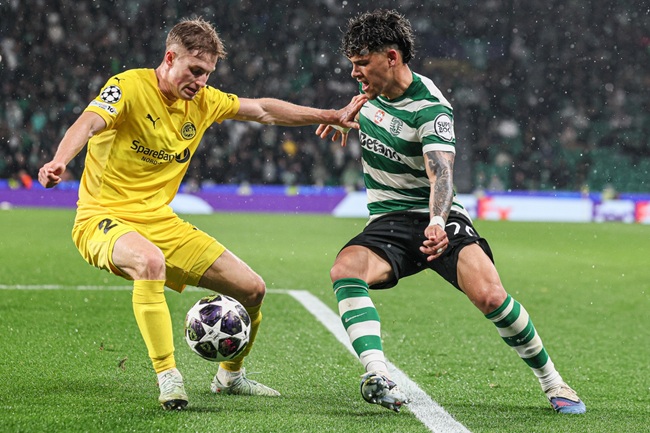
The full-back is no longer one fixed role
A full-back can provide width, move inside to support midfield or stay deeper to protect the team against counterattacks. These are different jobs, even though the starting position on a team sheet may look identical. Portuguese football offers an interesting setting for examining those choices because clubs face varied domestic opponents and, at times, different challenges in European competition. The most useful question is not whether a full-back attacks often, but what the player’s movement allows teammates to do. Position and timing can matter more than raw distance covered.
Wide overlaps and their purpose
When a winger moves toward the centre, a full-back can overlap on the outside and stretch the defensive line. This movement may create room for a cross, but it can also pull an opposing defender away from a midfielder. An overlap is valuable even if the ball never reaches the runner. Analysts should look for the reaction it provokes: does the opposition full-back follow, or does a midfielder shift across to help? The answer changes where space becomes available. A team that overlaps automatically, without reading the opponent, may lose its balance for little attacking benefit. Sporting’s Maxi Araújo has proved effective in this role, aided by the fact he began his career as a winger.
Inverted movements into midfield
Some full-backs move inward during possession to provide an additional passing option in central areas. This can help a side circulate the ball and protect against immediate counterattacks. The role demands awareness of pressure from several directions and an ability to receive with an open body shape. It also changes the winger’s responsibilities, since the touchline may need to be occupied by someone else. When comparing Portuguese teams, note whether the inward movement occurs consistently or only in certain phases, such as when the goalkeeper begins a controlled build-up. João Cancelo was often given this role of moving into a midfield position for Portugal under Roberto Martínez.
Defensive responsibility remains essential
Attacking contributions attract attention, but a full-back must still defend wide one-on-one situations, judge the flight of crosses and coordinate with the nearest centre-back. A player who advances at the wrong time may leave a channel for the opponent’s winger to attack. Recovery speed can help, yet it cannot replace positioning and communication. Watch how the defensive line responds when possession is lost. Does the full-back immediately press the ball, or recover toward the back line? The appropriate answer depends on the position of teammates and the threat posed by the opponent. Nuno Mendes is considered by many the best all-round full-back in the world, but it should not be overlooked just what an accomplished defender he is.
Why raw statistics can mislead
Assists and crosses are easy to count, but they do not provide a complete evaluation. A full-back may make few crosses because the team’s plan is to progress through the centre. Another may produce many deliveries from poor positions. Pass completion is also shaped by the difficulty of the instructions. A player asked to switch play under pressure will naturally attempt riskier passes than one recycling possession close to the centre-back. Video analysis and role-specific context are necessary before using numbers to compare players across different tactical systems.
Keep unrelated gaming terms out of tactical claims
Modern full-backs attract attention far beyond the stadium. Supporters study touch maps, debate tactical clips and follow matches through digital platforms where other leisure interests, including searches for online casino slots, compete for attention. Those habits explain the crowded online setting of football coverage, not a player’s role. To understand a Portuguese club’s full-back, watch when the player moves inside, who provides width and how the team protects the space left behind when an attack breaks down.
A practical comparison exercise
Select one match in which a team dominates possession and another in which it spends long periods defending. Track the full-back’s starting position in both. Count not just forward runs but the situations that prompt them. Observe the distance to the nearest midfielder, the winger’s movement and the cover available after a turnover. The same player may perform two very different jobs across those matches. Understanding that flexibility provides a better picture of modern Portuguese football than judging a defender solely by goals, assists or highlight clips.
There is also a developmental dimension. Young defenders should practise both wide defending and central receiving, even if their senior team eventually uses only one of those patterns. Learning multiple roles improves awareness of teammates’ movements and helps players understand the consequences of losing possession. Coaches can gradually introduce the additional responsibility instead of expecting a technically promising full-back to master every tactical demand immediately. Versatility grows through repeated decisions in realistic match situations, not merely through changing a position label on a formation diagram.
