
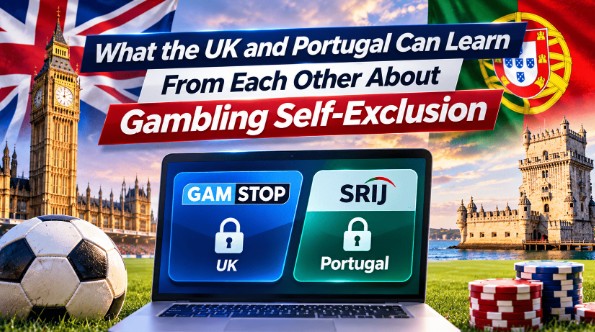
Gambling self-exclusion has become an important part of consumer protection across European betting markets. The UK and Portugal have developed centralised systems that allow individuals to restrict their access to licensed online gambling platforms. Both countries pursue similar objectives, but their approaches differ in registration procedures, exclusion periods and account reactivation rules. For football supporters accustomed to seeing gambling advertisements during domestic and international matches, these differences raise important questions about the effectiveness of existing protections.
How the UK’s GAMSTOP system works
GAMSTOP provides a free self-exclusion service for people living in the UK. A single registration covers online casinos and bookmakers licensed in Great Britain. Users do not need to contact each gambling operator individually.
Under the current GAMSTOP terms, participants can select six months, one year or five years of self-exclusion. A five-year option with automatic renewal is available too. Users cannot cancel their exclusion during the selected minimum period.
This centralised approach reduces administrative barriers and provides consistent protection across the regulated online gambling market.
How Portugal’s self-exclusion system works
Portugal manages online gambling self-exclusion through the Gambling Regulation and Inspection Service, known as SRIJ. Individuals can submit requests directly through the regulator or through individual licensed gambling websites.
Submitting a request through the official SRIJ self-exclusion service extends the restriction across every licensed Portuguese online gambling operator. Applications submitted directly to individual operators cover only their respective websites.
Portugal offers fixed exclusion periods starting at three months and exclusions without a predetermined end date. People without existing gambling accounts can register preventively, restricting their ability to open accounts in the future.
Comparing exclusion periods
Portugal offers greater flexibility regarding the initial duration of self-exclusion. Its three-month minimum is half the shortest period available through GAMSTOP. Portuguese participants can select a particular end date rather than choosing from predefined intervals.
The British approach provides longer minimum commitments. These periods may benefit individuals seeking sustained protection from gambling-related harm.
Portugal’s indefinite exclusion option offers another interesting feature. British users seeking long-term protection can select automatic renewal, but GAMSTOP does not currently offer permanent lifetime registration.
Both countries could examine how different exclusion periods affect participation rates and long-term recovery.
Returning to gambling after self-exclusion
The two systems differ significantly in their account reactivation procedures. In Portugal, fixed exclusions expire automatically on the selected date. Requests for early termination cannot bypass the three-month minimum and require a one-month waiting period.
GAMSTOP does not automatically remove restrictions when the initial exclusion period ends. Users must complete a removal process, followed by a cooling-off period of at least 24 hours. Without a removal request, restrictions can continue for another seven years.
Portugal could benefit from studying Britain’s approach to continued protection. British policymakers could examine Portugal’s longer waiting period before requested reactivation.
The challenge of unlicensed gambling websites
Neither system provides universal protection against every gambling website available online. Their effectiveness depends on operator participation and domestic licensing requirements.
Online discussions about why some customers prefer non GamStop casinos often highlight differences between domestic and overseas gambling regulations. Foreign licenses do not automatically provide authorization to serve British or Portuguese consumers.
Both countries face the challenge of protecting individuals from gambling services outside their regulated markets. Cooperation with payment providers, advertising networks and international regulators could strengthen existing protections without relying exclusively on self-exclusion databases.
What Britain could learn from Portugal
Portugal places its central self-exclusion platform directly under the national gambling regulator. This arrangement creates a direct connection between consumer protection services and regulatory supervision.
The country introduced an updated online self-exclusion form in April 2026. Its revised interface improves navigation and accessibility on smartphones and tablets.
British regulators could study how direct regulatory administration affects registration efficiency and complaint handling. Portugal’s flexible exclusion periods could provide useful evidence about participation among individuals seeking shorter commitments.
What Portugal could learn from Britain
GAMSTOP demonstrates the benefits of maintaining restrictions beyond the original exclusion period. Automatic expiration can leave individuals without protection during financially or emotionally difficult circumstances.
Portugal could consider introducing an optional automatic renewal feature for fixed-duration exclusions. Such an option would reduce the administrative effort required to maintain long-term restrictions.
Britain’s dedicated self-exclusion branding offers another useful example. A recognizable public identity can make protective services easier to identify across gambling websites, football sponsorship campaigns and responsible gambling advertisements.
The role of football in raising awareness
Football maintains close commercial relationships with gambling companies in both countries. Shirt sponsorships, stadium advertisements and digital campaigns expose supporters to gambling brands throughout the season.
Clubs and league organisers could use their existing advertising channels to promote national self-exclusion services. Visible information during televised matches could reach individuals unfamiliar with the available protections.
British and Portuguese football organisations could exchange experience in responsible gambling campaigns and measure their impact through independent research.
The two countries already share the benefits of centralised self-exclusion. Combining Portugal’s flexible registration options with Britain’s continued protection measures could improve how both markets address gambling-related harm.
