
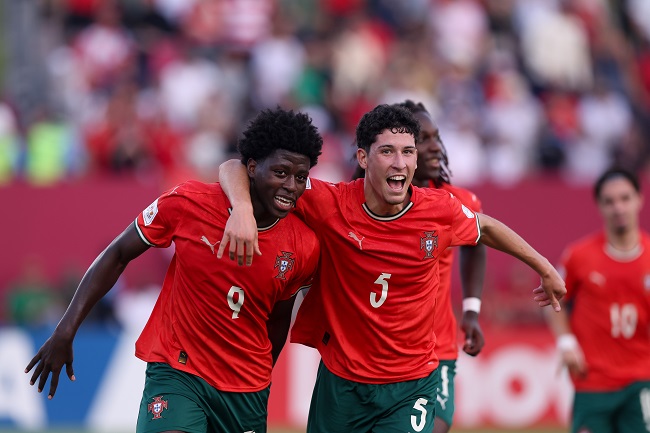
Portugal became the first country to win the UEFA Nations League twice when they beat Spain on penalties in the 2025 final. The achievement looked less surprising when the squad is examined player by player. Nuno Mendes, Rúben Dias, João Neves, Bruno Fernandes and other elite performers came through a development system that keeps replacing one generation with another. For a country of roughly ten million people, the supply is unusually deep. Portugal has turned player development into one of its most reliable sporting industries.
Football also exists inside a much wider entertainment routine. Supporters watch matches, follow transfers and use their phones for several unrelated activities before and after kick-off. Someone may finish a highlights video and later browse online casino games on the same device. Casino play involves direct financial risk, unlike simply watching football. A separate spending limit and a clear stopping point keep those forms of leisure from blending into one open-ended session.
Porto adds another route to the top
Portugal’s development strength does not depend on Lisbon alone. FC Porto has its own history of moving young talent toward high-level football. The club also operates in an environment where domestic success and European competition matter immediately. A prospect entering the senior squad cannot spend years learning without pressure.
That pressure can accelerate development when the player is ready. Young professionals face experienced opponents in the Primeira Liga and may soon encounter Champions League or Europa League football. The jump is difficult, but it gives scouts useful evidence. Performing against serious European opposition carries more weight than dominating only at youth level.
B-teams and U23 league solve an important development problem
The step up to adult football is a total shock for 18-to-21-year-olds. They easily dominate youth leagues but still aren’t ready for the senior squad. Portugal fixed this by throwing B-teams right into the professional divisions instead of useless reserve matches. Now, teenagers immediately clash with tough veterans in high-stakes games where every error costs points. Young defenders have to fight off clever, physical forwards who punish every tiny error. This survival test quickly teaches youngsters that professional grit matters just as much as technical skills.
The U-23 league, known as the Liga Revelação, mostly comprising of the smaller Portuguese teams, provides another route to regular, highly competitive football for young players making their first steps as professional footballers.
The transfer market rewards development
Portugal’s leading clubs cannot routinely compete with the wages available in England or at Europe’s richest teams. Instead of making that a permanent weakness, they have built a model around identifying, developing and selling talent. A young player who performs well can generate a major transfer fee. That money helps finance the next cycle.
The incentives therefore align unusually well:
- scouts need to find talent early;
- academies must improve it;
- coaches need pathways into senior football;
- clubs benefit financially when players succeed;
- foreign teams continue monitoring the system;
- younger prospects can see real examples of progression.
The model only works if graduates are genuinely good enough. A reputation can attract scouts once, but repeated successful transfers keep them returning. Portugal has maintained that attention for decades.
Football analysis has become part of modern fandom
Modern Portugal national football team players come from several academies and occupy major roles across Europe’s strongest competitions. TFans compare league form, European performances, injuries and transfers across several countries. Betting adds another layer for some adults because every match creates priced outcomes.
Someone using online betting before a Portugal or Primeira Liga fixture can examine team news, tactical matchups and recent performances before considering a market. The reputation of the Portuguese football team does not guarantee a result against another strong national side. Likewise, a club with several expensive prospects can still struggle against an organized opponent. A fixed stake decided beforehand is more useful than reacting financially to a goal or red card.
Global fans follow the players across several screens
Portuguese football has become international entertainment partly because its players scatter across major leagues. A supporter may follow one graduate in Manchester, another in Paris and a third in Spain. Match clips, transfer news and statistics make that easy. The relationship with Portuguese football can therefore continue even when the player leaves the Primeira Liga.
Long matchdays also contain pauses that fans fill with other digital activities. Some adults may open a live casino Philippines section after a game or while waiting for another broadcast. Live-dealer gaming operates in real time, but it remains gambling rather than sporting competition. A defined entertainment budget keeps its financial risk separate from the emotions created by a football result. Winning or losing a match should never determine the amount used elsewhere.
Coaches are part of the export story too
Portugal does not only export players. Its coaches have worked across many major European and international leagues. That matters because strong coaching knowledge feeds back into domestic development. Young footballers grow up in a culture where tactical discussion is taken seriously.
The effect can be seen at academy level. Players are expected to understand why a movement is required, not simply repeat instructions. When they later meet demanding senior managers, that learning style is already familiar. Portugal exports football intelligence as well as athletic talent.
