
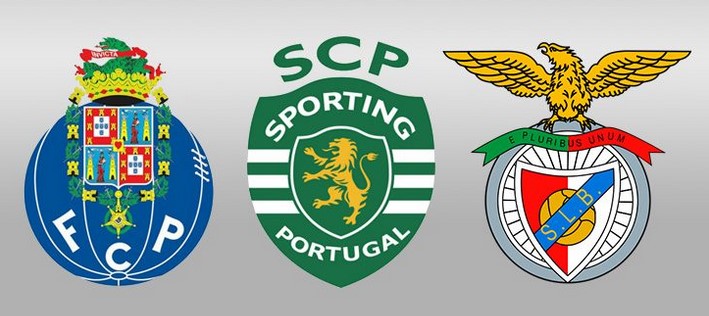
The Pillars of Domestic Dominance: Os Três Grandes
Portuguese football holds a distinct place in European competition. Even with a population of roughly ten million, Portugal's top flight, Liga Portugal, routinely competes with leagues built on vastly bigger populations and television deals. Three historic clubs sit behind that staying power: Sport Lisboa e Benfica, Futebol Clube do Porto, and Sporting Clube de Portugal, known collectively as Os Três Grandes.
These three institutions have won almost every league title since the national championship began in 1934. Only two other sides, C.F. Os Belenenses in 1946 and Boavista F.C. in 2001, have broken their hold on the trophy. Concentrating resources and fan loyalty in three teams fuels intense rivalries, led by O Clássico between Benfica and Porto, and the Lisbon derby between Benfica and Sporting CP.
They set the standard abroad too. Porto is the only Portuguese club with two Champions League titles, won in 1987 and 2004, while Benfica took back-to-back European Cups in the 1960s. Constant runs into continental knockout rounds keep Liga Portugal visible worldwide and give young players a stage before bigger leagues buy them.
Academy Systems and the Methodical Development of Global Talent
Portuguese clubs survive economically through a simple sequence: spot technical talent early, train players thoroughly in house, give them top-flight minutes, and sell them abroad at a profit. Squad turnover isn't treated as a problem here. Academies run as production lines designed to replace outgoing stars before the ink dries on their transfer contracts.
Three facilities generate most of this talent:
- Benfica Campus (Seixal). Focuses on technical skill, tight-space decision making, and sharp first-touch control.
- Academia Cristiano Ronaldo (Alcochete). Sporting CP's home base, known for developing 1v1 wingers and inventive playmakers.
- Olival Training Centre. Porto's headquarters, built around defensive organization, physical work rate, and high pressing.
A major competitive edge comes from placing reserve squads ("B teams") directly into Liga Portugal 2. Instead of playing age-group football, teenagers face grown men in second-division fixtures every weekend. Facing experienced professionals early speeds up their adaptation to senior football.
|
Player |
Formative Academy |
Primary Position |
Key Career Milestones |
|
Cristiano Ronaldo |
Sporting CP |
Forward |
5x Ballon d'Or Winner, UEFA Euro 2016 Champion |
|
Bernardo Silva |
Benfica |
Attacking Midfielder |
UEFA Champions League Winner, Multi-time English Champion |
|
Rúben Dias |
Benfica |
Centre-Back |
Premier League Player of the Season, UEFA Champions League Winner |
|
Vitinha |
Porto |
Central Midfielder |
Ligue 1 Champion, National Team Regular |
|
Luís Figo |
Sporting CP |
Winger |
Ballon d'Or Winner, 127 Senior Caps |
Tactical Periodization and the Primacy of Game Intelligence
Portuguese players and managers built their reputation on tactical detail. Local coaching culture treats fitness, tactical structure, and mental preparation as one connected unit rather than separate training drills. This approach relies on Tactical Periodization, a training framework created by Professor Vítor Frade at the University of Porto.
Under Tactical Periodization, every practice session mirrors specific match situations: attacking organization, defensive shape, and transitions. Players learn to think quickly and maintain discipline under pressure. The philosophy values intelligence over size, prioritizing specific attributes:
- Positional Movement. Rotation across roles to disrupt structured defenses.
- Decision-Making Speed. Quick one-touch passing when pressed hard.
- Field Awareness. Spotting overloads and pockets of space between opposition lines.
- Game Control. Dictating tempo with patient, deliberate possession.
This academic grounding explains why Portuguese managers work across top European leagues. Managers like José Mourinho, Jorge Jesus, Rúben Amorim, and Leonardo Jardim all came through formal university sports science programs. Their focus on detailed match preparation and structured organization helps them adapt quickly to different leagues.
The South American Scouting Corridor
Liga Portugal acts as the primary European doorway for South American talent, especially from Brazil and Argentina. Shared language with Brazil, similar cultural links, and straightforward work-permit rules make Portuguese clubs the logical first step for players crossing the Atlantic.
Local scouting networks track South American leagues daily, buying prospects before richer teams in England or Spain take notice. Portugal gives these players a comfortable stepping stone. They adapt to European tactics and lifestyle without facing immediate language or culture shocks.
Once proven in Portugal and European competition, players move to bigger leagues for profits that fund the next recruitment cycle:
- Radamel Falcao. Porto bought him from River Plate, won European trophies, then sold him to Atlético Madrid.
- Ángel Di María. Benfica signed him from Rosario Central before his high-profile move to Real Madrid.
- Éder Militão. Porto picked him up from São Paulo and transferred him to Real Madrid after one season.
- Enzo Fernández. Benfica acquired him from River Plate, played him in the Champions League, and sold him six months later for a British-record fee.
Digital Platforms, Fan Engagement, and Identity Security
With Liga Portugal drawing more international fans, clubs rely heavily on digital channels to reach supporters. Official apps, streaming portals, and digital membership systems let fans abroad buy tickets, track team news, and access subscriber media.
Handling thousands of global user accounts means security is a constant priority. Fan portals store personal details and payment data, so keeping those accounts safe takes real technical groundwork.
Sports media and online platforms handle this by using single sign-on (SSO) tools to protect user logins. You see the same setup across other online sectors. For instance, people checking an inclave casino list run into unified credential systems that eliminate repetitive sign-ins while encrypting user data behind one secure login. Football clubs use similar verification steps so fan accounts and ticketing transactions stay safe from breaches.
Structural Realities and Future Competitiveness
Despite its European success, Portuguese domestic football deals with sharp financial divides. Broadcasting revenue in Liga Portugal lags far behind the English Premier League or German Bundesliga. Benfica, Porto, and Sporting draw big commercial deals and Champions League prize money, but smaller regional clubs survive on tight budgets.
To narrow that gap, league executives are moving toward centralized TV rights. Helping mid-tier sides like S.C. Braga, Vitória de Guimarães, and F.C. Famalicão keeps matches competitive and protects Portugal's UEFA coefficient, which dictates how many teams qualify for European tournaments.
Sustaining top-tier academies and coaching courses allows Portuguese teams to stay competitive against far richer European rivals.
