
At first glance, what does economics even have to do with it? Sure, they built a stadium. Sure, the fans showed up. Then a year later, everything went quiet. That’s often how it goes when projects are handled half-heartedly. Still, there are cases where major sporting events genuinely pulled entire regions out of financial holes. And it’s not only about the money fans spend on non-alcoholic beer and tickets. Though that matters too. Sport simply has this strange ability to make people leave their homes, build roads, open cafés, and launch businesses. Even those of us who are used to following matches remotely.
That’s where the famous multiplier effect economists love talking about kicks in. The paradox is that while downloading betting app (Persian: تحميل تطبيق melbet) to test his intuition, a person also sets off an entire chain of transactions, taxes, and jobs. Sounds unbelievable, but it’s true. Let’s look at how the industry works in practice.
The infrastructure multiplier and life after the final
When a city lays the foundation for a new arena, the regional economy receives a massive injection of capital that spreads far beyond the concrete perimeter itself. Take Qatar as an example. There, sport became a central pillar of the country’s income diversification strategy. New stadiums are not architectural monuments — they are hubs that attract operational businesses, including:
- retail;
- hotels;
- logistics.
Local businesses come alive almost instantly. Small coffee shops, transport services, and cleaning companies receive contracts that support them for years. Essentially, every dollar invested in construction returns to the budget through indirect taxes and increased consumer activity from people deciding to spend their weekends in the stands. This isn't just theory. The numbers below illustrate exactly how sports infrastructure fuels economic fire across the Gulf.
|
Economic Indicator |
Location / Event |
Real Figures & Facts |
|
💰 Multiplier Effect |
🇶🇦 Qatar (pre-2022) |
Fiscal multipliers exceeded 1 in years before the World Cup—government spending didn't just boost growth; it amplified it. |
|
📈 GDP Growth |
🇶🇦 Qatar (2012–2014) |
Economy surged at an average 5% annually after winning the 2010 bid. |
|
🏗️ Non‑Oil Growth |
🇶🇦 Qatar (past decade) |
Infrastructure investments contributed 5–6 percentage points annually to non‑hydrocarbon real GDP. |
|
🌍 Visitor Impact |
🇶🇦 Qatar (2023) |
Arrivals nearly doubled pre‑pandemic levels directly after the tournament. |
|
🛍️ Local Sales Boost |
🇸🇦 Saudi Arabia (King Abdullah Sports City) |
Nearby restaurants and shops saw a 25% increase in sales during major events. |
|
🪑 Direct Employment |
🇸🇦 Saudi Arabia (construction phase) |
Approximately 3,000 workers directly employed during stadium construction. |
|
🇸🇦 Event‑Driven Job Creation |
🇸🇦 Saudi Arabia (2034 World Cup forecast) |
A projected 1.5 million new jobs across hospitality, logistics, and security sectors. |
|
🏨 Tourism GDP |
🇶🇦 Qatar (2024) |
Travel and tourism sector contributed a record QAR 90.8 billion (~$25 billion), or 11.3% of total GDP. |
|
🏢 Tourism Employment |
🇶🇦 Qatar (2024) |
The sector supported over 334,500 jobs—fully 15.8% of the nation's total workforce. |
|
🏟️ Infrastructure Investment |
🇶🇦 Qatar (2011–2022) |
Stadium construction accounted for barely 5% of total spending; the rest went into ports, roads, metro systems, and airports. |
Look closely at the numbers and a pattern starts revealing itself. Money poured into a stadium rarely stays trapped inside the walls of the arena. It spills into construction crews, hotels, airport traffic, restaurants, ride-hailing apps, street retail — basically every layer of the surrounding economy. One football project suddenly feeds dozens of other industries at the same time. That’s the real game Gulf countries learned to play years ago. The stadium itself is only the visible part. The actual objective is everything growing around it afterward.
Sport forces governments to build what they delayed for years
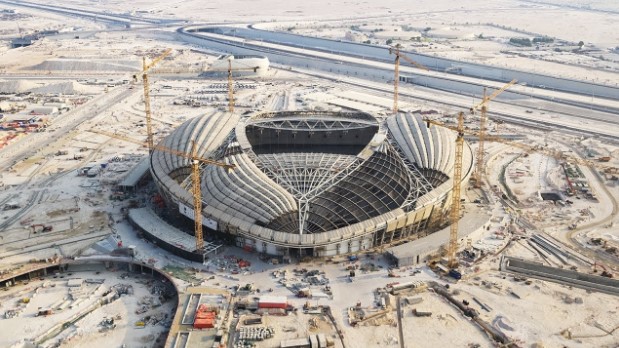
The story of the 2022 FIFA World Cup is a textbook example — albeit an expensive one. As (Arabic: لعبة MelBet تنزيل) wrote, the country built a metro system, new airports, highways, and seven stadiums from scratch. Yes, more than $200 billion was spent, triggering massive criticism. But one year after the tournament, tourist traffic increased by 40%. Hotels that stood half-empty before the World Cup are now packed year-round. The roads and transport infrastructure remained. People who arrived for football return later for beaches and shopping. Qatar bet on the long-term effect, and so far, the decision appears to be paying off.
A more modest yet equally revealing example is Lille. Before the construction of Stade Pierre-Mauroy, the surrounding district was considered economically depressed. Today, it’s a business hub filled with offices, hotels, and dozens of restaurants. Matches of LOSC Lille regularly sell out, while on non-matchdays the arena hosts concerts, conferences, and festivals. The city ended up with a functioning asset that generates revenue 365 days a year.
The digital frontier
Modern sport is impossible to imagine without the technological ecosystem inevitably growing around it. Fintech and the IT sector see sports projects as the perfect testing ground. Developing high-load systems capable of surviving transaction and traffic spikes during a UEFA Champions League Final stimulates the growth of an entire class of programmers and analysts.
Besides, people no longer just watch matches. They discuss them on social media, buy fan merchandise with home delivery, and make predictions. Every one of those actions is taxed. Platforms like YouTube and paid television networks pay enormous sums for broadcasting rights. Sports organizations receive revenue from sponsors and advertising deals. Part of that money flows back into public budgets through corporate taxes — meaning everyone, in one way or another, ends up benefiting.
Why cities fight so hard for major tournaments
There’s another reason governments aggressively chase sporting events even when the upfront costs look terrifying on paper: global visibility became a currency of its own. One successful tournament can reshape the international image of an entire country faster than years of traditional advertising campaigns. Qatar understood that perfectly. Saudi Arabia understands it too. The same logic explains why cities continue competing for Olympic Games, Formula One races, and continental championships despite endless criticism about budgets.
The effect stretches far beyond the match itself. While people watch a final or a title fight, they also absorb the city in the background — the skyline, the beaches, the packed cafés, the modern transport. And unlike regular advertising, sport leaves an emotional imprint. Fans remember where their team won a trophy or where a legendary knockout happened. Later, that memory quietly turns into tourist trips, business interest, and sometimes even relocation plans.
Several sectors usually explode after successful tournaments:
- aviation and hospitality, driven by rising international traffic;
- food and retail businesses, benefiting from concentrated crowds around venues;
- real-estate markets, especially near redeveloped sports districts;
- technology companies, handling streaming, ticketing, and data infrastructure;
- media production industries, supplying broadcasts, graphics, and digital content.
And the interesting part is that many of those gains continue long after the medals are handed out. Stadiums may dominate headlines during the event itself, but the deeper economic effect usually hides in everything orbiting around them afterward.
From concrete arenas to permanent business ecosystems
The smartest countries no longer view sports infrastructure as isolated construction projects. They treat entire districts surrounding stadiums as long-term commercial ecosystems. That difference matters enormously. A single arena used fifteen times per year can quickly become a financial burden. A mixed-use district filled with restaurants, offices, hotels, apartments, and entertainment venues operates very differently.
That’s exactly why modern stadium projects increasingly resemble miniature cities. Developers now design pedestrian zones, shopping areas, public transport links, parks, and business spaces together rather than separately. In many Gulf countries, sport essentially became the trigger accelerating urban development that governments had postponed for decades.
