

Watch a Portuguese footballer receive the ball under pressure in the Premier League, and you might notice something interesting. The first touch is rarely the whole story. What matters is what happens next: a quick pass into space, a change of position, or a decision that gives a teammate an extra second to move.
Portuguese players have become familiar faces in English football. From Bruno Fernandes and Rúben Dias to Diogo Dalot and Pedro Neto, they have brought different qualities to some of the league's most demanding environments.
But what makes their journeys particularly interesting is the connection to Portuguese football itself. Clubs such as Benfica, Porto, Sporting CP and Braga have helped develop players capable of adapting to different leagues, managers and tactical systems.
Understanding that background offers another way to enjoy Premier League matches. Rather than judging a player solely by goals, assists or highlights, supporters can look at how their positioning and decisions influence the entire team.
Why Portuguese football produces players who adapt abroad
Portugal's football development system has earned an international reputation for combining technical education with tactical awareness.
At leading Portuguese clubs, young players are encouraged to understand more than their individual positions. The ability to recognise passing lanes, respond to pressure and adjust to an opponent's movements becomes increasingly important as they progress towards senior football.
However, there is no single Portuguese development model.
Benfica's academy has produced defenders and midfielders capable of operating in possession-oriented systems. Porto has developed players known for their competitive intensity and versatility. Sporting CP has a strong tradition of developing technically skilled footballers, while Braga has also provided opportunities for promising young talent.
These pathways are not identical, and neither are the players who emerge from them.
Rúben Dias developed through Benfica's academy before moving to Manchester City. Diogo Dalot came through Porto's youth system before joining Manchester United. Pedro Neto began his career at Braga and later continued his development abroad.
Bruno Fernandes followed a different route, gaining professional experience in Italy before returning to Portugal and becoming a key figure at Sporting CP.
Their careers demonstrate an important point: Portuguese football's influence extends beyond academy training. Senior experience in the Primeira Liga can also prepare players for the tactical demands of English football.
Portuguese players in the Premier League: five examples worth studying
When watching Portuguese players in the Premier League, the most useful approach is to focus on their responsibilities rather than simply their reputation.
The following examples illustrate different footballing pathways and tactical qualities.
|
Player |
Premier League club |
Portuguese football connection |
What to watch |
|---|---|---|---|
|
Bruno Fernandes |
Manchester United |
Sporting CP |
Creative passing, movement between the lines and attacking decisions |
|
Rúben Dias |
Manchester City |
Benfica academy |
Defensive organisation, positioning and passing from the back |
|
Diogo Dalot |
Manchester United |
Porto academy |
Full-back positioning, overlapping runs and defensive transitions |
|
Matheus Nunes |
Manchester City |
Sporting CP |
Versatility, ball progression and movement between midfield and wide areas |
|
Pedro Neto |
Chelsea |
Braga youth system |
Dribbling, acceleration and creating space on the wings |
These are selected examples from the 2026/27 Premier League season, not an exhaustive list of Portuguese players in England.
The variety is striking. A central defender, a creative midfielder and an explosive winger may share the same nationality, but their contributions to a match can look completely different.
That is precisely why tactical observation is more revealing than simply comparing individual statistics.
How Portuguese players influence different phases of a match
Building attacks from the back
Modern defenders are expected to contribute to possession, not merely prevent goals.
Rúben Dias provides an interesting example. His role involves recognising when to advance, when to circulate possession and when to maintain a secure defensive position.
A centre-back's influence can be easy to overlook because successful decisions often appear routine.
Imagine a defender receiving the ball while an opponent presses aggressively. Rather than playing a risky forward pass, he moves the ball towards a teammate with a better passing angle. The opposition's pressing structure shifts, and a new passing lane opens.
The defender may receive no statistical credit for the eventual attacking opportunity, yet his decision helped create it.
This is one of the reasons Portuguese defenders who are comfortable in possession can be valuable in technically demanding systems.
Creating chances between the lines
Bruno Fernandes represents another side of the tactical picture.
An attacking midfielder must constantly decide whether to support possession, look for a forward pass or move into space near the penalty area.
The challenge is balancing ambition with control.
An aggressive pass can break through an organised defence, but the same decision can expose teammates to a counterattack if possession is lost.
When watching Fernandes, pay attention to where he receives the ball and how many opponents are positioned between him and the goal.
His most important contribution may not always be the final pass. Sometimes it is the movement that draws a defender away and allows another attacker to receive possession.
The changing role of the full-back
Traditional full-backs were largely judged on their ability to defend wide areas and deliver crosses.
Modern tactical systems demand much more.
Diogo Dalot is a useful player to observe because his positioning can change depending on the team's formation, opponents and instructions.
In one attacking phase, a full-back might stay close to the touchline to provide width. In another, he may move inside to offer an additional passing option in midfield.
These movements affect the entire team's structure.
When the full-back moves forward, another player may need to cover the space behind him. When he moves inside, the winger may be responsible for stretching the opposition's defensive line.
Understanding these relationships makes seemingly ordinary movements much more interesting.
Using pace and movement to stretch defences
Pedro Neto offers a contrasting example.
Wingers are often associated with spectacular dribbles, but their tactical value goes beyond beating an opponent.
A winger who threatens to accelerate behind the defence can force a full-back to retreat, creating additional room for teammates in central positions.
Even when he does not receive the ball, that threat can change the defensive shape.
Neto's ability to operate on either flank creates further possibilities. Moving onto his stronger foot may open a shooting angle, while attacking the outside can create crossing opportunities.
The most revealing question is not simply whether a winger completes a dribble. It is whether his positioning makes the opposition uncomfortable.
How to follow Portuguese players more closely on matchday
Watching an entire match with a particular player in mind can reveal patterns that are almost invisible in a highlights package.
A useful starting point is the team sheet.
Knowing whether a Portuguese player has been selected, which teammates are positioned nearby and how the manager has arranged the starting formation provides valuable context before kick-off.
For supporters following Portuguese players in England, Match XI offers a convenient way to check Premier League fixtures, team lineups and match information.
Once the game begins, the next step is comparing the nominal formation with what actually happens on the pitch.
A player listed as a central midfielder may regularly drift towards the right wing. A full-back may move into central areas during possession. An attacker may drop deep to help the team progress the ball.
These movements are not necessarily signs that the formation is wrong. They may be deliberate tactical instructions.
A five-point matchday checklist
Try focusing on the following details when watching a Portuguese player:
- Starting position: Where is the player positioned in the announced formation?
- Movement in possession: Does he remain in that position or move into different areas?
- Defensive responsibilities: Who does he press, mark or cover when his team loses the ball?
- Connection with teammates: Which players does he combine with most frequently?
- Adjustments during the match: Does his role change after substitutions or a tactical reshuffle?
This approach works particularly well when comparing two matches against opponents with different playing styles.
A player facing a high defensive line may have more opportunities to attack space. Against a deep defensive block, the same player may need to rely on close control, patience and combination play.
The most revealing moment is not always a goal or a spectacular pass. Sometimes it is a small positional adjustment that makes the next attack possible.
What Portuguese clubs teach us about tactical development
Portugal's domestic game provides useful context for understanding why many of its players are comfortable with tactical responsibilities.
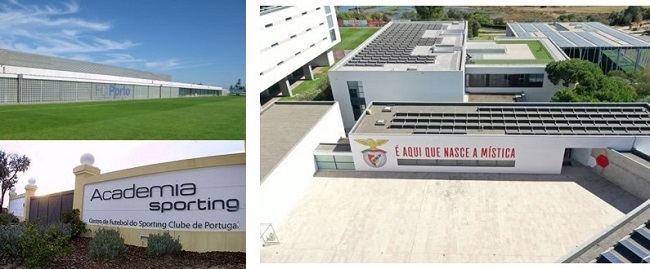
At Benfica, Porto, Sporting CP and Braga, footballers encounter different systems, competitive expectations and approaches to player development.
At the senior level, they must also adjust to the specific demands of their managers.
Some teams prioritise aggressive pressing and rapid transitions. Others place greater emphasis on controlled possession or defensive compactness.
Consequently, it would be misleading to describe every Portuguese player as having the same style.
What connects many successful exports is their capacity to learn and perform different tactical roles.
Matheus Nunes offers an interesting case study. His development at Sporting CP was followed by a move to Wolverhampton Wanderers and then Manchester City.
Those environments have required different qualities, from carrying possession through midfield to adapting to more specialised positional responsibilities.
It illustrates how success abroad depends not only on what a player learned in Portugal but also on how effectively he continues to develop.
Why the Premier League is an important test
English football presents a distinctive combination of physical intensity, tactical variation and pressure.
Teams can encounter very different opponents within a short period.
One match might involve defending against direct attacks and aerial deliveries. The next could require prolonged spells without possession against an opponent that dominates the ball.
Portuguese players must therefore adapt to changing game situations while maintaining their individual responsibilities.
For a midfielder, this may mean finding space against an aggressive press. For a defender, it could involve choosing the right moment to step forward. For a winger, it may require recognising when to stay wide and when to move closer to the striker.
The Premier League also exposes players to close public scrutiny, making consistency particularly important.
A spectacular performance can attract attention, but delivering the correct tactical decisions week after week is what often earns lasting trust.
What Portuguese fans can learn by comparing different players
One of the most enjoyable ways to follow Portuguese football abroad is to compare players who occupy similar areas of the pitch but perform different functions.
Consider two midfielders. One may focus on retaining possession and controlling the rhythm of the game. The other may play more aggressively, searching for opportunities to move the ball forward.
Neither approach is automatically better.
Their effectiveness depends on the team's overall structure, the opposition and the manager's instructions.
The same applies to defenders and wingers.
A full-back who rarely advances may be following a deliberate defensive plan rather than showing a lack of attacking ambition. A winger who receives fewer passes might still create valuable space through off-the-ball runs.
These distinctions help supporters develop a more complete understanding of individual performances.
They also provide useful context when Portuguese players return to international duty, where they may be asked to fulfil different responsibilities from those at club level.
Final thoughts: look beyond the highlights
Portuguese players in the Premier League offer an excellent opportunity to appreciate the technical and tactical qualities associated with football development in Portugal.
Their journeys connect the Primeira Liga, Portuguese academies and senior teams with one of the world's most closely followed football competitions.
Yet their individual experiences are far from identical.
Bruno Fernandes shows how creative decision-making can influence attacking play. Rúben Dias demonstrates the importance of positioning and defensive organisation. Diogo Dalot highlights the changing responsibilities of modern full-backs, while Pedro Neto illustrates how pace and movement can reshape an opposition defence.
The next time a Portuguese player appears in a Premier League match, try watching his positioning for a few minutes instead of following only the ball.
You may discover that some of the most important contributions happen long before the decisive pass, tackle or shot.
