The season started shakily for Lisbon giants Benfica. Bruno Lage asked the board for players in the close season and got what he wanted. “This has been the best transfer window in terms of the coach and board working on the same ideas,” he said. He even won the Super Cup against the reigning champions Sporting.
In the Primeira Liga, he also won the first three games. However, the fans were not happy. Benfica played poorly, with low pace and almost no soul, even though the only “bad result” was a draw in Turkey against Fenerbaçhe.
However, after a poor performance against Alverca (an unconvincing 2-1 win away), the ghosts of Christmas past started coming to life for Bruno Lage. First, a humiliating draw at the Estádio da Luz against Santa Clara. Benfica played more an hour against 10 men and suffered the equaliser in stoppage time after an excruciating mistake by Otamendi.
Then, all chaos broke loose after this week’s loss in the Champions League against Azeri side Qarabag. Benfica lost 3-2 at home after being two goals up early on. It was by far the most humiliating performance by a Portuguese club in Europe in a long, long time. It dictated the termination of Bruno Lage’s contract.
Desperate times, desperate measures
Beleaguered Benfica president Rui Costa, already under immense scrutiny after just one championship title in his four-year reign, found himself under a tonne of pressure. With the presidential elections just one month away, and without a manager, Rui Costa had to do something fast.
Bruno Lage’s “body” was still warm when José Mourinho’s name appeared on the screens. The perception of it was not the best by the Benfica fans. Even though Rui Costa guaranteed it was the best for the club, it was seen as a desperate move due to the recent polls that suggest the former Benfica idol would not be re-elected.
Back to the Future
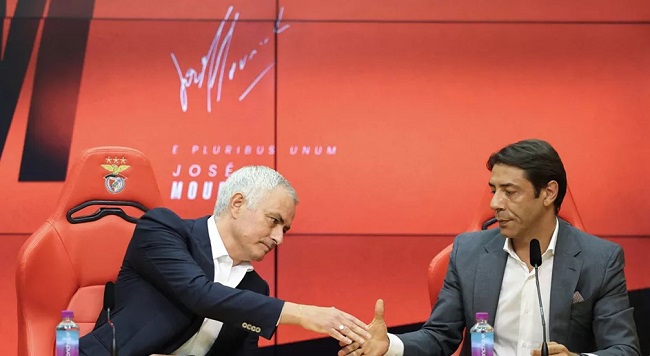
The Special One returns to his first home with Benfica in something resembling turmoil. 25 years later, José Mourinho is the new SL Benfica manager and will start right away, on Saturday against AFS, barely 48 hours after signing his latest contract.
Mourinho started his extraordinary career that cemented his place as one of the greatest ever football managers at Benfica. However, it was in Porto where he conquered the country and Europe for the first time. One week ago, he received a standing ovation at the Estádio do Dragão. Something tells me that on 5 October, he will not be welcomed in the same manner, as the coach of the Dragons’ biggest rival.
Reasons why it might work
The main goal of every presidential candidate of the Eagles is to bring back the glory days of a club, capable of being highly competitive amongst the best in Europe. If there is a manager who knows how to do that, it is the Special One. He is the only manager to win all three European club competitions, but more significantly he was the last one to win the Champions League from a league other than the “Big Five” of Spain, England, Germany, Italy and France, when he lifted the greatest prize in club football at Porto almost 21 years ago.
He also brings a certain level of aura, fear and respect in the light of the sheer weight of his incredible career. Benfica has clearly been the club with the most expensively assembled squad in Portugal in recent seasons, but it has been difficult to translate that into becoming the best team in the country. José Mourinho has the experience with high quality squads to make the Eagles not only a great squad, but a great team.
Reasons why it might not work
The pressure at the club is something I have never seen, even in the pressure-cooker environment of Benfica. According to some friends, it feels like the early days of a repeat of what they call “our Vietnam” a reference to a disastrous decade between 1994 and 2005 when Portugal’s biggest club failed to win a single league championship. The elections have put a lot of pressure on the president, and that transfers down to the manager and the team.
That is the whole reason why Mourinho arrived. Pressure to do something that would keep the fans excited at least until the elections. Rui Costa seems to be trying to hold on to his position at the club by any means.
It is important to state that the Special One is not so special anymore. The last title he won was the Conference League with Roma in 2022, four seasons ago. The failures and dismissals have been piling up: Tottenham, Roma, Fenerbahçe. Only one title across these three clubs where he was always dismissed due to poor results.
I don’t know if the Special One will be able to bring himself and Benfica back into the limelight. One thing is for sure: if it works, it might be the greatest gamble of the century; if it doesn’t, it is for sure the final nail in the coffin of Rui Costa.
SL Benfica will look to get their season back on track when they head north to face AVS in the Primera Liga on Saturday at the Estádio do CD das Aves. After a series of poor performances led to the sacking of Bruno Lage this week, the talk around the Estádio da Luz (and Portuguese football in general) over the last few days has focused on newly appointed manager José Mourinho’s comeback and whether the tactician can get this talented group of Benfica players to reach their potential.
On September 20, 2000, a then 37-year-old Mourinho was handed his first-ever managerial position at Benfica. Exactly 25 years later, “The Special One” returns to the place where it all began for what will likely be one of the toughest challenges of his career: awakening a sleeping giant.
Benfica have not won the league title since 2023, and Mourinho has been brought back to the Luz with the primary objective of bringing trophies back to the club. Known for his competitive nature, he is a master motivator and is capable of bringing out the best from his players. His style of play typically yields results, and Mourinho has a long list of titles to support his reputation. Saturday’s match should provide some insight into the two-time Champions League winner’s tactics, preferred lineup and his strategy for the upcoming season.
Mourinho’s first obstacle will be an away fixture against AVS, a team that finished 16th in the Primera Liga last season. Like Benfica, AVS are also experiencing a changing of the guard, with the club parting ways with their manager, José Mota, earlier this week following a dreadful start to the season. After securing just one point from their first five matches, it came as no surprise when the board decided to go in a different direction. According to reports, Fábio Espinho and Armando Roriz will be in charge of this AVS side, but the new coaches will have an uphill battle on their hands against one of Europe’s powerhouses.
Preview
After surviving a three-team relegation battle that went down to the last day of the season, AVS were able to pull through in a playoff to remain in the top division. The club brought in reinforcements over the summer and will aim to work their way up the table after a poor start. Experienced midfielders Rafael Barbosa and Ángel Algobia were signed to fortify the centre of the park. 32-year-old forward Tomané, who spent last season with SC Farense, will be expected to provide goals. Paulo Vitor, Sidi Bane, Óscar Perea, Bruno Lourenço, João Gonçalves and Jordi Escobar should also bring some much-needed depth to the squad. Diogo Spencer, who joined the side on loan from Benfica, has been one of the team’s standout players over their first five matches of the season.
It has been a shaky start to the season for the Vila das Aves-based club. Brazilian forward Nenê recorded their first goal of the campaign in their opening match against Arouca, but that simply glossed over a one-sided match where AVS found themselves trailing 3-0 within 62 minutes. An opening day away defeat was nothing to be too concerned about, but the following week, AVS were outplayed at home against Casa Pia, falling 2-0. Mota was able to earn the club their first points of the season with an impressive 2-2 draw at Braga, but consecutive defeats against FC Famalicão and Estoril Praia saw the manager relieved of his duties.
AVS currently sit 17th in the table, ahead of only CD Tondela on goal difference. The club have already conceded 11 goals over their first five league matches, including three against Estoril Praia last weekend.
One positive for AVS is that they have managed to put the ball in the net. So far, Rafael Barbosa, Diego Duarte, Spencer and Nenê have all got their names on the scoring charts.
The always charismatic José Mourinho seemed to say all the right things in his first press conference for the Eagles. “I’m going to immerse myself in this mission. I’m the coach of one of the biggest clubs in the world,” said Mourinho. “Coaching Benfica is returning to my level, given that my level is to coach the biggest clubs in the world,” added the Portuguese manager. However, words will not be enough, and Mourinho will need to win over the fans with results.
Mourinho may not have had the same success with Tottenham, Roma and Fenerbahçe as he had early in his career with FC Porto, Chelsea and Inter, but he remains one of the most respected managers in world football, and the spotlight will be on the 62-year-old as he looks to revive a Benfica team that remains the most decorated and successful in Portuguese football.
Mourinho inherits a strong squad, with the club spending over €100 million in the transfer market this summer to strengthen the lineup. The results, however, have not matched the ambitions and targets of the club.
Former manager Lage started the season well, winning the Super Cup against local rival Sporting, qualifying for the league phase of the Champions League, and beginning the Liga Portugal campaign with three straight wins. That, though, was when things started to go downhill.
After taking the lead against Santa Clara at the Estádio da Luz, the visitors battled back to secure a 1-1 draw. A devastating result for Lage and his players, considering the Azores club played 55 minutes with 10 men. Perhaps more demoralising was the shocking 3-2 home defeat to Qarabağ FK in the Champions League a few days later. Benfica squandered an early two-goal lead in a match they were expected to win comfortably. A series of poor displays left Rui Costa under pressure and the Benfica president moved swiftly to dismiss Lage and bring in Mourinho.
Benfica are currently sixth in the standings with 10 points from 4 games. They trail the league leaders Porto by five points, but do have a game in hand.
Overall, the Eagles have recorded seven goals in their first four league matches, an average of 1.75 goals per game. It is a significant drop off from the 2.47 goals per game they averaged last season. Vangelis Pavlidis leads the lineup with four goals in all competitions, followed by Andreas Schjelderup, Franjo Ivanovic and Fredrik Aursnes, who all have two.
Mourinho knows that anything less than three points in Saturday’s clash will be regarded as a massive failure. Following their visit to Vila das Aves, Benfica will take on Rio Ave and Gil Vicente before a gruelling fixture list that includes Chelsea, FC Porto and Newcastle United in the span of 21 days.
Odds
AVS 16.50 Benfica 1.16 Draw 6.80
Over 2.5 total goals: 1.50, Under 2.5 goals: 2.12
*All odds provided from Betano.pt. Odds are subject to change prior to kick off.
Form Guide (All Competitions)
AVS:
L
L
D
L
L
Benfica:
W
W
W
D
L
Head-to-head Record
The AVS Futebol SAD was only formed in 2023, making this one of the newer teams in the league. Therefore, Benfica and AVS have only met three times in their history, with Benfica winning twice and one draw between the two clubs.
These teams have met only twice in the Primeira Liga, both last season. During their encounter at the Estádio do CD das Aves, the home side were able to secure a late equaliser from Cristian Devenish to record a 1-1 result. Benfica responded when the clubs met at the Luz in April, winning 6-0, with six different scorers getting on the scoresheet.
The two clubs also competed in the Allianz Cup during the 2023/24 season. On that occasion, Benfica won that game with a comfortable 4-1 victory.
Players to Watch
AVS keeper Simão will have his hands full when Benfica come to town this weekend. Benfica have already scored 15 goals in all competitions. Nine different players have recorded goals this season, and the Eagles are capable of scoring in a variety of different ways. Simão has been the preferred option this season ahead of former Boavista keeper João Gonçalves, starting all five matches for AVS this season. Saturday, however, will be the Brazilian keepers biggest test of the season so far.
Keep a close eye on Pavlidis, who continues to score goals at a staggering rate. The Greek striker finished the 2024-25 campaign as the team’s top scorer with an incredible 30 goals in 57 matches, of which 19 came in the league. He also contributed 13 assists over the season. This season, he leads the team with four goals over 10 matches.
Pavlidis has a knack for coming up with big goals at big moments (he scored a hat-trick in the CL against Barcelona last season). The 26-year-old has firmly established himself as the primary option up top over the last 12 months, and will want to get off to a strong start in order to solidify his place as the No. 9 in Mourinho’s new-look formation.
It looked a mismatch on paper and so it proved. Sporting scored four goals, hit the woodwork twice and missed a penalty as they brushed aside Champions League debutants Kairat Almaty 4-1 in Lisbon this evening. Tom Kundert reports from the José Alvalade stadium.
Rui Borges rings the changes
Sporting made three changes to the starting XI in relation to the weekend victory at Famalicão, with full-backs Fresneda and Maxi Araúja returning to the lineup and Eduardo Quaresma given his first start of the season.
The hosts had a golden chance to take an early lead as Luis Suárez slipped in Pedro Gonçalves, the forward beating his marker but thwarted by 18-year-old goalkeeper Sherkhan Kalmurza.
Teenage goalkeeper shines
The Portuguese champions continued to boss the game, Inácio heading over, and midway through the first half Suárez won a penalty.
Teenager Kalmurza – playing only his second game for the Kazaks – was having a night to remember though, and saved Morten Hjulmand’s spot kick with his outstretched leg.
Quenda was next to be denied by the goalkeeper, who dived to his right to make a flying save. The team from Kazakhstan had been inoffensive until that point but on a rare breakaway a rocket of a shot by Dastan Satpaev forced a sharp save out of João Virgínia.
Sporting were soon back on the attack, Suárez rifling an effort towards goal from outside the box and unlucky to see the ball bounce off the post.
Trincão makes the breakthrough
Just when it seemed the visitors would survive until the break, a fizzing 25-yard shot by Francisco Trincão nestled into the corner of the net. Half-time and Sporting 1-0 to the good.
Suárez was left ruing his luck at the start of the second half as he hit the woodwork again, his header crashing back into play off the crossbar.
Kairat were beginning to feel they might yet take something from their long-distance trip as the home supporters began to voice their frustration. A bad mistake by the out-of-sorts Kochorashvili enabled Jorginho to burst clean through on goal, but Virginia saved his teammate’s blushes with an excellent stop.
Three-goal burst
What had been a largely frustrating night up until then for the Green & Whites completely changed complexion in a devastating spell of three goals in three minutes.
Trincão guided a finish into the top corner after being well set up by Iván Fresneda, and substitute Alisson then found the net with a firm short from the the top of the box after receiving a pass from Quenda.
Quenda himself then helped himself to a piece of the action, the young winger dancing his way through the Kazak defence and finishing with aplomb to make it 4-0 with over 20 minutes yet to play. Suprisingly it was Quenda’s first goal at Alvalade and the 18-year-old star celebrated wildly, taking off his shirt and receiving a yellow card for his troubles.
Sporting slowed down however, with a series of substitutions also disrupting the rhythm of the game, although Trincão will be disappointed he did not complete his hat-trick when he rounded the goalkeeper but was crowded out as he was about to shoot.
Travelling fans get their reward
Out of nowhere Kairat reduced the deficit, Edmilson thumping a terrific volley into the net after Sporting’s defence had gone to sleep to allow Ricardinho to set up the goal.
It was a special moment for the impressive following of a few hundred supporters of the away team who had made the trip of over 8,600 kilometres to the Portuguese capital.
Although a positive night for Sporting, especially considering they gave several players rest time, they may rue missing the chance to rack up a bigger margin of victory given the crucial role goal difference can play in the 36-team league phase of the competition.
Next up for the Portuguese side is a trip to Italy to lock horns with Italian champions Napoli.
Sporting: João Virgínia, Iván Fresneda, Eduardo Quaresma, Gonçalo Inácio, Maxi Araújo (Matheus Reis, 65’), Morten Hjulmand (Zeno Debast, 70’), Giorgi Kochorashvili (Hidemasa Morita, 61’), Geovany Quenda, Francisco Trincão, Pedro Gonçalves (Alisson Santos, 61’), Luis Suárez (Fotis Ioannidis, 61’)
The greatest Portuguese manager of all time – and quite possibly the greatest of any nationality, period – is back where it all started for him. José Mourinho has signed a two-year contract at Benfica.
From the moment Bruno Lage was sacked late on Tuesday night after Benfica’s shock defeat at home to Qarabag in the Champions League, speculation had been rampant that Mourinho would be replacing his fellow Setúbal-born coach.
Benfica president Rui Costa, who runs for re-election at the end of October and has been trailing in the polls, moved fast to secure Mourinho’s services.
Less than 48 hours after Lage’s dismissal, and almost 25 years to the day since a young José Mourinho was unveiled as Benfica’s manager – his first job as a head coach after working as an assistant for Bobby Robson and Louis van Gaal at Porto and Barcelona – the now 62-year-old has returned to the Lisbon giants.
A visibly emotional Mourinho – “I’m feeling so many emotions, but experience enables me to control them” – guaranteed that he has lost none of his passion for football, saying that he wanted to start work in his new position last night and that he felt the exact same passion for football as he has ever done.
Long Ball Futebol podcast: The Special One returns!
Selected quotes from the press conference:
“I’d like to thank the club for showing confidence in me. I’m going to immerse myself in this mission. I’m the coach of one of the biggest clubs in the world.”
“It’s been 25 years, but I haven’t come here to celebrate my career.”
“I would like to say to you, Rui Costa, as the representative of the Benfiquistas all around the world, that none other of the giant clubs that I have had the opportunity to coach has made me feel so honoured, with such a sense of responsibility, so motivated, as I am as the coach of Benfica.”
“Coaching Benfica is returning to my level, given that my level is to coach the biggest clubs in the world.”
Asked about whether he could repeat his famous promise in a press conference as FC Porto coach that he would win the title, Mourinho responded: “Promises are worth what they’re worth. I promised that, and I kept my promise, but I could have not kept my promise. They are promises of a 40-year-old and not a 60-year-old.
“What I can promise, and what I truly believe, is that Benfica have all the conditions to win the championship. We have dropped two points, we’ll drop more for sure, hopefully not many, but we’re [all] pretty much starting from ground zero. And Benfica have enough potential in the squad to be champions.”
Immediately after the press conference Mourinho left to take charge of his first training session. He begins his second spell as Benfica coach in Vila das Aves on Saturday evening with Benfica playing AFS.
The night descends like a question no one dares answer.
A whisper across rooftops, a tremor in empty streets, a heartbeat echoing in forgotten stadiums.
Europe holds its breath.
And somewhere, the ball waits.
Fifteen times, Madrid have turned impossibility into ritual.
Fifteen times, white shirts have glimmered like stars burning in slow motion.
Milan, once gods in red and black, wander in exile, their ghosts trailing memories that flicker like candlelight in a storm.
Liverpool in Istanbul, United in ’99—miracles stitched into the folds of eternity.
Zidane’s volley in 2002—an arrow that pierced time itself, a memory that still trembles in the spine of football.
And tonight… tonight, nothing is written.
Not one name is sacred.
Not one pass guaranteed.
Not one heartbeat predictable.
Ancelotti smiles in the shadow of history.
Guardiola dreams in the silence before the storm.
Everyone trembles on the edge of obsession, chasing glory like it is a phantom in the fog.
Every pass is a kiss.
Every run is a promise.
Every goal a confession.
This is a labyrinth of desire.
A theatre of temptation.
A battlefield where heroes are born in the heartbeat between one touch and the next.
Where villains fall in a single, shattering moment.
The stadiums breathe, a living thing, vibrating with hope, fear, and longing.
The ghosts of legends past whisper, laughing, daring you to believe.
To marvel as miracles unfold in impossible, slow-motion perfection.
It does not merely thrill—it torments.
It seduces.
It leaves you aching, craving, trembling.
And when the final whistle sounds…
When the nets tremble, the floodlights fade, the crowds dissolve into memory…
You will remember this night not as a game, not as a story, but as a ritual.
A confession.
A masterpiece.
A spell that consumed you, reshaped you, whispered into your soul:
This… is football.
This is the Champions League.
EUSÉBIO AND BENFICA: MEMORY AS MAGIC
Eusébio da Silva Ferreira was more than a player. He was a comet hurtling through Lisbon’s streets, Mozambique’s dust and Portugal’s light fused in every stride.
When he ran, time bent. Defenders staggered; nets quivered. Every shot, every dribble, every sudden acceleration was a fracture in chronology—a moment expanded into eternity.
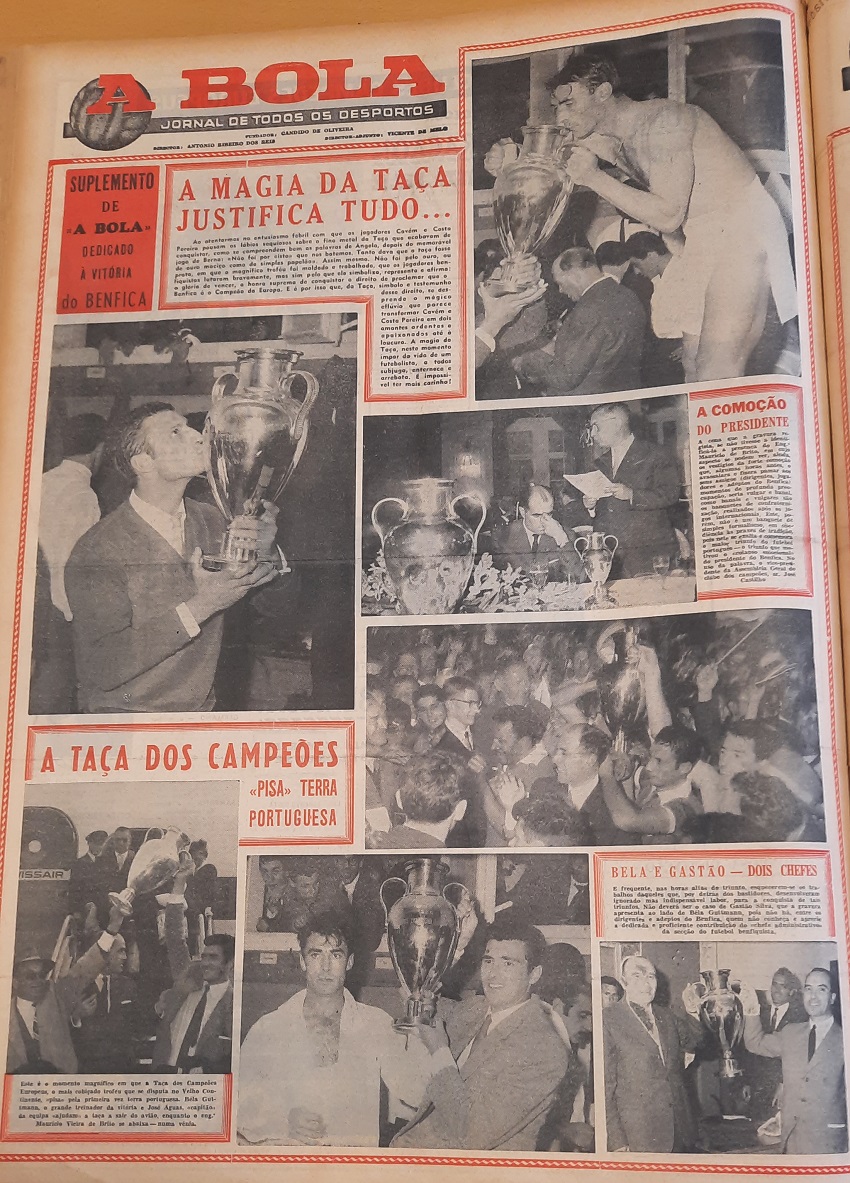
In 1961 and 1962, Benfica did not merely win; they sculpted history. The European Cup became a stage where inevitability and genius collided. Eusébio’s goals were not counted—they were catalogued in memory, the folds of time themselves remembering the strike before it left his foot.
Yet Benfica’s European nights are haunted.
The finals they lost — 1963, 1965, 1968, 1988, 1990 — do not lie in history books as failures alone; they linger like ghosts in the subconscious of the club.
These are memories that stretch forward, colouring each new campaign, bending the perception of time. A young midfielder today feels the shadow of a final lost 60 years ago; a striker hesitates for a heartbeat and remembers a goal that never came.
Loss, in this sense, becomes an instrument of education. Time itself teaches. Memory shapes movement. The ball is a teacher as much as it is an object of desire.
Bella Gutmann, the architect behind Benfica’s early triumphs, understood this.
He was a man who treated strategy as poetry, aligning players in rhythms that anticipated not just the present match but the memory of all that had gone before.
Gutmann’s approach was almost literary—slow, meandering, allowing the team to live in the spaces between seconds, to feel the tempo of history in every pass.
Under him, the ball became a vessel through which time was both stretched and contracted, a medium where nostalgia informed urgency, and memory dictated intelligence.
Benfica’s losses, then, are not failures—they are temporal paradoxes.
They teach that mastery of the present is inseparable from the memory of what has been.
A corner kick in Lisbon today carries the resonance of a missed header in 1965.
A through ball in the 21st century echoes Eusébio’s ghost, the pulse of memory threading the needle between probability and possibility.
Here, football is not simply played. It is experienced, measured in the subtle interplay of memory and tempo.
The Champions League, in its expanded modern form, demands acceleration, repetition, and spectacle—but Portuguese clubs navigate it with a patience born of history, a grace forged in the tension between nostalgia and necessity.
PORTO 1987: THE BACKHEEL THAT BENT HISTORY
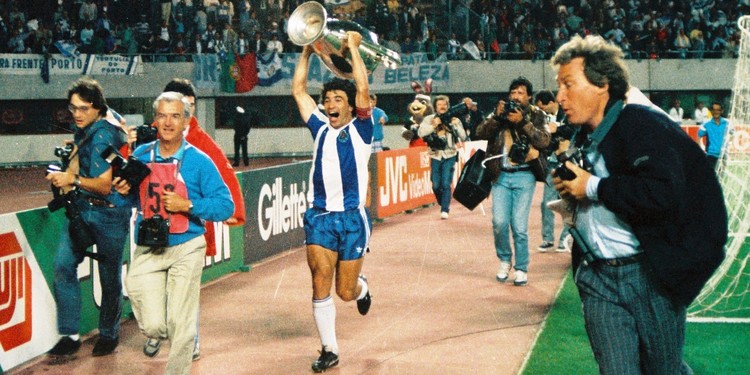
The spring of 1987 carried with it a rare alignment of forces. Porto, outsiders in every sense, stood on the threshold of a European Cup final against Bayern Munich, the embodiment of industrial German inevitability. For 25 years, no Portuguese club had lifted the trophy. Benfica’s glory belonged to memory, locked away in sepia tones. Porto arrived not with grandeur but with defiance, carrying the weight of a nation’s longing and the suspicion of the continent that they were guests at a table too fine for them.
Artur Jorge, the architect of this unlikely ascent, was no ordinary figure. His moustache alone seemed to declare resistance—a flourish of individuality, unmistakably Portuguese, that said: we belong here, on our own terms. Jorge understood what every Portuguese coach since has grasped: when the odds lean against you, you bend the rhythm of the game, you stretch time until inevitability breaks.
And then came Juary. Small, wiry, insistent—he was the spark before the fire, the disruption before the miracle. His equaliser was not the polished brushstroke of genius but the raw surge of belief, struck with the urgency of a man who knew that history does not wait for hesitation. Juary’s goal was the crack in Bayern’s armour, the rupture that made the impossible suddenly negotiable. Without it, there could have been no flourish, no backheel, no rewriting of destiny.
Then, as if time itself had been loosened, came the moment—Madjer’s backheel. A flick not of arrogance, but of destiny. A gesture so improbable it seemed to mock logic, to fracture the very idea of predictability. One second, Bayern held control; the next, football itself had turned inside out. That touch was more than a goal—it was a punctuation mark carved into eternity, the precise instant when underdogs became giants.
Beside him, a young Paulo Futre burned across the grass, a winger alive with invention and audacity. He played as if the game were elastic, capable of being reshaped by the sheer force of his imagination. Futre’s dribbles were not only evasions; they were sketches of futures yet to come. In him, you could already glimpse the lineage of Portuguese artistry that would later crystallize in Luís Figo, in Quaresma’s trivelas, in Cristiano Ronaldo’s devastating surges. Futre was a bridge between eras—born of streetlight improvisation, carrying the weight of tradition, and foreshadowing the chaos to come.
That night in Vienna was more than a trophy lift. It was a reordering of perception. Porto had reinserted Portugal into the bloodstream of European football, not with resources or reputation, but with imagination, defiance, and rhythm. Madjer’s backheel did not merely equalize; it redefined what was possible for a club dismissed as peripheral. Futre’s brilliance did not merely dazzle; it announced a template for Portuguese wingers who would turn improvisation into prophecy.
Porto’s victory in 1987 reminds us that Portuguese football’s greatest contribution has never been about sheer domination. It is about disruption. About the sudden moment when time fractures, when the impossible becomes inevitable. About producing gestures—be it a flick, a dribble, a moustached defiance—that linger in memory long after the medals fade.
In that sense, the 1987 triumph was not only a title. It was a rupture in history, a temporal portal through which Portuguese football stepped into its modern self.
JOSÉ MOURINHO AND PORTO 2004: THE ART OF IMPOSSIBLE
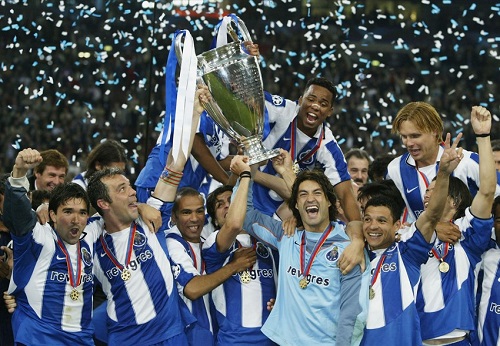
The 2003/04 Champions League season was a study in paradox.
Porto, a modest club, wielded the enormity of tactical genius with a surgeon’s precision.
José Mourinho, young yet omnipotent, orchestrated movements that seemed almost prophetic.
Porto’s system relied on relational intelligence: two defensive midfielders folding the pitch, full-backs stretching the field, a central striker exploiting half-moments of hesitation.
Every counterattack was rehearsed yet spontaneous, every defensive line a flexible entity, compressing space and expanding time as the game demanded.
Deco’s orchestration, Derlei’s runs, Costinha’s interceptions, Maniche’s forward momentum—each executed with the precision of a metronome in a concert hall of chaos.
Tactically, Porto taught Europe an important lesson:
With intelligence, discipline, and timing, structural inferiority can be overcome.
With anticipation, a team can compress seconds into defining moments.
With audacity, the improbable becomes ritual.
Mourinho’s genius lay in his manipulation of temporality.
A single touch at the right moment, a perfectly timed press, or a diagonal from Deco could rewrite the narrative of an entire half.
The trophy lifted in Gelsenkirchen was more than silver—it was a testament to mastery of the fourth dimension: time itself.
PORTUGAL’S INFLUENCE ON THE CHAMPIONS LEAGUE
Portugal’s imprint extends far beyond Porto and Benfica. The country exports not only players, but philosophers of the game—coaches, tacticians, creators of rhythm.
José Mourinho, André Villas-Boas, Leonardo Jardim—each leaves fingerprints on European competitions, reshaping tempo and strategy. Their teams manipulate space and time, forcing opponents into crises of perception. Tactical mastery becomes a negotiation, a dialogue, a way of rewriting what is possible on the pitch.
Players like Rui Costa, Deco, Cristiano Ronaldo—names that echo in stadiums from Munich to Madrid—carry with them a Portuguese philosophy of football: the understanding that the game exists not only in the immediate but across generations. A pass today may echo Rui Costa’s geometry; a dribble tomorrow may mirror Deco’s intelligence. Each movement, each decision is both present and memory, both action and reflection.
Portugal’s influence is subtle, hypnotic, and eternal. It is not always reflected in silverware, yet it shapes the very fabric of European football. Clubs with immense resources may dominate physically, but Portuguese teams bend time and space in ways that defy linearity, reminding all that football is a dialogue across eras, not simply a sequence of matches.
Why Portuguese clubs struggle to win: the inevitable paradox
The paradox is structural. Portugal produces genius, but the modern Champions League rewards industrialized power. English, German, and Spanish clubs leverage financial depth to convert probability into certainty. Portuguese clubs must compensate with intelligence, anticipation, and temporal manipulation.
The tactical implication is that Portuguese teams rarely dominate possession or press with relentless physicality for 90 minutes. Instead, they optimize micro-moments: second-half counterattacks, pre-emptive positioning, and calculated bursts of high-intensity play. The philosophy is clear: control time when you cannot control everything else.
UEFA’s expanding format magnifies this challenge. More games, compressed schedules, and increased travel exacerbate small squads’ limitations. Yet, the struggle becomes a pedagogical spectacle: Portugal teaches football as a chessboard of moments, where rhythm, memory, and intelligence often outweigh brute force.
CONCLUSION: TIME, MEMORY, AND THE BALL
And so the Champions League begins anew.
Europe waits, breathless.
And somewhere, Portugal waits too, not with the largest squad, not with the richest purse, but with mastery of rhythm, memory, and time.
The ball, in their hands, is alive.
Every pass is an essay.
Every run is a sonnet.
Every goal is a confession and a prophecy.
Portuguese football teaches a simple truth: victory is fleeting, but influence is eternal.
Memory and urgency coexist, nostalgia becomes strategy, and the Champions League is more than a tournament—it is a theatre of time itself.
This week, two Portuguese clubs step onto the pitch assuming the role of both historian and innovator.
They will honour legends, defy expectations or fall short, bend time or be swallowed by it and remind Europe that football is not merely a game, but a ritual, a spell, a conversation with eternity.
And in that, Portugal triumphs.
Not always in silverware.
Not always in headlines.
But always in memory.
Always in influence.
Always in the heartbeat between one touch and the next.
This is Portuguese football in the Champions League.

 The season started shakily for Lisbon giants Benfica. Bruno Lage asked the board for players in the close season and got what he wanted. “This has been the best transfer window in terms of the coach and board working on the same ideas,” he said. He even won the Super Cup against the reigning champions Sporting.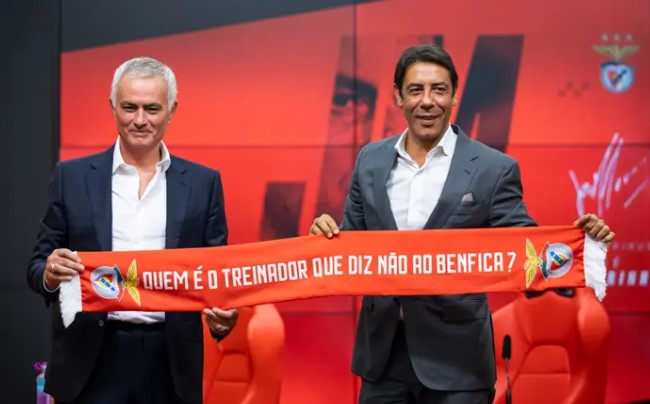
 SL Benfica will look to get their season back on track when they head north to face AVS in the Primera Liga on Saturday at the Estádio do CD das Aves. After a series of poor performances led to the sacking of Bruno Lage this week, the talk around the Estádio da Luz (and Portuguese football in general) over the last few days has focused on newly appointed manager José Mourinho’s comeback and whether the tactician can get this talented group of Benfica players to reach their potential.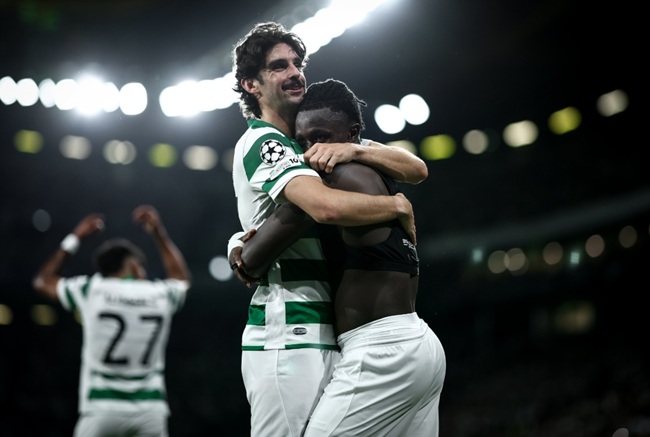
 It looked a mismatch on paper and so it proved. Sporting scored four goals, hit the woodwork twice and missed a penalty as they brushed aside Champions League debutants Kairat Almaty 4-1 in Lisbon this evening.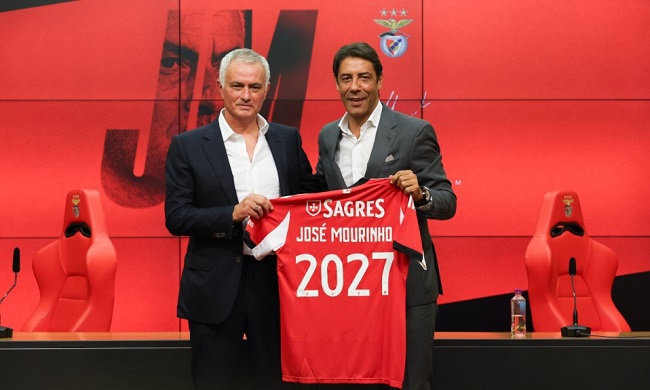
 The greatest Portuguese manager of all time – and quite possibly the greatest of any nationality, period – is back where it all started for him. José Mourinho has signed a two-year contract at Benfica.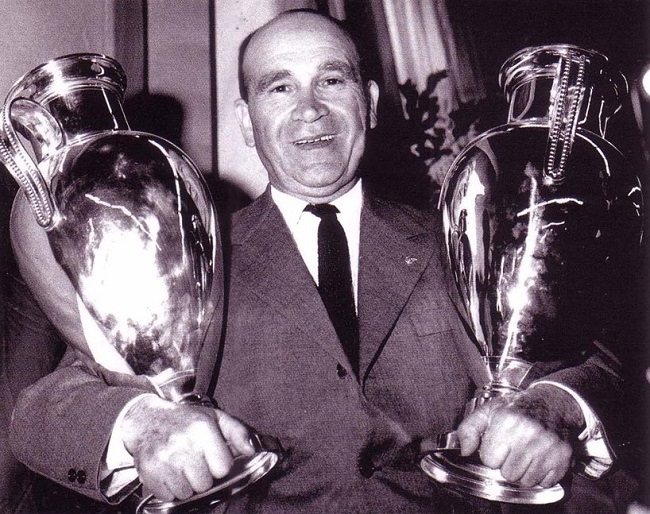
 The 2003/04 Champions League season was a study in paradox.