
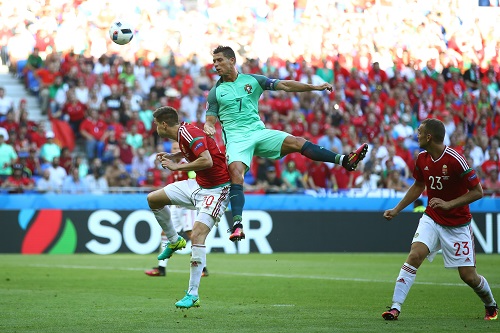
Cristiano Ronaldo’s World Cup journey is closely linked to how the Portugal national team has developed since the beginning of the 2000s. Since his debut in 2006 up until the 2022 tournament, he has been at the centre of attention each time Portugal has attended as a result of his talent and leadership. Featuring in 5 World Cups, he has often been a huge focus when it comes to the build-up, influencing the way the team is set up as well as how their performances are judged. With the 2026 World Cup in North America getting closer and closer, his presence is still one of the most talked about, as it could potentially be his final World Cup appearance.
As each tournament approaches, discussions around Portugal’s chances tend to grow, with analysis ranging from tactical breakdowns to broader comparisons, including how teams are viewed through metrics such as form, squad depth and even World Cup betting odds.
2006 World Cup: Ronaldo’s breakthrough
Ronaldo’s first World Cup in Germany marked his arrival on the global stage. He was still developing as a player, but had already become a massive part of the Portuguese side that managed to reach the semi-finals. Portugal did only manage to place 4th, but this was their best World Cup result in decades. Ronaldo scored his first tournament goal during the group stage and showed flashes of the player he would become, even if he was not yet the central figure of the team.
From rising star to leader
By the 2010 World Cup in South Africa, Ronaldo had become the face of Portuguese football. He was made captain and acted as the main attacking threat, but it seemed the responsibility was far too heavy and often isolated him in games. Portugal managed to reach the last 16, but lacked consistency across other areas of the team. His role had changed from being a promising winger to a focal point in the attack, and with that came growing pressure for the 26-year-old.
2014 World Cup: an early exit
The 2014 tournament in Brazil was one of disappointment for Portugal. Ronaldo entered the competition carrying fitness issues and was not at his sharpest, although he still scored against Ghana. The team, however, failed to progress beyond the group stage. It highlighted a wider issue that would follow Portugal for years: strong individual talent, but a lack of balance and rhythm as a collective unit.
2018 World Cup: a historic performance
Russia 2018 is often remembered as Ronaldo’s most explosive World Cup. He managed to produce an incredible hat-trick against Spain in an opening 3-3 draw, which included a late free kick, followed by a decisive goal against Morocco. He managed to score 4 goals in the tournament overall, but despite his strong performances, Portugal were knocked out in the last 16 by Uruguay, showcasing that other areas of the squad were weak. However, this did not take away from an incredible performance from the 33-year-old.
2022 World Cup: a changing role
By the time of the Qatar 2022 World Cup, Ronaldo’s position within the squad had shifted. He was no longer guaranteed a starting place as Portugal began to rely more on younger attackers. He still managed to make history by becoming the first male player to score in 5 different World Cups, but his influence on the games was not as drastic as in previous tournaments. Portugal reached the quarter finals, but were eliminated by Morocco. Ronaldo’s role mainly came from off the pitch, guiding the younger players and motivating the squad to overcome challenges.
2026 World Cup: what to expect
The 2026 World Cup in the United States, Canada and Mexico raises questions about Portugal’s direction and Ronaldo’s place in it. It is likely to be in a more limited or experienced role rather than as the main attacking focus. Portugal now has a deeper squad and more attacking options, meaning the team is less dependent on one player. The tournament may represent a clear shift towards a new era for Portugal, even if Ronaldo’s legacy still shapes expectations.
From emerging talent to national leader
Over the years, Ronaldo has gone from a promising youngster breaking into the squad to the most experienced and recognisable figure in Portuguese football. The change also altered what was expected of him, with Portugal often building its attacking play around his movement and natural finishing inside the box. Even as younger players started to break into the first team and take on more responsibility, he still remained a central figure in the squad, both in terms of leadership and overall quality. It reflects how closely Portugal’s identity has grown alongside his career, especially in major tournaments where experience can be just as important as current form.
Ronaldo’s legacy
Across five tournaments, Ronaldo has helped transform Portugal from occasional contenders into a consistent force on the world stage. His goals, leadership and presence have defined an era for the national team. At the same time, Portugal’s results have shown how difficult it is to rely on one figure. The World Cup legacy sits somewhere between inspiration and disappointment, but it is undeniable how far the country has come during Ronaldo’s career from being an underdog to a potential champion.
