
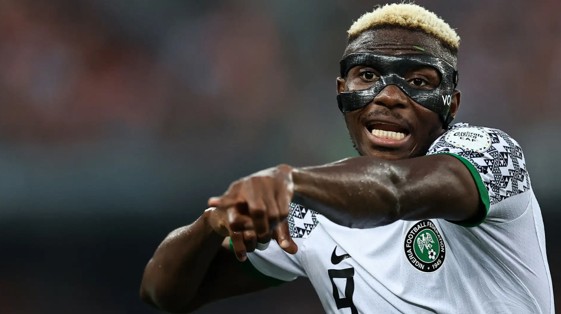
African forwards are often described through speed, strength or finishing, but that shortcut misses the deeper pattern. The most influential attackers from the continent usually win matches through small tactical margins: one blind-side run, one delayed press, one touch across a defender’s body, or one jump timed half a second earlier than the centre-back expects.
The modern fan follows football through match reports, video clips, live statistics, and constant online discussion. That same digital routine often connects naturally with betting platforms and mobile apps, where features linked to hollywood login spina zonke sit alongside live odds, accumulator tracking, in-play markets, and quick access to weekend fixtures.
This is where African forwards offer a useful tactical thread. Mohamed Salah, Sadio Mané, Victor Osimhen, Pierre-Emerick Aubameyang, Didier Drogba and Ademola Lookman all show different versions of the same principle. Victory is rarely built only on the final shot. It is usually built earlier, in the movement that changes a defender’s body shape.
Why Small Margins Matter More Than Highlight Moments
A highlight shows the end of an action. Tactical value often lives before that. The run that pins a full-back, the press that forces a hurried pass, or the first touch that opens the shooting angle may decide the move before the ball reaches the net.
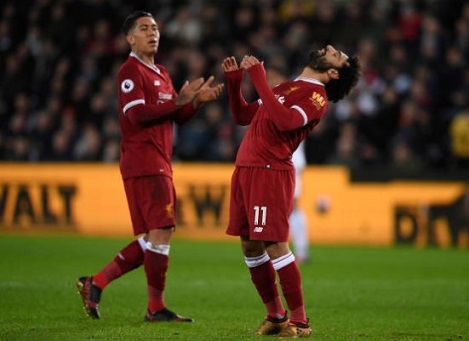
African forwards have repeatedly shaped elite matches through those hidden actions. Salah’s inside-forward game at Liverpool, for example, has never been only about shooting from the right. It is also about receiving between full-back and centre-back, attacking the far post, and forcing defensive lines to narrow.
Mané offered a different version of margin control. He could press from the front, attack the blind side, and arrive in central scoring zones without starting as a classic striker. That kind of forward does not only finish chances. He changes where the opponent feels safe.
The practical lesson is simple: watch the action before the goal. In many cases, the most important decision is not the finish, but the movement that makes the finish possible.
Player Threads: Six Margins That Decide Matches
The value of a forward is not always measured by one repeated action. Different players create different pressure points, and that variety is what makes African attacking profiles so useful for tactical study.
|
Player |
Tactical Margin |
What Viewers Should Watch |
|
Mohamed Salah |
Inside lane control |
How he receives on the half-turn and attacks the gap between full-back and centre-back. |
|
Sadio Mané |
Blind-side acceleration |
How he appears behind defenders after starting from a wide or hidden position. |
|
Victor Osimhen |
Depth and box timing |
How he stretches the back line before attacking the central scoring zone. |
|
Pierre-Emerick Aubameyang |
Last-line movement |
How he stays on the shoulder of defenders before timing the final burst. |
|
Didier Drogba |
Contact and aerial control |
How he uses body position to turn difficult deliveries into pressure moments. |
|
Ademola Lookman |
Change of rhythm |
How he shifts from pause to acceleration when a defender plants his feet. |
This table is not a ranking. It is a viewing guide. Each profile shows a different way to turn a small advantage into a major match event.
That distinction matters because forwards are often judged too quickly by goals alone. Goals remain the currency, but repeatable movement is the process behind the currency. A forward who keeps creating the same advantage is giving the team something sustainable.
Salah and Mané: Wide Starts, Central Damage
Salah and Mané helped popularise a modern attacking idea: the wide forward who becomes a central threat at the right moment. They may start near the touchline, but the danger often comes when they move inside and attack the penalty area like strikers.
Salah’s margin is often technical. He receives under pressure, protects the ball with his body, and turns a narrow angle into a shooting or passing option. A defender who shows him outside can still be beaten by the next touch inside.
Mané’s margin was more explosive and spatial. He could appear suddenly at the back post or between centre-backs after the defence had shifted toward another threat. That made him especially dangerous in systems where quick switches and counter-pressing created second-phase chances.
Their shared Premier League Golden Boot in 2018/19 with Aubameyang was more than an individual statistic. It showed how African forwards could dominate a league through different attacking routes: inside combinations, pressing, pace behind the line and penalty-box timing.
Osimhen and the Value of Depth
Victor Osimhen offers a more direct lesson. His game stretches the pitch vertically. When he runs behind the defence, the back line has to drop, and that extra space can help midfielders and wide players operate with more time.
Depth is not just sprinting. It is timing. If the run is too early, the forward becomes easy to mark or drifts offside. If it is too late, the pass disappears. Osimhen’s strongest moments often come when he threatens behind first, then attacks the box as the move develops.
That pattern changes how opponents defend. Centre-backs who fear the run become less aggressive stepping into midfield. Full-backs may narrow earlier. Midfielders may hesitate before pressing, because one vertical pass can expose the space behind them.
For young forwards, the lesson is useful: do not judge a run only by whether it receives the ball. A run can still create value if it moves defenders and opens the next pass for a teammate.
Drogba, Aubameyang and the Psychology of Defenders
Drogba and Aubameyang represent two contrasting forms of pressure. Drogba could make a centre-back feel every duel. Aubameyang could make the same defender fear the space behind him.
Drogba’s strength was not simply physical power. It was the ability to turn contact into control. He could hold the line, win aerial battles, draw fouls, and make set pieces feel dangerous even when the delivery was not perfect.
Aubameyang’s threat was different. He did not need constant touches to affect the defensive line. His positioning on the shoulder of the last defender created anxiety because one mistimed step could turn a normal pass into a clear chance.
Together, they show that forward play is partly psychological. Some attackers dominate by contact. Others dominate by making defenders protect space they cannot comfortably see.
Lookman and the Modern Lesson in Rhythm

Ademola Lookman’s 2024 Europa League final performance is a clean example of rhythm control. His hat-trick for Atalanta was not only about finishing. It was about knowing when to slow a defender down, when to shift angle, and when to accelerate.
This is one of the most useful skills for modern forwards. Defenders are quick, compact and well-coached. Straight-line speed alone is easier to manage than a forward who can change rhythm inside one action.
Lookman’s threat comes from that pause-and-go pattern. He can receive, invite pressure, then attack the defender’s planted foot. That kind of margin is small, but at elite level it is often enough.
For viewers, the key is to watch the defender, not just the attacker. If the defender’s hips open too early, the forward has already won part of the duel.
What Coaches and Fans Can Learn
The broader lesson from these African forwards is not that one profile is superior. It is that elite attacking comes from repeatable details. A forward can win through timing, body shape, aerial control, pressing, disguise or rhythm.
Useful viewing cues include:
- where the forward starts before the pass is played;
- whether the run moves a defender even without receiving the ball;
- how the first touch changes the angle of the duel;
- whether the attacker presses to win the ball or to force a predictable pass;
- how often the forward arrives in the box after beginning outside it.
These cues help fans read football beyond the obvious. They also make player analysis fairer, because not every decisive contribution appears as a goal or assist.
Small margins are not small in consequence. They are the details that turn balanced matches into victories. African forwards have supplied some of the clearest modern examples, not because they all play the same way, but because each shows how one repeatable edge can reshape a game.
