
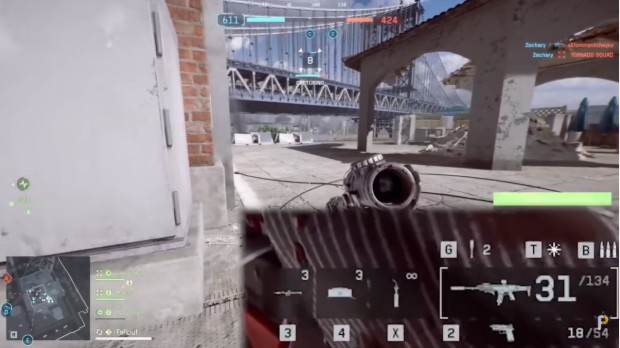
Most deaths in Battlefield 6 happen before the shooting even starts.
That's not an exaggeration. The TTK is brutally fast, and by the time you're taking bullets, the fight was already decided — by your position, your angle, and whether you read the situation correctly. Raw aim matters less than you'd think.
This guide breaks down exactly how to survive longer in BF6, covering Season 3's meta shifts, movement habits, audio settings, class loadouts, and the mistakes that keep killing players who should know better.
Survival Starts With Information, Not Aim
The single biggest mindset shift that separates dying players from consistent survivors is treating every moment as an information problem. What do you know? What don't you know? What can you hear?
Wins and deaths are almost always decided by positioning and awareness, not gunfights. Players who chase top of the scoreboard die constantly. Players who play around flags, maintain cover, and use crossfires live much longer — and contribute more.
Before worrying about your loadout or aim, ask: do you know where the threats are before they see you?
Audio Settings Are Your Real Competitive Edge
Footsteps, reload sounds, vehicle engines — BF6's audio landscape is packed with survival-critical information that most players are completely drowning out.
The best setting combination recommended across the community: switch to War Tapes audio mix, push SFX volume high, and drop music to zero. Commander VO and tinnitus effects should be lowered too — those explosion ringing sounds mask the subtle footstep cues that tell you someone's pushing your flank.
For headphones, any stereo or spatial audio setup that emphasizes mid-range frequencies (roughly 250–1,000 Hz) will produce noticeably clearer footstep detection. Several BF6 audio breakdowns confirm that boosting these bands dramatically changes how early you hear enemy movement.
One more thing: turn off radio music in vehicles. It seems small, but players pushing your position in close-quarters situations are completely masked by that ambient loop.
Positioning and Cover: The Three Rules That Matter
EA's own new-player guidance is genuinely useful here and maps directly onto what experienced players do naturally: stick with your squad, focus on positioning, and don't be exposed.
In practice, that breaks down into specific habits:
- Slice angles instead of wide-swinging. Pre-aim likely enemy positions and clear one sightline at a time. Corridors and junctions are particularly dangerous when rushed.
- Use soft cover constantly. Bushes, pillars, fences, and even parked vehicles break line of sight during rotations between objectives. Use them between every movement.
The corridor mistake kills more players than any single weapon in the game. Sprinting blind through a hallway into a pre-aimed enemy isn't bad luck — it's predictable behavior being punished correctly.
Movement: Slow Down to Live Longer
BF6 has a full movement toolkit — sprint, slide, dive, combat roll, fall-breaking rolls. And high-level guides are surprisingly unanimous: fancy movement rarely beats solid positioning.
The practical model is simple. Move fast between pieces of cover, then slow down and clear before committing to open ground. Never sprint into unknown angles. Slides and dives have a real use case — desynchronizing enemy aim when crossing a watched lane or changing elevation — but they're tools for specific moments, not a general movement style.
At medium to long range, stop moving when shooting. Accuracy suffers significantly when mobile, and the small evasion benefit doesn't compensate for the missed shots that extend a gunfight unnecessarily.
Peeking and Angle Control
Most duels are won before you see each other. The player with the better angle and better information commits; the other one reacts too late.
Pre-ADS before rounding corners. Use quick shoulder peeks to gather positional information before committing to a full fight. Jiggle-style peeks can bait shots and confirm enemy positions — then re-peek from a slightly different angle or height to avoid being pre-aimed on your return.
The rule of one sightline at a time is critical. Never wide-swing two open angles simultaneously. Use walls and doorways to block extra sightlines and turn potential 1v2 situations into sequential 1v1 slices where you have all the information advantage.
Health, Armor, and When to Disengage
Season 3 improved armor bar visibility and HUD readability considerably, which means the information to make disengagement decisions is now clearly on-screen — the issue is players ignoring it.
Armor plates and heals are between-fight resources, not during-fight ones. If your armor is cracked mid-engagement, the correct play is to break contact, get behind hard cover, and fully plate before re-challenging. Re-peeking at half armor against a player who just tagged you is the single most common avoidable death pattern in the game.
Explosives remain lethal despite some Season 3 splash reduction. Moving predictably along roads or chokepoints — especially near vehicle lanes — still gets infantry killed by mines, rockets, and C4 constantly.
Season 3 Meta and Loadout Fundamentals
The current meta has shifted meaningfully following the 1.3.x patch cycle. Tank buffs are the biggest structural change: main battle tanks now have more HP, better mobility, and improved sustain. Open-field infantry is more vulnerable than it has been in previous seasons, which directly increases the value of cover-based rotations and AV-focused loadouts.
Weapon handling tweaks have pushed the meta toward controllable ARs and LMGs for mid-range dominance. For close-quarters environments like Cairo Bazaar, fast ADS SMGs and shotguns with hip-fire builds are performing strongly. Sites like Battlefinity aggregate K/D and TTK data per build, and the "Top 5 meta loadouts" breakdowns after each major update are worth checking before you finalize your loadout.
General loadout logic for survival-focused play:
- Mid-range primary: Low-recoil AR or LMG paired with a mobility-oriented sidearm and survivability gadgets — self-heal, plates, smoke.
- CQC environments: SMG or shotgun with fast ADS, combined with stuns and smokes for safe building entry.
Players who want an immediate read on enemy positions and angles — particularly useful for learning how angles and sightlines work on new maps — sometimes use tools like a Battlefield 6 aimbot or ESP overlay available at Battlelog.co, which can provide real-time spatial awareness while getting familiar with map geometry.
Vehicles: Avoid, Evade, or Coordinate
EA puts it plainly: machine usually beats infantry. Don't try to outplay a tank in the open unless you're specifically kitted for it.
Season 3 tank buffs make this even more true. AV mine effectiveness has been nerfed against tanks, so solo C4 rushes and mine traps are less reliable than they were. Coordinated flanks, armor-piercing rounds, and IFV support are now the primary tank counterplay tools.
For infantry survival around vehicles: if you lack AV tools, break line of sight immediately and route around. Use friendly tanks as mobile cover when pushing contested streets — staying on the protected side of a friendly IFV to cross open ground is genuinely effective and underused.
Squad Coordination: The Survival Multiplier
Everything above works better with a squad. Teammates provide revives, resupply, traded kills, and spawn points that dramatically change your survival odds. Playing solo in a squad-based game is just harder in every measurable way.
Spawn discipline matters: always spawn on safe beacons or teammates in cover. Spawning onto someone mid-gunfight usually means two deaths instead of one.
Communicating crossfires — one player draws attention while others hold angles — consistently produces better outcomes than four players independently rushing the same point. It also lowers individual death risk significantly because enemies can't process multiple threat directions simultaneously.
The Mistakes That Keep Killing You
Across official guides, community posts, and patch-specific breakdowns, the same death patterns appear constantly. Recognizing them is the fastest route to improving your survival rate.
Sprinting through open ground or corridors without checking angles. Pre-aimed players are waiting. They win every time.
Over-extending for flags or kills. Backing off and re-engaging from a better position is almost always the correct play. You don't need to cap every flag immediately.
Reloading after every kill mid-fight. Getting caught reloading while multiple enemies are present is one of the most consistent causes of death in close-quarters situations.
Ignoring gadgets and revives. Class utility swings more fights than raw gunplay. Forgetting that all classes can revive — and that Support does it best — is a persistent mistake that costs both individual survival and squad durability.
Final Thought
Surviving longer in Battlefield 6 isn't about mechanics mastery — it's about decision quality. The players who die least are the ones reading audio cues, holding disciplined positions, respecting the Season 3 meta shifts, and staying connected to their squad. Get those fundamentals right, and the gunfights mostly take care of themselves.
