
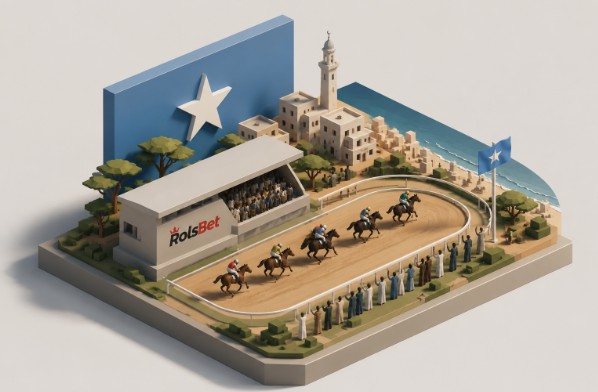
In 2022, an event took place in Mogadishu that many would have considered impossible: the first equestrian arena in decades was opened. Fourteen horses were placed on the grounds of the city stadium, and owner Yahya Isse outlined the philosophy of a new era: “Horse racing belongs to peaceful territories, not war zones.” In a country where gunfire had echoed for decades instead of the sound of hooves, these words sounded like a manifesto.
Today, in August 2026, traditional horse racing in Somalia is experiencing a second birth. It has not turned into a major business and has not acquired world-class racecourses. Equestrian sport in the country remains at an early, enthusiast-driven stage. But the very fact that they exist is already a victory. Players on the https://rolsbet-so.com/en platform—which offers some of the most competitive odds on the African market, a wide range of betting options on local events, and welcome bonuses for new customers—are closely monitoring this trend. After all, where there’s excitement, betting is bound to follow sooner or later.
Siad Barre’s horses and a forgotten tradition
Horse racing in Somalia was formerly popular among more than just a few ardent fans, but few are aware of this fact. The tyrant Siad Barre was deposed in 1991, and under his rule, the only people allowed to learn how to ride a horse were members of the police force. Rather of being used for amusement, horses were used as tools of power. The country fell into anarchy when the regime fell. For thirty years, horse racing was unheard of.
Still, the steeds made it. Despite persecution and natural disasters, two major Somali breeds—the western Galbeed and the eastern Bari—have persisted. Smaller than average horses (only 132-142 cm at the withers), Bari horses were highly prized for their resilience in extreme environments. Dervishes relied on these horses in combat due to their ability to last a day without drink. They were stronger and more hardy than those in the West. What makes Somali horses special are their flexibility, endurance, and tolerance of high temperatures.
The comeback: how equestrian sport survives in Mogadishu
The opening of the arena in 2022 became a turning point. “Children and elderly people love watching horses; there is a beauty in them that attracts people,” Isse explained. Dozens of young Somalis enrolled in training sessions. Many dream of one day competing internationally.
This is not merely a sport. It represents a symbol of returning to normal life. In a country where every day can bring difficult news, horse racing has become an island of stability. Organisers do not host large-scale tournaments, but they frequently arrange local races. The excitement surrounding these events is strengthened by predictions and public interest. Local residents place small wagers on favourites, adding extra tension to the competitions.
However, if the local market isn’t enough, you can always choose the RolsBet download option to get the app for free and switch to major international races like the Kentucky Derby, Royal Ascot, or the Melbourne Cup. In this legal operator’s app, you can place bets on the world’s legendary racehorses using the best tools for analysing statistics.
The secret to the field's success
No matter how bad things become, Somalia's enthusiasm in horse racing never wanes for three basic reasons:
- Comfort for the soul. Reports concerning confrontations are becoming old news. Equine therapy offers a healthy alternative to regular anxiety by combining the benefits of speed, beauty, and adrenaline.
- Recollection of cultural practices. Somali culture includes horse racing. People regard its renaissance as a nod to its pre-war customs and origins.
- Easy access. Neither elaborate infrastructure nor pricey stadiums are necessary for participation. Even a desert road outside of town has the potential to be a racecourse.
Unpredictable developments in Somali equestrian sport in recent years have cast doubt on long-held conservative assumptions. The 25-year-old Shukri Osman Muse has become a major phenomenon recently. She is the first Somali woman to ride horses with confidence on the streets of Mogadishu. Her public appearances sparked a powerful societal reaction, indicating that people are growing more receptive to progressive ideas.
Barriers on the road: what prevents Somalia from becoming an equestrian power
Despite growing interest in horse racing, the sport remains far from professional standards. The country has no racecourse that meets international requirements. Training takes place on dirt roads and empty fields. Veterinary care for horses remains a luxury. Feed supplies are often insufficient.
The Somali Equestrian Federation does exist, but its resources are limited. Without sponsorship and government funding, a major breakthrough is impossible. For now, horse racing remains a form of entertainment for locals rather than a professional sport. But even in this form, it generates genuine interest, especially among online bookmakers. And where there is interest, there is potential for growth.
