
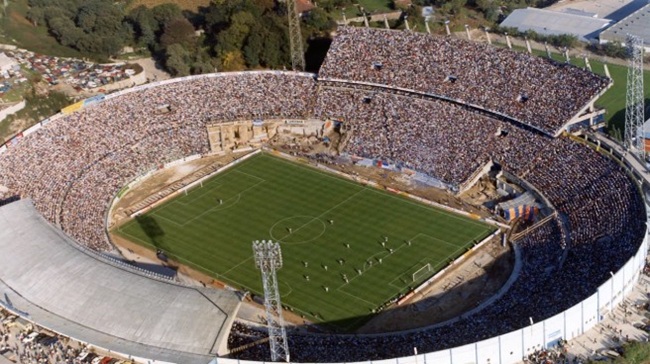
They needed a home according to their dreams and fought for it for decades. When it became reality, it seemed like heaven had been found, but, in turn, they entered purgatory. For more than three decades, the Antas stadiums witnessed more heartbreaks than any other in FC Porto’s history.
Yet, it was all worth it as the ground enjoyed the club’s rise to the top and said goodbye as the club were about to conquer the world all over again. FC Porto had many grounds they called their own, but only one genuinely felt like their spiritual home, and that was the old das Antas.
***
The long goodbye
The new ground had just been inaugurated in a dashing party, a spectacular win and the debut of a young Argentine genius, Lionel Messi. Yet, it was not prepared. Not yet. The grass pitch was a mess and, for a few weeks more, the club returned to their safe place, a few metres north. Everybody who thought they had said their goodbyes had the chance to return to do it properly one last time.
In a sense, that communion reflected how much the Estádio das Antas meant for Porto supporters. It had been their dream for decades, it became a place where they met regularly to cry on each other’s shoulders as the club kept failing expectations and then became the most dreaded football ground in Portugal, the Dragon’s den. All in a half a century of history full of obstacles and iconic moments.
The Antas stadium was officially inaugurated in May 1952, but the plans to bring it to life had been drawn up two decades earlier. The football club that started to kick a ball in the northern side of town at the Campo da Rainha had outgrown their early venue quite fast, and the board understood they had to move to a decent place where everyone who supported the blue and whites could fit in. By the 1920s, even the newfound pitch of Constituição had become so small for their ascension to the top of the Portuguese game that, for matches against bigger opposition, they were forced to borrow the Ameal or the Lima ground from their owners, Progresso and Académico do Porto. Those two venues were bigger than Constituição and, in Lima’s case, had proper stands, while the Constituição consisted mainly of standing ends.
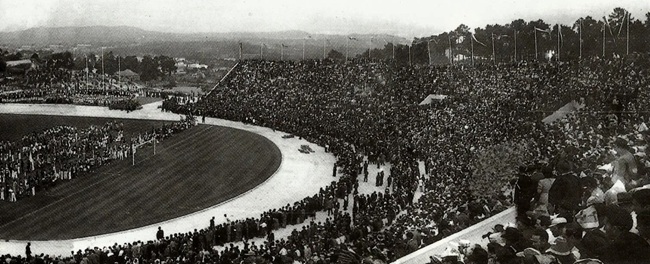
There were plans and even a draft contract to buy the surrounding grounds to expand the Constituição stadium, but at the last hour, they fell through, so the club was forced to find another venue for their future ground. They did build temporary stands for the venue, but then news broke of land being sold in the northeastern side of Porto, close to the Antas church. For a while, there was a difference of opinion between members of the board. While some favoured the Vilarinha area, near the Foz neighbourhood and where the actual Parque da Cidade sits, others preferred the Antas option because it felt closer to the club’s original birthplace.
Sporting success helps fund new venue
In the end Césario Bonito, the president, got his way and the club formally decided, after getting the support of the members in an extraordinary meeting in 1933, to buy the plots of land in the area, little by little, with the little money they had saved thanks essentially to gate income as Porto were enjoying a golden era during the 1930s thanks to the genius of the likes of Artur de Sousa, known as Pinga, and Waldemar Mota, the child prodigy of Portuguese football at the time.
They only bought the last piece of land in the final years of the 1940s due mainly to the club’s poorly managed finances, the political situation and economic difficulties that resulted from World War II, which forced a delay longer than originally expected. By 1947, everything was seemingly ready, and Oldemiro Carneiro, a renowned local architect, drafted a project that was going to be built under the supervision of Miguel Resende, an engineer credited with important work in the region. The final version of the ground differed slightly from his original plan, particularly due to the lack of sufficient funding to complete the initial design in its entirety.
Although the project included the necessary space for the club to build a 65,000-seat venue, and in its surroundings, there were different buildings for the practice of other sports, there was still one owner of an adjacent plot who was less inclined to sell, and without that land the whole project was in doubt. News reached Salazar’s cabinet at a time when the regime, out of World War II, had decided to invest in public buildings and big venues to boost the economy and raise their standing in the eyes of the population. José Frederico Ulrich, the cabinet minister for construction works, who also happened to be a Porto supporter, had his say, and the deal was finally settled. By December, 1949, the club formally owned every patch of land needed in an area that at the time sat at the border of town, surrounded only by a rural landscape.
Priestly intervention helps the cause
Two weeks later, on 16 December, construction began, and the oldest club member alive, José Bacelar, insisted on paying the workers on the first day of labour. Club members joined in over the years with different projects of support to raise money to have the construction end within the planned deadline of 1952. Marcelino, a well-known priest from Paredes, a small neighbouring town east of Porto, organised a pool where supporters or locals could contribute with whatever they had to help buy the materials necessary. It was perhaps the most popular of the many initiatives initiated both by the club and its members; in truth, the lack of funding meant that by the beginning of 1952, only one stand had been completely built.
Finally, the club seemed to have found the funds needed to speed up the works, and by May the ground was partially completed. The front access to the main covered stand had been abandoned, and so was the opposite central stand, which remained empty so that standing tickets could be sold at a lower price. It was called the Maratona gate, and it took the club two more decades to finally build a proper concrete stand in its place. The stadium originally included a tarmac track for athletic events and would later have a track for cycling contests, with Porto being one of the main cycling clubs in Portugal at the time.
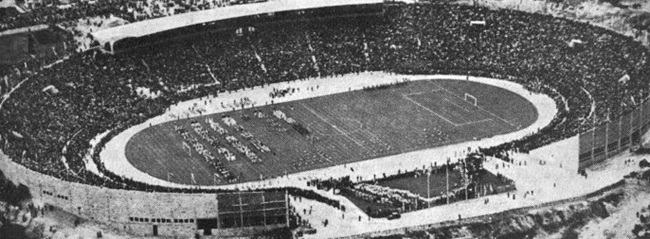
With the paint not even dry yet, the stadium was finally inaugurated on 28 May, a day picked by the club, as with many, to fulfil the policy of the Estado Novo regime of hosting public events on the day of the military coup that finished off the first Republic. The President of the Portuguese Republic, Craveiro Lopes, was invited to host the ceremony as were many influential local figures, including Ulrich himself.
Benfica party poopers
Despite the tense historical relationship between FC Porto and SL Benfica, the Eagles were invited to join the celebrations and play a friendly after the ceremony took place. With a stadium packed, the Lisbon club came away with a thumping 8-2 win that surprised even their own few supporters who had decided to attend. Two years later, Benfica would return the favour, and Porto would be invited to inaugurate the Estádio da Luz. Porto would also spoil the party with a surprise win, albeit by a lesser margin.
The Antas quickly became a centre point for a city that was quietly expanding to the northeast. The Velasquez area was starting to sport many residential buildings, and in a few years’ time, the VCI road would be built around the northern stand. At the time, the club had already inaugurated both the cycling track and the floodlights, first used in a friendly against Athletic Club Bilbao in 1962. By then, Porto had won two league titles but were already going through the first years of a long drought that would take the club 18 years to end.
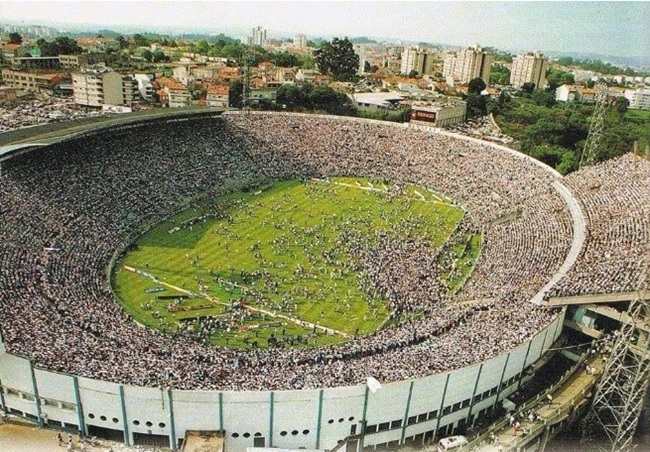
During that period, the Antas became a meeting point in the city for supporters who began each campaign full of hope and usually ended it in emotional shatters. Provisional refurbishments were undertaken here and there, and progressively in the lands surrounding the stadium, other iconic buildings were built, particularly the training grounds and a closed venue for handball, volleyball, roller hockey and basketball. Later, swimming pools were also added, and by 1976 the club finally closed the entirety of the stadium with the new Arquibancada, a two-tier central stand that would become a landmark of Porto’s skyline and which increased capacity to over 70,000 supporters.
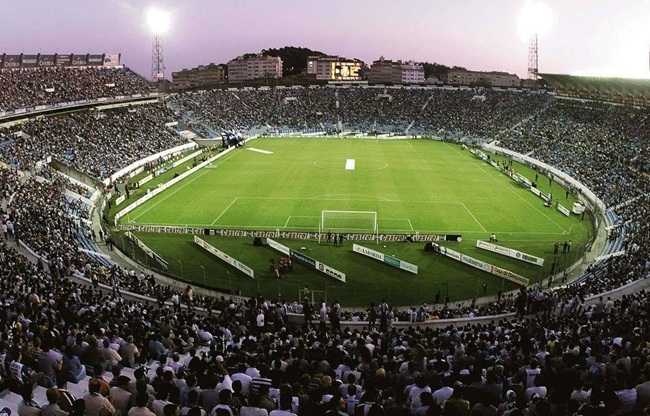
By then, the stadium was twenty-five years old, and despite having been built as a launchpad for bigger feats, few had been the moments for the club’s fans to enjoy. Then, that summer, the arrival of Jorge Nuno Pinto da Costa as sporting director and José Maria Pedroto for a second stint as manager made all the difference. Pedroto had been signed in 1952, thanks in part to the expected increase in ticket sales of the new stadium, and throughout the decade he became a key figure in two championship-winning sides. As manager, he had briefly coached Porto in the 1960s and was now returning to finish the job. By the end of his first campaign, Porto won the Portuguese Cup in a final played at the Antas against Braga. A year later, he was league champion, and the record was set for the biggest crowd the ground had accommodated.
From also-rans to top dogs
In the following years, Pedroto laid the foundations for the rise of FC Porto from perennial underdogs into the big boys in town, and after his death, in 1984, Pinto da Costa, now club president, started to develop new ideas for the stadium to become bigger in time for a revolution that was already taking shape in his head. By 1986, it was decided that the capacity would be expanded, with the tarmac and cycling tracks erased and an extra 20,000 added to the capacity. It was a decisive move, just in time to host the 1986/87 European Cup-winning campaign that brought Porto into the European spotlight.
In the following years, playing at the Antas became a living hell for anyone visiting, as Pinto da Costa drew the concept of a Dragon pit where only the locals were welcome. Those were the years that shaped modern Portuguese football, and for many supporters, particularly from Lisbon, to travel north became a synonym for purgatory. On the contrary, for the locals, the aesthetics of the old Antas, surrounded by training pitches east and south and with the more vibrant urban side of the city north and east taking shape, it felt like a gate between the not-so distant past and the future they looked upon with expectation.
The 1990s became the most celebrated decade in Porto’s domestic history (8 championship titles in 10 seasons), and the stadium was a big part of the success, even though UEFA forced the club to make the stadium an all-seater venue by the end of the decade, reducing capacity to 55,000. Around that time, Porto decided to build a giant skyscraper just where the entrance gates for the club members’ old covered stand were, once again redefining the landscape of the area in shades of blue.
Come rain or shine...
Porto supporters were absolutely in love with the old ground, even if the lack of covered stands all around it meant that in the recurrent days of thunder and rain, it wasn’t the most welcoming place. The Arquibancada became famous for the echo sound of Mr António Lourenço’s trumpet, while the south and north stands were the places where the different ultra groups would join in. The south stand, later famous for the dominance of the Super Dragões, was originally called the Tribunal – the Court-Room – as it was said that how the crowd who usually sat there judged a player or a manager could become decisive in their career. Win their hearts, and you have your back forever; disappoint, and there would be no second chance.
By 1999, surprise news came with UEFA had awarded Portugal the right to host the Euros in 2004, and that meant Porto had to decide to completely refurbish the old ground or build a new one from scratch. Pinto da Costa, who had been present on the day the old Antas ground was inaugurated in 1952, had a clear idea in mind as always. He knew the club needed a more modern venue, and the club quickly moved to build a new home as close as possible to the old one. Like in the 1940s, it meant struggling with local land owners and, this time, even with the city hall, presided by the newly elected chairman Rui Rio, a well-known Boavista supporter, who tried his best to boycott the project, to no avail. By 2002, construction work was already taking place metres south of das Antas for the new Dragão stadium, but Porto kept on playing in the old venue until the end of 2003.
That gave the supporters time for a final celebration round as the arrival of José Mourinho meant happier times were coming. Porto claimed the league title in 2003 against Santa Clara, and an iconic 4-1 win versus SS Lazio meant the ground was still well alive to enjoy the club’s greatest European night. Despite rumours that the new stadium would be ready in time for the start of the 2003/04 campaign, Porto began the campaign still playing at the Antas, where they hosted Real Madrid, Partizan Belgrade and Olympique Marseille in the Champions League group stage, as well as Sporting and Benfica for the league. Those were the last great nights for the Estádio das Antas.
The “Dragon pit” is no more
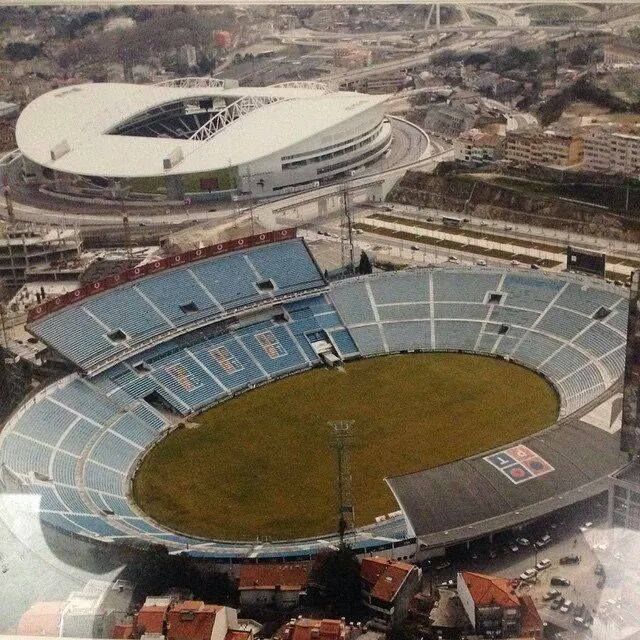
After the inauguration of the new venue, the side briefly returned to the Antas until a new grass pitch was put in place. By 2004, the adventures at the old Antas were over, the last match taking place on 24 January, a 2-0 win against Estrela da Amadora. The two stadiums coincided in time, leaving space for iconic photographs and aerial shots to represent the past and future of a club that had become the dominant force of Portuguese football, and a powerful player in Europe.
By the end of the 2003/04 the Champions League win was celebrated with the club partying around the new stadium, but many supporters still drifted to the old concrete stands of the Antas to say thank you. Over the following months, the stadium was demolished as the 2004 European Championship took place, with just the floodlights remaining for the next few years until housing projects completely occupied the grounds where Porto had spent the worst and the best seasons in their history.
The first Dragon pit was no more, but the memories of flags and scarves dancing in the wind can still be felt when anyone approaches the place, as the fading sound of a trumpet is heard one last time.
By Miguel Lourenço Pereira, author of “Bring Me That Horizon – A Journey to the Soul of Portuguese Football”.
