
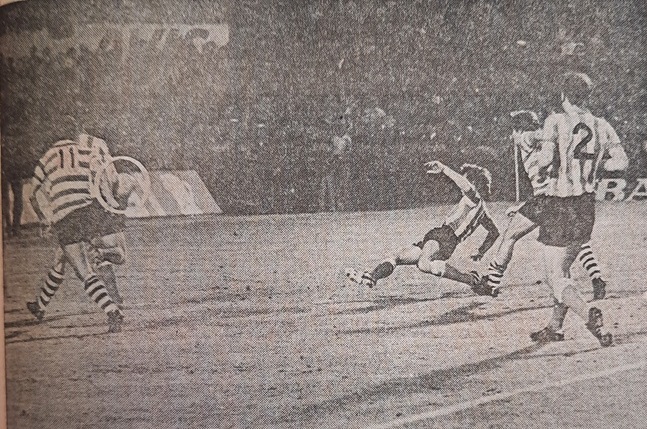
Sunderland never played Torreense. That much is true. That doesn’t mean, though, they never played a Portuguese opponent on their scarce European nights. And not just any Portuguese side. In 1973/74, Sporting CP was on the brink of a historic season. It was also a monumental moment in history for Portugal as a nation, yet no-one knew it.
What the Lions did not know was that a trip to England would become part of the club’s folklore, and the return leg at home set them on course for what could have become a memorable continental campaign. Sunderland, meanwhile, although in the English second tier, were enjoying a voyage into unchartered territory.
***
Regime change afoot
Let’s start from the end. By May 1974, Portugal was free from the Estado Novo dictatorship. It had been decades since the military coup of 1926 and the establishment of a new fascist and corporatist regime six years later, when former treasury minister António de Oliveira Salazar took control of the nation. On the night of 25 April, everything changed, and Portugal woke up from a nightmare. Weeks later, Sporting CP celebrated another League and Cup double with a memorable win at the Jamor, in a true celebration of democracy that engulfed the very essence of Portuguese football.
They had claimed the league and were on the brink of an unforgettable treble that ended, almost exactly, at the same time as the dictatorship. On 24 April, the Lions travelled to Magdeburg, in Eastern Germany. They brought with them an uncomfortable 1-1 home draw against the Germans, who had scored through Jürgen Sparwasser, who would become globally famous weeks later during the World Cup by netting the winner of the tie between the two Germanies in the tournament group stages.
Sporting needed a goal in Magdeburg to reach their second Cup Winners’ Cup final and they got it, but by then it was all over for them. Jürgen Pommerenke opened the scoring early, and it was Sparwasser again who netted a second well into the second half. When Marinho got one back for Sporting, it was too late… as it was for Marcello Caetano, Salazar’s successor of the dictatorial regime back home.
Sporting leave Portugal in a dictatorship, arrive back in a democracy
As a disappointed Sporting side travelled back to Portugal, they were warned something was happening. Their plane stopped at Madrid airport, where they were informed the Portuguese airspace had been shut down due to a military coup. The team had to take the bus to the border, at Badajoz, where they spent the rest of the night. When they were finally allowed to cross the border, Portugal was by then a new country. It was as crazy as it would ever be for a Portuguese side in Europe, but Sporting’s European away campaign also started with one of the craziest episodes they had ever endured at Sunderland.
***
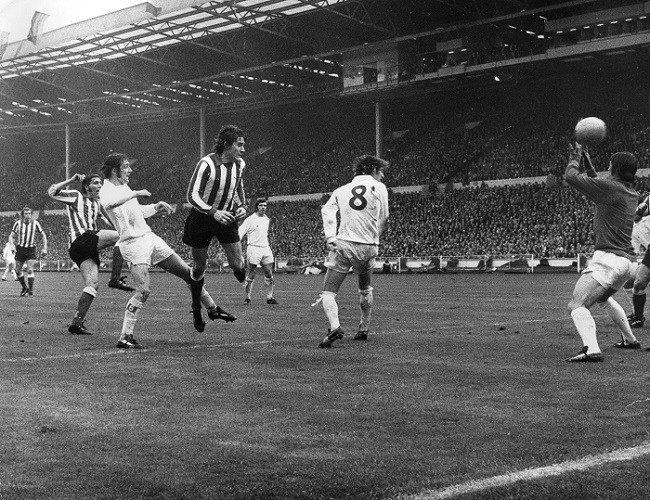
Sunderland were the Torreense of 1972/73 in England. Despite being an historical side that had been champions of England on six occasions, the last of those triumphs had been decades ago. They were a Second Division side when a surprise run took them to the FA Cup final. There, against all odds, they beat Don Revie’s much fancied Leeds United to become the first side in more than four decades to claim the FA Cup while playing in the lower divisions. It was an all-night party in Sunderland, and a trip to Europe the following season was the cherry on top of the cake.
In the first round, they disposed of Hungarian team Vasas, a well-known European contender, showing unexpected grit. Sporting, on the other hand, had just gotten rid of another British club, Cardiff City, and the two sides were drawn against each other for the round of sixteen. The Lions were amongst the heavy favourites to claim the trophy alongside the likes of AC Milan, Borussia Monchengladbach, Glasgow Rangers and Athletic Bilbao, while Sunderland would to be tested, for the first time in their history, against a former winner of a European trophy.
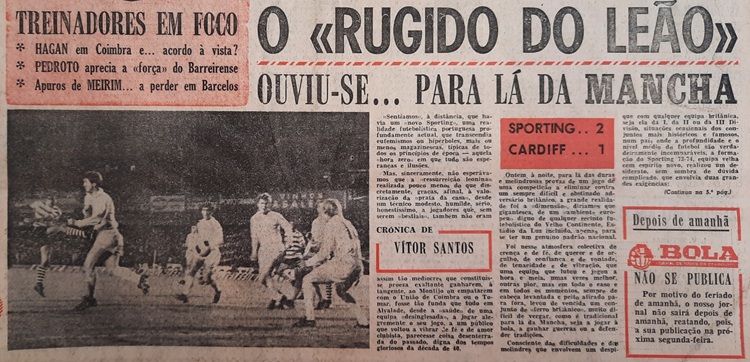
“Roker Roar” galvanises hosts
It had all the ingredients of a memorable showdown at Roker Park and the night lived up to the expectations. In front of more than 30,000 supporters, the home side stormed to a memorable 2-1 win, with club captain Robert Kerr and Michael Horswill scoring the goals. Argentinean striker Hector Yazalde, who had been born and raised at Villa Fiorito, only a few houses away from where Diego Maradona was growing up and would win that season’s Golden Boot, got one back for Sporting. The incredible noise generated by the home faithful, known as the Roker Roar, was in full evidence as Sunderland sealed the win.
It was not the result that hurt Sporting more, but rather the events that preceded the tie. Hours before the match, the Sporting players were visiting Newcastle, where they were staying for the tie, when three of them walked into a store. Baltasar, Bastos and Marinho would later be arrested by the police on charges of stealing property worth £14.33. The store owner realised they were attempting to take audio tapes and quickly called the authorities, who then took the players to the city police station where they were held for two hours and dutifully trailed on the spot. The judge applied an extra fine of 20 pounds each for the attempted robbery plus another 20 for the judicial costs.
Sent back to Lisbon in disgrace after pilfering tape cassettes
 Sporting were livid with the behaviour of the players and got a warning from UEFA that they would do better than to play them that night at Roker Park. They were immediately sent back to Portugal, yet the usual blue pencil used by the censorship authorities prevented any of it from hitting the news back home, despite the incident being widely reported in the British press. Artur Gonçalves knew of the story and used it as inspiration for the lyrics of As Cassettes, a local folk song he released later in the year.
***
There was now growing expectation surrounding Sunderland’s visit to Lisbon two weeks later, on 7 November, as they held the advantage in the knockout tie and some were already starting to consider the Black Cats as underdogs to claim the trophy. The local press started to look at Sunderland’s European prospects more positively, and in Portugal there was a genuine fear of the British side as they were, traditionally, a hard opponent due to the physicality and direct approach of their attacking game.
Contrary to what happened in England, Mário Lino now had full clearance to call Marinho back into the attacking line, where he would partner Yazalde, Nelson Fernandes and Chico Faria. Fraguite and Wagner would play in midfield while captain and goalkeeper Vitor Damas was protected by a back line of Manaca, Laranjeira, Alhinho and Carlos Pereira.
Bob Stokoe could call upon his best eleven as Jimmy Montgomery, the FA Cup hero, would be joined by David Watson, Dick Malone, Joe Bolton, David Young, Ian Poterfield, Michael Horsewill, Robert Kerr, Vic Halom, Dennis Tueart and William Hughes, names that still resonated like celebrities in the northeast. The Alvalade was not fully packed, but more than 40,000 fans came in to witness what many expected to be a memorable comeback for the home side, who, at the time, were also leading the league table on route to a memorable campaign.
Damas thwarts Black Cats
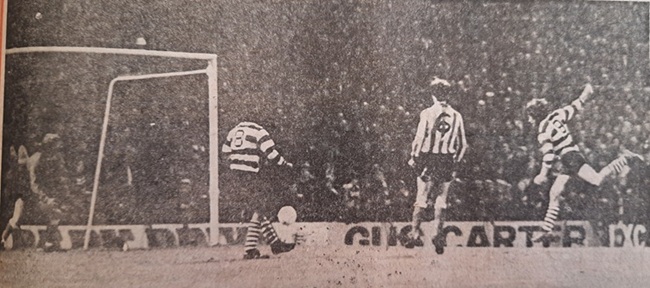
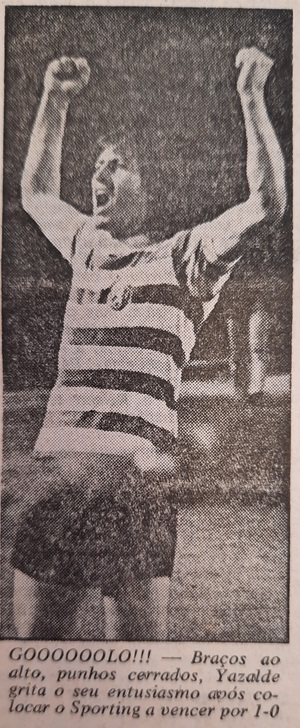
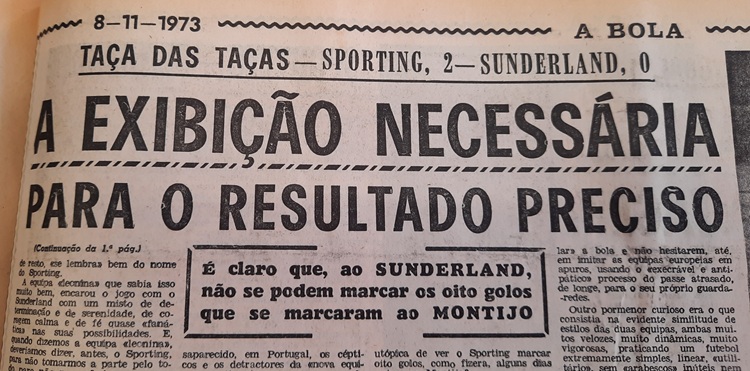
Sporting needed to get back into the game early on, and they got the goal they were looking for in the 20th minute, when Yazalde, who else, knocked in the first for the home crowd to celebrate. It was also enough to qualify them for the next round due to the recently established away goal rule, but there was nervousness every time Sunderland approached Damas’ goal in haste. The visitors proved to be an attacking menace, but a brilliant performance by the iconic goalkeeper kept them at bay. With little more than twenty minutes to go, Fraguito fired a second to put the game to bed, whipping up the crowd into a wild frenzy of delight.

It was a particularly vindicating moment for Marinho, who celebrated and was then taken off to thunderous applause from the home crowd, who had already gotten word of what had happened in Newcastle weeks before. Sunderland were close to pulling back a goal but, once again, Damas proved to be the hero of the hour and kept a decisive clean sheet to book Sporting’s place in the last eight.
There, the Lisbon Lions hammered Zurich and were now expected to easily beat Magdeburg to reach the final against either AC Milan or Mönchengladbach, the two heavy favourites. It wasn’t to be. The bitter defeat in East Germany put an end to what could have been an iconic Treble – something only FC Porto managed in 2002/03 and then 2010/11, by winning the League, the Portuguese Cup and a European trophy in the same season. Magdeburg went on to surprise Europe once again as they outscored AC Milan in the final to become the only East German side ever to claim a continental trophy.
Sunderland’s European adventure crosses path with Portugal again
Sunderland’s season was pretty uneventful. They finished a disappointing sixth in the Second Division and were out of the FA Cup at the hands of Carlisle. They also missed out on a shot at the Charity Shield. Their famous Cup triumph coincided with last time the Charity Sheild season-opening trophy was played between the holders of the First and Second Division. The tradition changed the following summer, to become a contest between the league champions and the FA Cup winners (or runners-up in case of a Double), but the change happened one year too late for Sunderland to partake in the season curtain raiser.
For Sunderland it was a memorable experience, the first time and until this season the only time they qualified for European football. Now the Black Cats are at it again and, ironically, they will be playing the Portuguese version of themselves among their opponents in the Europa League group stage. Torreense stunned Sporting to lift the Portuguese Cup last May and earn themselves a place in the Europa League group phase. Despite their lack of European pedigree, both teams started off their continental campaign in fine style, beating Lillestrom and AZ Alkmaar respectively.
Nobody ever remembers what happened to that convenience store in Newcastle, but in Sunderland the story hasn’t quite been forgotten yet. After all, before the recent match against AZ Alkmaar in September it was their last European home tie and memories like that don’t simply fade away easily.
