Only a short train ride from Lisbon, Alverca do Ribatejo is a town that many travellers pass by without a second thought. Sitting quietly on the banks of the Tagus, it has its own stories to tell and a local identity that doesn’t always make the guidebooks.
Aviation plays a defining role here, and traces of that history can still be found today, while football has brought new attention thanks to FC Alverca’s recent rise in the headlines. Beyond that, Alverca rewards a slower kind of visit: wandering into centuries-old churches and chapels, stepping into small museums, or simply strolling along the riverside where life moves at an easier pace.
What makes the town appealing is its mix of heritage and everyday Portuguese life. There are family-run taverns where the food is hearty and unpretentious, leafy walks that open out onto views of the river, and a sense that you’re experiencing a place as it really is — close enough to Lisbon to be convenient, yet far enough away to feel like its own discovery.
Walks & Riverside Time
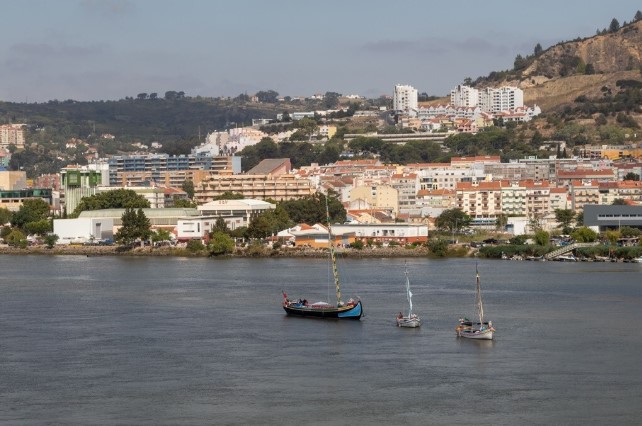
Stroll along the Tagus (Rio Tejo) riverside, soak in the views, enjoy nature, calm yourself. It’s a good break from the city noise.
Museu do Ar — Polo Alverca
Aviation is part of Alverca’s DNA. This museum gives you a look at Portugal’s aeronautical heritage, vintage aircraft, engines, and more. Please note that the Air Museum (Museu do Ar) is open only on Mondays, from 10.00 am to 5.00 pm.
Catch a Match / Visit the Club
If possible, see a FC Alverca game. With the club making waves (especially with recent investment), attending a match is a way to connect with local culture and energy. You can also watch the youngsters at the newly built Centro de Estágios (Training Centre) close to the train station.
Eat Locally
Try local restaurants and taverns. Some names found nearby: Morgado Taberna 2017, Cantinho da Adanaia, Taskamor, among others. Good for winding down after sightseeing.
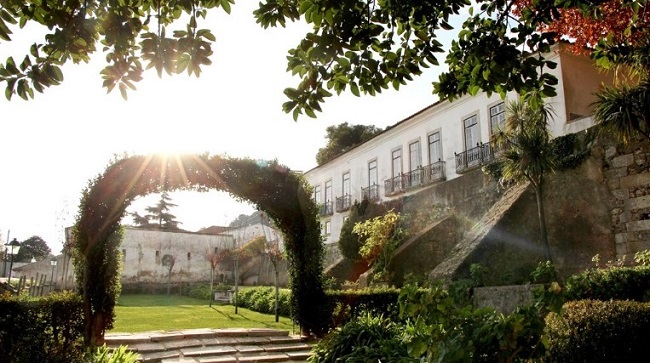
Explore the Sobralinho Palace
Here are local legends of a “secret chamber” hidden behind a rotating bookshelf, rumoured to be tied to the figure of Salazar and alleged romantic liaisons. These stories are largely unverified, but add to the palace’s aura. The palace has served as a mirror of Portuguese social and political change — from noble retreats to wartime decline, to the ambitions of private restoration, and finally turning into a public cultural asset.
Encostas de Xira Sunset @ Quinta da Subserra
The Quinta Municipal de Subserra has wonderful views over the River Tagus and hosts sunset events (image: https://www.cm-vfxira.pt)
Picture this: at Quinta Municipal de Subserra, in São João dos Montes (within the Encostas de Xira wine region), there’s an ongoing series of sunset events blending local wine, regional gastronomy, and live music — notably from the resident band MT80.
Estoril makes for an ideal base from where you can explore the Lisbon coast, the Portuguese capital, the pretty seaside town of Cascais, and the atmospheric and mystical Sintra.
But Estoril itself holds many charms that have long made it a popular destination for holidaymakers. In this article we explore what to do in and around Estoril.
1. Go to the beach
The name of the local football team is Estoril Praia (Estoril Beach), even though its stadium is located a couple of kilometres inland from the seashore, which is testament to how this fashionable coastal town is defined by its centrepiece. There are wonderful beaches all along the Lisbon coast, but the view from Estoril’s central Praia do Tamariz is truly stunning.
The well-appointed coastline snakes left and right, Cascais and its marina can be made out in the distance to the west, and looking straight out to sea, the deep blue shades of the Atlantic contrast with the pale light of sunny skies and the yellow-white expanse of sand straddled by rocks impervious to the eternal lapping of the waves.
Handily located smack bang in front of the railway station, with the glamorous casino and resplendent garden a few metres behind it, Tamariz Beach is well-served by an array of cafés, restaurants, shops and kiosks. The harmoniously integrated seawater pools offer an alternative wave-free entry point into the sea.
Curiosity - a man ahead of his time
Businessman and politician Fausto Cardoso de Figueiredo, a towering figure in the history of the town and the football club, dedicated his life to turning Estoril into a tourism hub before the concept had even fully taken hold in Europe, and promoting sport among the local population.
Fausto Cardoso de Figueiredo made it his life's mission to promote Estoril as a tourist destination
2. Visit Cascais
Like Estoril, Cascais can boast wonderful beaches lined with jaunty restaurants and all the amenities needed for a fun day of sun, sand and sea, but with the added advantage of a bustling town with quaint streets begging to be explored. All tastes and budgets are catered for, and a few hours lazily strolling the pedestrianised town centre is a pleasing experience.
While you’re at it, a walk through the Fortaleza Nossa Senhora da Luz citadel complex takes you to the marina laden with spectacular yachts of all sizes. Five hundred years of history side by side with sumptuous modern-day luxury.
For art enthusiasts, a trip to the Casa das Histórias Paula Rego in Cascais is a must. The curious building designed by renowned Portuguese architect Eduardo Souto de Moura houses works by Paula Rego, one of Portugal’s foremost artists of the 20th century with her peculiar and striking semi-abstract depiction of the human figure, often verging on the grotesque, always heaving with emotion, making her pictures instantly identifiable.
Casa das Histórias Paula Rego in Cascais houses works from one of Portugal's most renowned 20th-century artists
3. Watch Estoril Praia play
When you think football and Lisbon, two clubs inevitably come to mind: Benfica and Sporting. But in addition to these two giants of the world’s most popular sport, as a football-obsessed country it only natural that Portugal has a myriad of clubs in an around its capital. One of the most historical is Estoril Praia, founded in 1939.
A club of modest means, it has however made a habit of punching above its weight. Estoril provided four players for Portugal’s national team in 1948/49 and more recently qualified for European competition in 2012/2013 and 2013/2014. Two of Portugal’s most successful football managers cut their teeth at Estoril. Fernando Santos would go on to guide the national team to its first major trophy by winning Euro 2016, and Marco Silva, after leading Estoril to their highest ever finishes and a ticket to the UEFA Europa League, has since forged a highly successful international career.
Photo: estorilpraia.pt
The António Coimbra da Mota stadium, colourfully decked out in the club’s distinctive yellow and blue, is known as a potential “banana skin” for the most powerful teams in the Primeira Liga. The proximity of the spectators to the pitch makes for excellent viewing conditions and although a small arena, the passionate local fans generate a vibrant atmosphere.
4. Stroll, jog or cycle along the coastal walkways
The local authorities have invested substantially over the last three decades in beautifying the coastal walkway between Estoril and Cascais, making it accessible, attractive and safe. Saunter between the two towns with the gentle sea breeze kissing your skin, the sound of ocean waves, children playing in the sand and bathers braving the Atlantic temperatures in one ear, the murmur of chatting and chinking glasses emanating from the many patio cafés and bars in the other.
Taking in the route on wheels is also an option, with bicycles and scooters available for hire at several locations in Estoril and Cascais.
For a more vigorous activity, the 8-kilometre trip to Praia do Guincho is well worth it, either jogging or on a bicycle. A cycle track runs all the way along the coastline, which becomes rugged and wild once out of Cascais, passing by the spectacular Boca de Inferno (Hell’s Mouth), a natural chasm in the rockface through which water explodes upwards through the force of the powerful Atlantic waves. Praia de Guincho is known for its mighty waves and is a frequent venue for international surfing competitions.
This zone is also home to top-quality restaurants where fresh shellfish and seafood dishes take pride of place. Next-door to one of the most exclusive neighbourhoods in Portugal – Quinta da Marinha – with the spectacular scenery and a menu of luxury offerings, be warned this is not a budget option.
5. Go to the casino
The world-renowned Estoril Casino is the largest casino in Europe, but in truth it is much more than a place to try your luck at Poker, on the roulette wheel or any of the seven different gaming alternatives. The complex includes two showrooms, three restaurants, four bars and an art gallery.
The casino was famously attended by German and English spies in the Second World War, one of whom was none other than Ian Fleming, who no doubt drew inspiration from the setting as he began writing his famous James Bond novels at the time.
Nowadays the casino continues to attract international visitors and is a popular venue for concerts and shows, as well as hosting national televised events, banquets and conventions. During the day it is used for business conferences and meetings, with the panoramic foyer overlooking the resplendent garden sloping down towards the beach. But it is at night when this glitzy zone comes to life as one of the most glamorous spots in Portugal.
Aerial view of Estoril Casino and its resplendent garden
6. Eat fresh fish overlooking the seafront
Visiting Estoril and surrounds and not taking advantage of the fresh fish on offer should be a punishable crime. Or as my esteemed colleague Simon Curtis (who like me came to this part of the world as a young adult, fell in love with it and never left) puts it:
“Sizzling squid and prawns on a skewer, the fleshy delights of a plump grilled sea bream with the tastiest potatoes and salad in Europe, the luscious overflowing pots of monkfish and seafood risotto and the much-underrated cuttlefish stew with pasta. The Portuguese take delight in the combination of simple flavours using pristine produce from the sea and the fields. Not eating John Dory fillets dipped in egg batter and served with the magnificent arroz de grelos (a wet rice with turnip greens) would be a crime in itself, but you’ll have to book an extra week to try every worthwhile delight.”
Built on seven hills, bathed by the River Tagus estuary, steeped in history and blessed by a sun-baked climate, Lisbon is truly one of the world’s most stunning cities. While its geography lends itself to nonstop picture postcard viewpoints, the vibrancy of the Portuguese capital and its endless places of interest has transformed it into a mecca for tourists.
Whether travelling alone, as a couple, with friends or family, Lisbon has plenty to offer to leave a lasting impression on every visitor. Here are 10 fun things to do in Lisboa.
Chaves is a relatively small city, so the best way to explore it is on foot. As such, I have selected 10 things to do in Chaves, including visits to churches, a museum, a castle, eating a “pastel de Chaves” and even drinking sulphur water.
I visited all the places described in less than a week. Please do not read this list as the best attractions in Chaves or something similar. They are simply my choices of what to do in Chaves, given what I found in the city.


 Estoril makes for an ideal base from where you can explore the Lisbon coast, the Portuguese capital, the pretty seaside town of Cascais, and the atmospheric and mystical Sintra.


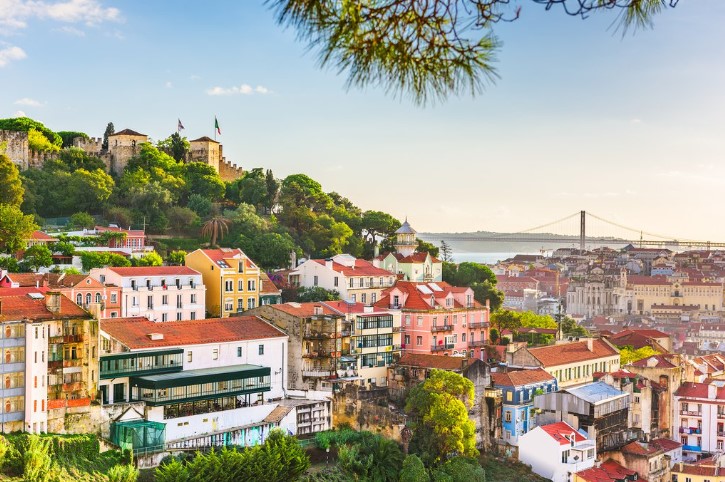
 Built on seven hills, bathed by the River Tagus estuary, steeped in history and blessed by a sun-baked climate, Lisbon is truly one of the world’s most stunning cities. While its geography lends itself to nonstop picture postcard viewpoints, the vibrancy of the Portuguese capital and its endless places of interest has transformed it into a mecca for tourists.
 Mário Ferreira is a resident of Chaves and fervent fan of the city’s football club. He runs the excellent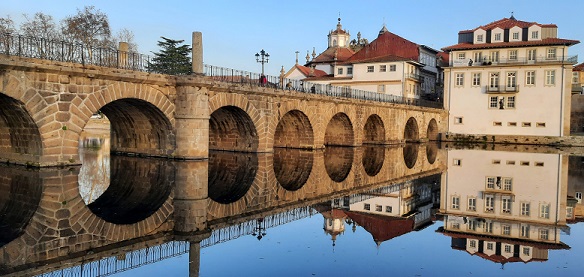
 Chaves is a relatively small city, so the best way to explore it is on foot. As such, I have selected 10 things to do in Chaves, including visits to churches, a museum, a castle, eating a “pastel de Chaves” and even drinking sulphur water.