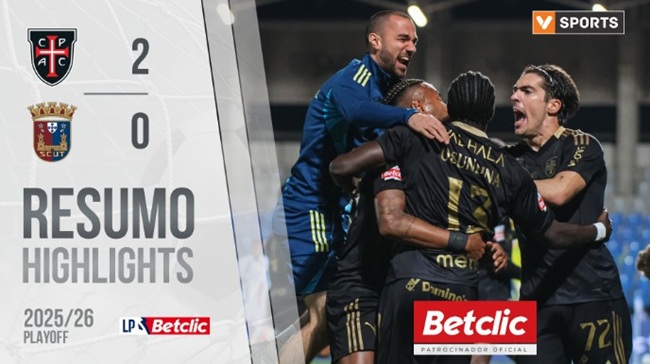
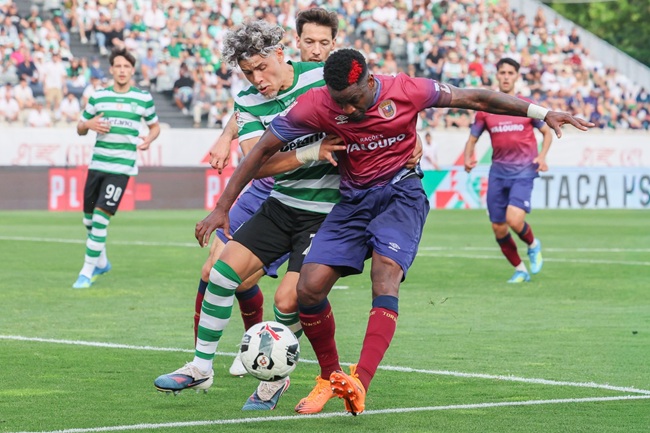
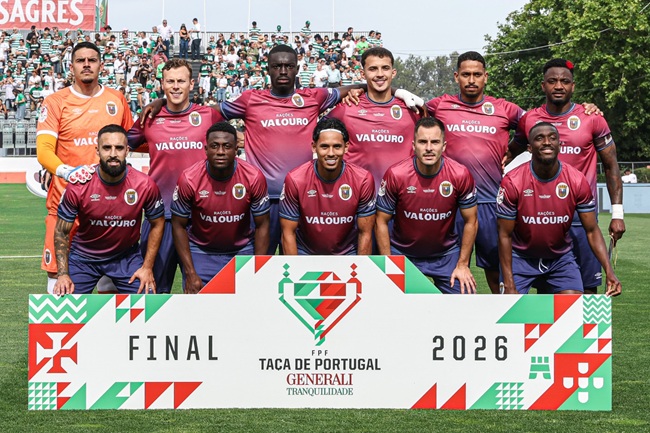
A goal in each half by Gaizka Larrazabal and Lawrence Ofori gave Casa Pia a 2-0 win over Torreense and ensured the Lisbon minnows remain the top flight for another season.
It was a deserved win for Álvaro Pacheco’s team, who were the stronger side throughout the 90 minutes. Torreense were clearly physically diminished by their Portuguese Cup heroics on the weekend.
***
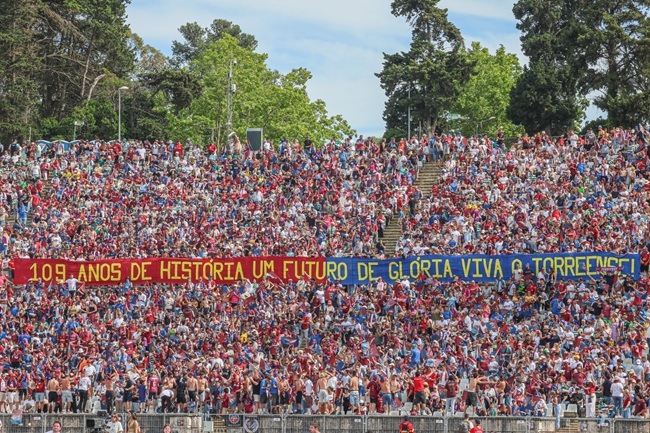
This season’s relegation/promotion playoff could have been labelled the “homeless” playoff. Casa Pia continue to play their “home” games in Rio Maior, 85 kilometres north of their Pina Manique stadium. A crowd of under 2,000 fans turned up on Thursday night despite what was at stake.
Torreense themselves will play their Europa League matches in the Algarve next season instead of their own ground in Torres Vedras (a distance of 300 kilometres), and if they had gained promotion, it was not certain that their small stadium would have been approved for Primeira Liga matches.
That decision will no longer have to be made by the Portuguese football authorities as Casa Pia’s victory means the Geese will be playing in the country’s top division for a fifth successive season.
Wonder goal averted by fingertip save
It could have been very different if Javi Vázquez’s sensational shot early in the game from inside his own half had gone in. The Spaniard had noticed Casa Pia goalkeeper Patrick Sequeira way off his line and the Costa Rican was forced to backtrack furiously and dive backwards to touch the ball around the post as it was about to drop into the net.
That was as good as it got for the visitors as Casa Pia began to dominate the match and create chances.
André Geraldes tested Torreense goalkeeper Lucas Paes, Jérémy Livolant hit the post, before Dailon Livramento smashed a shot against the underside of the crossbar. The Cape Verdean then missed two glaring chances from headers.
Larrazabal does the business
You sensed a goal was coming for Casa Pia and it duly arrived in the 38th minute when the excellent Larrazabal finished smartly after a pinpoint through ball by Kevin Prieto. The Spaniard has enjoyed a fantastic season, playing both as a right wing-back and a right winger. Out of contract, it would be no surprise if one of Portugal’s bigger clubs signed him.
The second half was a more even affair, with Torreense’s half-time substitute Alejandro Alfaro coming close to an equaliser on three occasions.
Casa Pia scored a crucial second goal in the 78th minute to give them breathing space. Ofori tapped in from close range after superb work by striker Cassiano to set him up.
Vázquez almost pulled a goal back, his low shot fizzing just wide, but Torreense were out of energy. Three crunch games in eight days had taken their toll.
“Lack of common sense” – Luís Tralhão
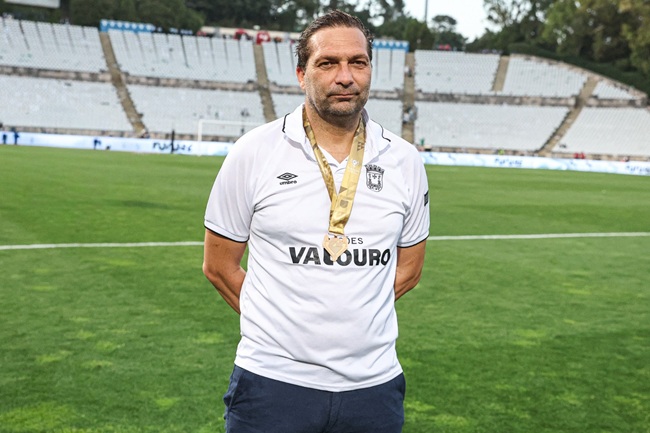
It was difficult not sympathise Torreense coach Luís Tralhão after the match when he said: “There was a lack of common sense by whoever organises the schedule.” His team were forced to play the two legs of the playoff in between the biggest game in the club’s history – the Portuguese Cup final – within the space of one week.
As for Casa Pia coach Álvaro Pacheco, the experienced manager said: “both teams deserve to be in the Primeira Liga.”
A huge shock at Jamor saw second-tier team Torreense beat holders Sporting in the Portuguese Cup final this afternoon.
The team from Torres Vedras took an early lead through a Kévin Zohi header and held onto it going into the break. Sporting levelled ten minutes into the second half through Luis Suárez.
No further scoring meant extra time, the decisive moment coming when Maxi Araújo fouled Ismail Seydy for a penalty, resulting in a red card for the Sporting left-back. Torreense captain Stopira smashed home the spot kick for a famous victory.
It was the seventh time a team from outside the top flight had made it to the final. The other six times the team from the Primeira Liga had ended up lifting the trophy. Not this time. Congratulations to Torreense, the winners of the 2025/26 Portuguese Cup.
Sporting came into the game huge favourites but from the first chance of the game Torreense took a shock lead.
Javi Vásquez did well to win a corner and the Spaniard took it himself. His cross was flicked on by Léo Azevdo and striker Zohi was in the right place at the right time to nod in from close range.
Sporting immediately set about trying to level the game, and the match was played almost entirely in the half of the pitch the Lisbon team were attacking.
Nevertheless, Torreense’s rapid front line were keeping Sporting’s defenders on their toes, Gonçalo Inácio shown a yellow card for bringing down the speedy Dany Jean in full flight.
Luis Suárez back-heeled a chance wide, and Pedro Gonçalves blazed over the bar when well-placed after being expertly set up by Morita.
Pote hits the post
Pote came close to atoning for that miss in the 33rd minute, turning sharply, shooting past Lucas Paes, but his shot bounced back into play after hitting the post.
Suárez was next to come close to levelling up the scores, his shot saved well by Paes after being slipped in on goal by Pote. Half time and a surprise score at Jamor. Sporting 0-1 Torreense.
The Lions continued on the front foot after the break and finally drew level in the 54th minute, inevitably through their prolific Colombian striker. Maxi Araújo did well to pressure the Torreense defence following a corner, the ball ricocheting to Suárez who cut past his marker and fired a low shot into the corner of the net.
Soon afterwards Sporting fans thought their side had taken the lead, Geny Catamo scoring from close range from a Maxi cross, but the Mozambican had strayed into an offside position.
Sporting had applied heavy pressure in search of the equaliser, but once level the team lowered their intensity and the chances dried up. Whether by accident or design, the Lions would pay a heavy price for failing to keep Torreense on the back foot.
Hjulmand saw a shot from range turned around the post by Paes but from the last action in normal time it was Torreense who went close, a ricochet off André Simões thudding into the side-netting.
Torreense fans went berserk in the 94th minute when the ball fell at Diadie’s feet behind the Sporting defence and he duly smashed it into the net, but the celebrations were cut short as the substitute was in an offside position.
The game became stretched with both teams tiring. Francisco Trincão forced Paes into another save, but when the referee blew for half time in extra time the spectre of a penalty shootout was looming large.
It wouldn’t be needed, and Torres Vedras will not sleep tonight.
The players will not be able to party too hard though. On Thursday they play the second leg of the promotion/relegation playoff against Casa Pia having drawn the first leg 0-0. What will now go down as their greatest ever season could yet get better.
“Am I emotional? To be honest, it hasn’t really hit me yet. I haven’t really got a notion of what we’ve just done. I think I got more emotional thinking about this day when I was driving my car the last few days than I am right now. When it sinks in, maybe I’ll get more emotional.
“But I’m emotional when I see my family in the stands, because it’s a lot of suffering. A coach’s life gives a lot of pleasure, but also a lot of anguish. I’m emotional looking at all these fans and seeing the happiness we gave them; it fills my heart with joy.
“The celebrations have to be controlled [because of Thursday’s game], at least for me. The players deserve everything that will happen to them today.”
Think of Portuguese football, and three clubs would immediately come to mind: Benfica, Porto, and Sporting. There is hardly any league in Europe that has been controlled by just three clubs as we see in the Portuguese Primeira Liga. For the last decade, the three have battled for league titles, local cups, and even relevance in major European competitions. And looking at the momentum, it doesn’t look like the rivalry between these three is fading any time soon.
After being frustrated for years, Sporting recently had the league titles under their belt back-to-back. Though Benfica managed to bring José Mourinho on board, they still struggled to win major trophies, while Porto this season again emerged as the champion. And with the way power has constantly shifted between these three clubs, determining who actually dominated the last ten years may not be very easy.
But this debate is not just about league titles. European performances, transfer business, managers, financial strength, and consistency across competitions all matter. Following the competition at stake, fans globally, including in the UK are also following Portuguese football more closely than ever now, especially during Champions League nights and fierce matches like Sporting vs Benfica. And, fans are not just following these games; they add an extra layer of excitement to the whole thing as they track odds, analyze predictions, and place wagers on the match outcomes using popular betting apps available to them.
Now, let’s take a closer look at this debate to see who truly came out on top.
Domestic titles: who won what between 2015/16 and 2025/26
How can we truly figure who dominated the most without considering trophies? While the three clubs have been strong sides in the league, none of them has managed to completely dominate throughout the last 10 years. But they have all had their times as champions in the last decade.
Below is how the Primeira Liga standings look across the last decade in terms of the teams that have emerged as champions:
Season
Champion
2015/16
Benfica
2016/17
Benfica
2017/18
Porto
2018/19
Benfica
2019/20
Porto
2020/21
Sporting CP
2021/22
Porto
2022/23
Benfica
2023/24
Sporting CP
2024/25
Sporting CP
2025/26
Porto
Portuguese Cup (Taça de Portugal): who lifted it most?
The Taça de Portugal is usually a strong test of a team’s mental strength, especially when it comes to knockout football. So, who lifted this the most among the three teams? That will be Sporting CP. The club has proved to be the strongest in cup competitions, especially during major matches and recently under Ruben Amorim.
Porto too has not been doing badly in this wise. Their performance in domestic cups have been quite interesting as they often managed to reach the latter stages even in the midst of intense pressure from league fixtures. For Benfica, there has not been anything significant to write home about them in this regard.
Though not as popular as the championship title, the League Cup and Super Cup are good places to measure the consistency and depth of a team. Here, Benfica remains the strongest over the last decade. They have managed to explore their squad depth to achieve something significant in the competitions every season.
Sporting has also been a force to reckon with since 2020 when the club seems to have rediscovered their mojo, facing every match with an unbeatable winning mentality.
Europe: who went furthest and who disappointed most?
While success on the domestic level is always the big thing, European football is where clubs register their name internationally. And interestingly, all the three sides have had their moments in Europe.
Champions League campaigns
Here, Benfica tended to lead, at least until this season. The team has produced the biggest run in the last decade. They reached the UEFA Champions League quarter finals in the 2022/23 season, pulling up strong performances against even elite oppositions. Sporting this season equalled that feat, beating reigning European champions PSG along the way, before falling to a narrow defeat to Arsenal.
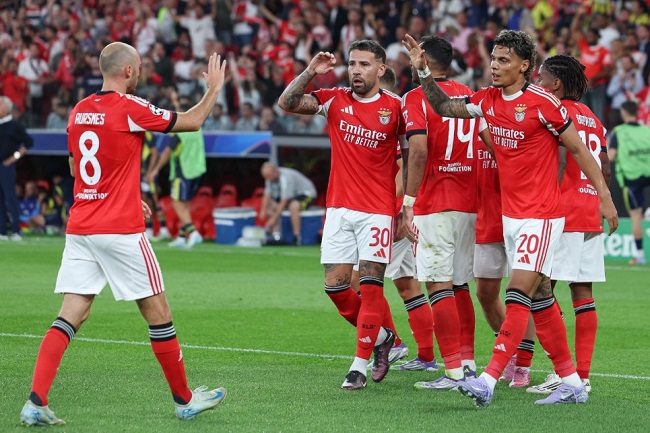
Benfica’s run three seasons ago also increased discussions around the club internationally. Owing to their storied history, people tend to recognize and talk more about them even outside Portugal. Fans followed their fixtures, especially during high-profile European nights and topics like Benfica vs Real Madrid standings always make the trends as the competition intensified. However, we won’t be seeing the Eagles in next season’s competition as Benfica recently failed to secure a place in the Champions League next season after a disappointing draw to Braga. Unfortunately, their fans who may have been looking for details about UEFA champions league final tickets for the next campaign will have to look elsewhere.
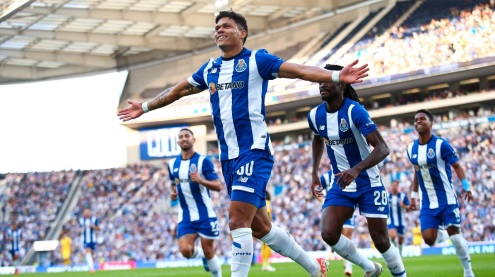
Porto, however, were probably the most consistently competitive Portuguese side in Europe across the full decade. They may not have produced the biggest run, but they have managed to consistently be in the knockout rounds and no clubs can look down on them in any way – whether from Spain, England, or Germany. They are often a tough nut against any side.
For Sporting, their European journey has not been that fascinating. They have gradually improved over the last decade, with more momentum associated with the time Ruben Amorim was managing the club.
However, Portuguese football recently climbed up in UEFA's coefficient rankings, making it to the 7th position. That shows the amount of strength the three teams brought to the table at Champions League level during the decade.
As José Mourinho once said while reflecting on Porto’s European mentality: “I won't say we have to win. I won’t put that pressure. But we can’t lose.” That mentality remained visible throughout the decade, especially in difficult away matches against Europe’s biggest clubs.
Europa League and Conference League
The Champions League is not the only place Portuguese teams get to show their prowess on the continental front. The teams also demonstrated excellence in the Europa League. In fact, a team like Porto treated the Europa League just as seriously as the Champions League, producing several strong campaigns. They are experienced and disciplined, and these gave them the advantage of becoming a competitive side in the competition even after dropping out of the Champions League.
Sporting has also been doing relatively well in secondary UEFA competitions. The Lisbon side seems to have been doing excellently well in the tournament since after 2020, giving them the chance to compete and improve their country’s UEFA co-efficient.
Meanwhile Benfica has not enjoyed so much of a great time outside the Champions League. Some campaigns ended in disappointing exits, while others only showed flashes of genuine quality. And most of the time, this leaves a toll on their finance and transfer plans.
The managers: who had the best coaches and how much did it matter?
Portuguese football is not only shaped by the quality of players they have. The managers contribute as much as players to what we see today. Long-term planning, tactical identity, and stability are all what come together to determine if a club will stay competitive or keep running without momentum.
Now let’s see the managers these teams have had over the last decade and the impact they have on the clubs.
Porto
Sérgio Conceição is probably the best coach Porto has had this decade. Between 2018 and 2024 that he managed the club, he turned them to a highly competitive side, both locally and in Europe. They won many league titles during this time, bringing the club’s name back to the lips of football fans. The team, under him, were known for their discipline, aggressive play, and excellent winning mentality. Even in seasons when Sporting and Benfica appeared stronger on paper, Porto still remained a force to reckon with.
After his departure, Vítor Bruno took the baton, but the team struggled to maintain the consistency they had built under Conceição. But Francesco Farioli came in 2025 and brought life back to the club. They have just won the league title under Farioli and became even stronger against in European ties.
Sporting
Ruben Amorim remained the most remarkable manager for this team in the last decade. He did not only impact Sporting but also the entire Portuguese football. Sporting was struggling when Amorim took the job in 2020. The club had not won the league in 19 years. But in just his first season, the capital side was once again crowned champion.
The Lisbon side became really strong tactically and had a number of trusted younger players. They had the structure and brought the fight to any team playing against them. Matches like Sporting vs Benfica started to feel different because the team has evolved from being a spent force to a formidable force.
Even after Amorim left the club for Manchester United, Sporting still continues in its legacy, competing at the top of the table. A look at Sporting CP vs Benfica standings will immediately reveal this. Amorim indeed won more than just trophies for the club; he restored belief to both the players and the fans.
Benfica
Unlike Porto and Sporting who seem to have benefited a lot from long-term stability, Benfica suffered from constant managerial changes. From Jorge Jesus to Bruno Lage, Nélson Veríssimo, Roger Schmidt, and then Bruno Lage again, the club has changed managers too often than many clubs in Portugal. Each of these managers come with their own unique identity and tactics, making the club’s style fluctuate a lot in the last decade. However, one must say that despite the changings, they were still successful on the pitch.
José Mourinho took up the managerial appointment in 2025, and it seemed things would become stable for a while. He managed to improve things on the European front and finished the 2025/2026 season unbeaten, but they couldn’t secure the league. Mourinho has also secured a move to Real Madrid now, meaning the Eagles will have to look for a new gaffer.
The overall verdict: who dominated the decade?
After ten years of title races, managerial changes, European campaigns, and financial battles, the answer depends largely on what “dominance” actually means.
The case for Benfica
Benfica probably owned the first half of the decade. The team consistently won the league, buoyant in their finances, and produced some of the biggest player sales in European football. They are masters of turning young talents from their academy to world stars. João Félix came from their academy and Enzo Fernández arrived as a fresh face from South America. The move of both to Atlético Madrid and Chelsea respectfully remain some of the biggest sales in Portuguese football history.
Their 2022/23 Champions League run also remained one of the best from the country in the last decade.
The Case for Porto
Porto’s argument is built on consistency. It doesn’t matter who is managing the team or what financial pressure they are under; they remain competitive every season. Even when Sporting or Benfica looked stronger, you will often see Porto finishing towards the top of the table.
After winning the title in 2025/26 under Francesco Farioli, it became obvious how quickly the team could rebuild and recover. If we are to look at how the three teams have managed to avoid major collapse during the last decade, then it will be hard to say anyone has done better than the Dragons.
The case for Sporting
Sporting’s story was the most dramatic. For many years, the team has struggled behind their local rivals until Amorim showed up and he quickly restored them back to the position of one of the strongest in the league. In a space of just five years, the capital side won the league three times after waiting 19 years.
Presently, they also have one of the most defined footballing structures in the league. They have a pool of young talents they can always promote for long-term performance.
Final verdict
In all of these, the truth is that no single club dominated throughout the entire decade. Each of the teams had their fair share of dominance. Benfica controlled the narrative between 2015 and 2020, while Sporting became the defining force between 2021 and 2025. Porto has been consistently competitive through the era and presently, they are the champion, winning the title again in 2025/26.
PortuGOAL’s “Talk of the Town” feature is back, with a long overdue trip to one of Portugal’s island clubs.
After three years out of the limelight, Madeira’s major team, Club Sport Marítimo, will be back in the big-time next season following an exceptional season and a Second Division championship title.
Learn about the proud past and the exciting present of one of Portugal’s oldest clubs, where outstanding achievements, individual brilliance, politics and a staunch identity intertwine throughout more than a century of history.
Madeiran descendent and PortuGOAL correspondent Kevin Fernandes gives us the lowdown on Marítimo’s fabulous 2025/26 season in three articles highlighting the main protagonists behind the success, and the thoughts of club president Carlos André Gomes.
Check out the remarkable story of the return to the game for Joel Santos, a star player for the islanders during the 1990s and 2000s, who has been contracted by Norwegian club Sauherad IL at 50 years of age.
Last but not least, Madeira is one of Portugal’s top tourist destinations. PortuGOAL journalist Matthew Marshall is a seasoned traveller to the island and he presents readers with a comprehensive guide detailing how to get the best out of a trip to “the Pearl of the Atlantic”.
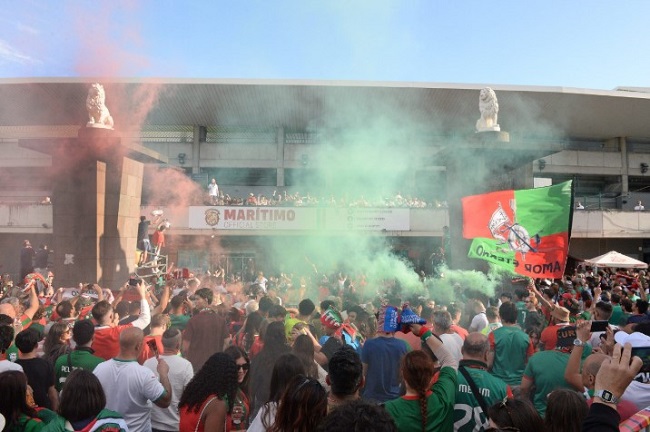
Marítimo’s return to the top flight sparked huge celebrations among their fans in Madeira
In 2023, Carlos André Gomes won a snap presidential election in convincing fashion, months after CS Marítimo were relegated from Liga Portugal for the first time in almost 40 years.
Upon taking office, Gomes proclaimed on RTP Madeira: “From today, there is only one Marítimo; there are no factions within the club.”
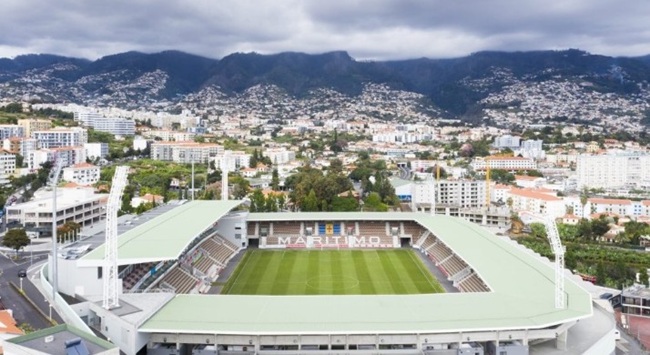
The priority was clear, and on the pitch of the Caldeirão (the nickname of the Estádio de Marítimo meaning the ‘Cauldron’) after the islanders were confirmed as champions of Liga Portugal 2, Gomes reflected upon what had been outlined and promised, in the company of Sport TV journalists: “We set out with the aim of getting Marítimo back into the first division, and we succeeded.”
Title celebrations
“From the very start, we knew what we were here for. We had a clear goal and we stayed focused on achieving it every step of the way. Today, that’s exactly how I feel: a job well done.”
When asked about the difficulties faced throughout his mandate, Gomes was dismissive: “I don’t look back. We had a goal and we laid a solid foundation to achieve it. We succeeded, and that’s what matters most.”
Gomes equally brushed off praise of the job he and his board have done, concluding: “Marítimo is much bigger than any executive.”
More than just a sporting institution
The president of Marítimo thanked the Regional Government of Madeira at a ceremony held in honour of O Maior das Ilhas (The Greatest of the Islands), arguing that the club represents “much more than just a sporting institution,” therefore also more than just a football team.
The 55-year-old continued in a heartfelt speech, underlining Marítimo’s “decisive role in affirming our regional identity” and in promoting the region around the world, going so far as to describe Marítimo as “Madeira’s greatest exporter of emotions.”
The former project manager and financial director even took a political stance, as he believes that Marítimo is “a tool for combating centralism,” an issue close to the heart of those outside of Lisbon (especially outside of the mainland).
For Marítimistas and Madeirans, it is more than a second division title.
In declarations cited by O Jogo, Gomes explained: “A big club is only big because of a big fan base, and this fan base has always supported us, through thick and thin. Marítimo is great because it always has that support behind it; the fans are the true soul of Marítimo, and moreover it is the greatest proof that Marítimo is a living force in the region.”
“Marítimo is Madeira and Madeira is Marítimo.”
Gomes’ impassioned words in relation to Marítimo and the role it plays in the community of Funchal and the island of Madeira as whole are an extension of the football club’s official anthem:
‘Oh Marítimo, oh Marítimo
You do Madeira proud
With pride and dignity
Oh Marítimo, oh Marítimo
Your name stands at the forefront
Of Portuguese sport’
A league title won, but no manager?
Despite the festivities, uncertainty has begun to creep in regarding the immediate future as Marítimo and title-winning manager Miguel Moita have parted ways.
In an official statement, Gomes revealed that “precisely because of the responsibility that returning to the Primeira Liga entails, the club felt that now was the right time to reflect, in a thorough and strategic manner, on the first team’s next sporting cycle.
“This analysis, carried out calmly and with a sense of responsibility, led to the decision to start the new season with a new head coach. Of course, the names of Miguel Moita and his coaching staff will forever be etched in Marítimo’s history, having led the club back to the top flight of Portuguese football.”
In a press conference transmitted by the club, Miguel Moita gave the impression that this surprise ‘divorce’ was a mutual decision, explaining: “Just as the club is looking for a different type of player, I too had decided some time ago to look for something different for myself. That is why I think that, up to this point, the board and the manager have been on the same page.”
Carlos André Gomes, “out of respect” for Miguel Moita, has promised to reveal the name of Marítimo’s next manager “in due course,” only after undertaking a thorough process to select the right coach.

 A goal in each half by Gaizka Larrazabal and Lawrence Ofori gave Casa Pia a 2-0 win over Torreense and ensured the Lisbon minnows remain the top flight for another season.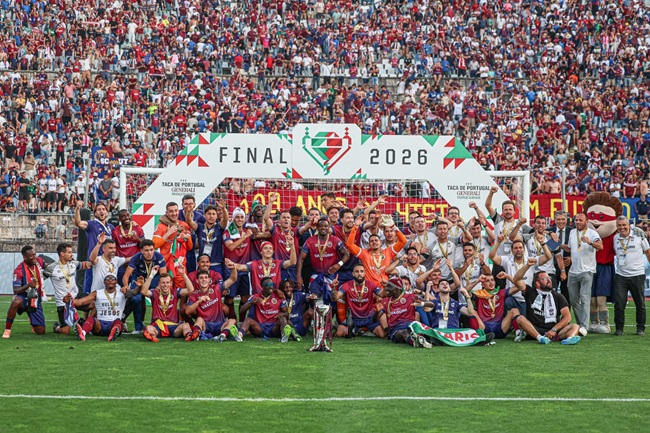

 PortuGOAL’s “Talk of the Town” feature is back, with a long overdue trip to one of Portugal’s island clubs.