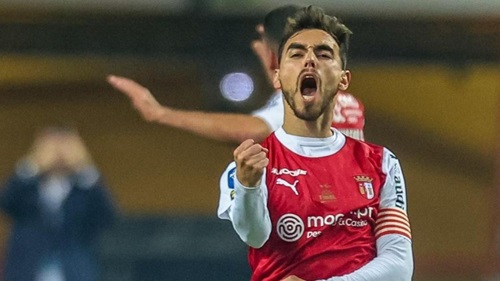
Braga’s record scorer Ricardo Horta added two more goals to his collection
An authoritative performance saw Braga turn around their Europa League tie in style against Ferencvaros this afternoon.
The Guerreiros lost 2-0 to the Hungarian champions in Budapest last week, but it was a different story in northern Portugal with four unanswered goals resulting in a 4-2 aggregate win.
An unusual kick-off time of 3.30pm on a working day did not stop a decent crowd of around 15,000 spectators turning up at the Quarry and the home fans were rewarded for their loyalty.
Deadly duo combine again
Usual suspects Rodrigo Zalazar and Ricardo Horta combined to break the Hungarians’ resistance early doors, the Uruguayan midfielder crossing perfectly for captain Horta to tap in from close range.
Soon afterwards Florian Grillitsch shot from the edge of the box and Ferencvaros goalkeeper Dávid Gróf made a hash of his attempted save, the ball squirming under his body and into the net. Fifteen minutes gone and the visitors’ advantage had been wiped out.
Such was Braga’s dominance it was only a matter of time before Carlos Vicens’ side took the lead.
Gróf saved well from a Horta lob, but he could do nothing in the 34th minute when Pau Victor’s cute through ball released Gabri Martínez, who, one-on-one against the goalkeeper, made no mistake.
Captain fantastic
Any doubts about who would be making progress in the competition were dispelled soon after half time when Ricardo Horta scored a superb goal, smashing a shot in off the post on the turn, with Pau Victor picking up his second assist of the match.
Braga took their foot off the pedal and it needed a fine save from Lukas Hornicek, diving full-length to his right, to prevent Júlio Romão’s excellent long-range effort from finding the back of the net.
Ricardo Horta, Braga captain:
“Was it easy? No, it wasn’t. We had to run a lot and that’s what we were lacking in the game over there. They won a lot of second balls [in the first leg] but today it was us who had more of the ball. In the second half we were a bit tired, but the goals had already been scored and it was a matter of managing the game in the best way possible.
“How far can we go in the Europa League? I don’t know. First of all, we’re going to enjoy this win. Turning around a tie when you’re losing by two goals is very difficult, but we did it. We don’t know who we’ll be playing next yet, but when the time comes, we’ll be ready for them.”
Greeks or Spaniards await
Braga will play the winner of the tie between Panathinaikos and Real Betis. The Greek side are leading after winning the first leg 1-0 in Athens. The second leg in Seville will be played tomorrow.
Sporting fans have had some memorable European nights in recent times, with last season’s 4-1 victory over Manchester City and the 2-1 win over PSG in January still fresh in the memory, but tonight’s effort against Bodø/Glimt arguably topped both those performances.
Trailing 3-0 from the first leg last week, the Portuguese champions simply pummelled the Norwegians into submission with a display of non-stop attacking football (38 shots, 16 corners!), winning 5-0 after extra time to set up a quarter-final meeting with Arsenal.
Sporting and their fans in perfect communion after a monumental win for the Lions. Also great to see Sporting fans give Bodø/Glimt and their fans a huge ovation, fully deserved after their own brilliant run in the competition. pic.twitter.com/4oVUFpFQjU
It is the first time Sporting have reached the last eight of Europe’s premier club competition in its current Champions League format, having achieved the feat once before, in 1982/83, when it was still known as the European Cup.
Sporting coach Rui Borges had said his team needed a perfect performance to turn around the tie, and the Lions set about Bodø – who had won five straight games in the Champions League – like a team possessed.
Maxi Araújo with a performance for the ages
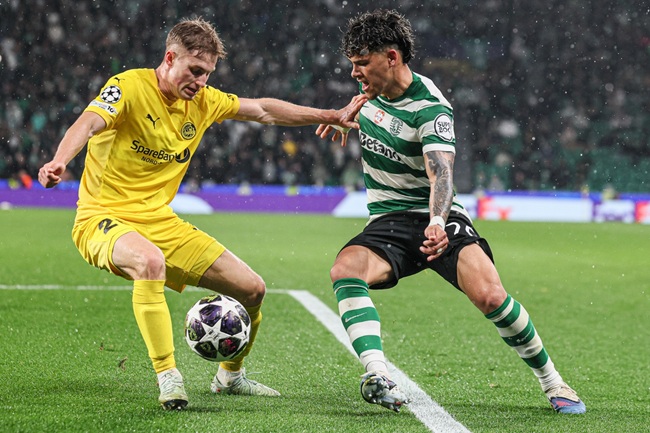
The energy and enterprise of the Lisbon outfit was personified in the magnificent display by man-of-the-match Maxi Araújo. The Uruguayan left-back was at the heart of all of Sporting’s best attacking moments in a whirlwind start.
Francisco Trincão twice, Luis Suárez and Pedro Gonçalves all spurned presentable chances as Sporting pinned back Bodø and opened them up several times in the first 20 minutes. But somehow it remained 0-0. That “perfect performance” Borges had talked about seemed to have just one missing ingredient – putting away the multiple chances created.
The visitors, as been characteristic of their superb Champions League, were not afraid to commit plenty of men forward when they counter-attacked, but they failed to create danger like they had done in Norway. However, it seemed they had weathered the storm as Sporting’s attacking momentum slowed down.
Inácio breaks the deadlock
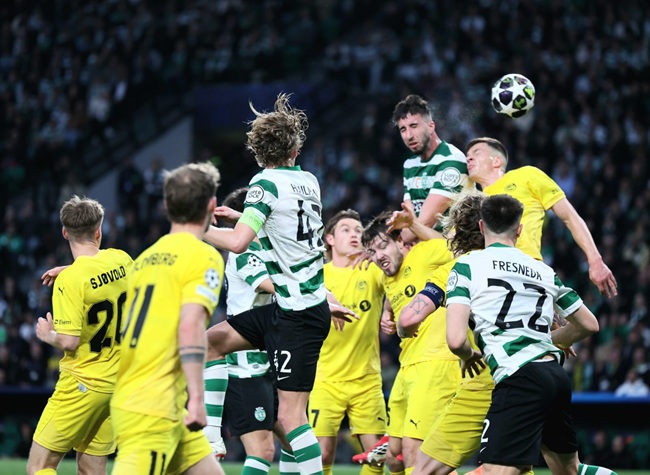
But in the 35th minute, goal-scoring defender Gonçalo Inácio rose highest at a corner to head into the net and give Sporting and their fans renewed hope. It was Inácio’s 23rd goal for Sporting in his 250th game for the Lions.
Bodø almost equalised soon afterwards from the same method, Odin Bjortuft heading against the bar from a corner, with Morten Hjulmand - the Sporting captain back to his very best - making a vital interception and clearing the ball away from the danger area in the ensuing scramble.
Sporting continued on the front foot after the break but were finding it more difficult to carve out chances. Catamo, Hjulmand and Fresneda tried their luck without seriously threatening Nikita Haikin’s goal.
Pote scores – the comeback is on!
The crucial second goal came on the hour mark. Catamo released Luis Suárez with a fabulous vertical pass, the Colombian racing forward and crossing perfectly for Pedro Gonçalves to fire home.
There was a palpable injection of energy in the stands and on the pitch, with Borges making sure Sporting kept up the momentum by bringing on Zeno Debast, Nuno Santos and Daniel Bragança for Eduardo Quaresma, Gonçalves and Morita.
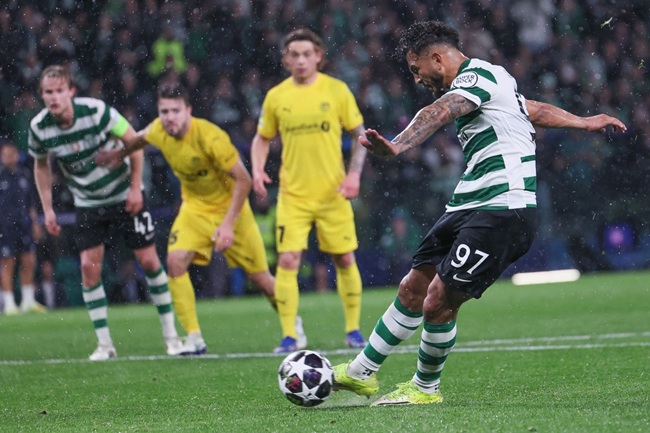
Sporting continued to pour forward and soon they had levelled the tie on aggregate. Luis Suárez showed nerves of steel to score from the penalty spot after a handball by Bjorkan.
The Lions smelt blood and were close to going into the lead for the first time in the tie on several occasions, Debast and Trincão forcing Haikin into excellent saves and Nuno Santos desperately unlucky to see his fierce shot bounce back off the post.
Bodø/Glimt somehow survived until the 90 minutes were up, meaning extra time was on the menu with the tie all square at 3-3 on aggregate.
Sporting would not be denied though, and from their first attack when the game restarted Maxi Araújo took advantage of good approach play by Bragança and Trincão to fire into the net.
Suddenly the match changed, with Sporting now content to hold possession and slow down the pace of the game, which they did intelligently. As the clock clicked down towards the final whistle the home team managed to keep play near the corner flag of Bodø’s goal for lengthy periods, winning a succession of throw-ins.
Nel puts by cherry on the cake
Bodø finally broke out of the stranglehold to try and launch a last desperate attack but it would be Sporting who found the net again, young substitute Rafael Nel firing into the roof of the net after being set up neatly by Bragança.
The José Alvalade stadium, which had been bouncing all night, reached a crescendo of jubilation as Sporting’s fans celebrated an epic comeback in communion with their players and staff.
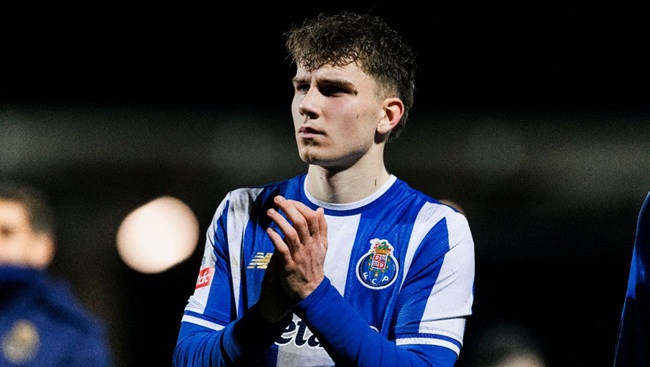
Polish teenager Oskar Pietuszewski has been a revelation for FC Porto (Photo: Getty Images)
FC Porto remain on course to become champions of Portugal for the first time since 2021/22 after a ruthless performance saw off Moreirense at the Estádio do Dragão tonight.
When the Dragons signed 17-year-old Polish winger Oskar Pietuszewski in the winter transfer window, most observers of the Portuguese game thought the youngster was a “long-term project” and would feature little this season. Perhaps even some of the Porto staff shared that idea given that he was not even registered to play in the Europa League.
But Pietuszewski has exceeded expectations and has given Porto an extra attacking dimension, his direct, audacious and fearless offensive play lending more creativity and unpredictability to Francesco Farioli’s team.
After winning a crucial late penalty on his debut in Guimarães that resulted in a 1-0 victory for Porto, Pietuszewski has gone on to play 8 more games wearing the Blue and White, five as a starter, increasingly becoming a key player. In his last five matches he has scored three goals and provided one assist.
Tonight, he was at the heart of Porto’s first goal, his shot beaten out by Moreirense goalkeeper André Ferreira with Gabri Veiga knocking the rebound into the net. Pietuszewski himself doubled the lead with a fantastic angled shot after being picked out in the box by Victor Froholdt. 25 minutes gone, Porto 2-0 up and completely dominating.
Pietuszewski came close on two other occasions, lifting shots over the bar, before he was substituted in the 55th minute, Farioli later explaining that the Pole had been suffering from a virus during the week and had complained of more stomach pains during the interval.
Moreirense almost pulled a goal back early in the second half, Landerson hitting the post, but Porto remained firmly in control.
Terem Moffi forced Ferreira into a terrific save in the 69th minute before another Porto substitute, William Gomes, made the game safe with a trademark left-foot shot into the top corner cutting in from the right-hand side.
Porto go seven points clear of Lisbon duo Sporting (who have one game in hand) and Benfica, with eight matches remaining.
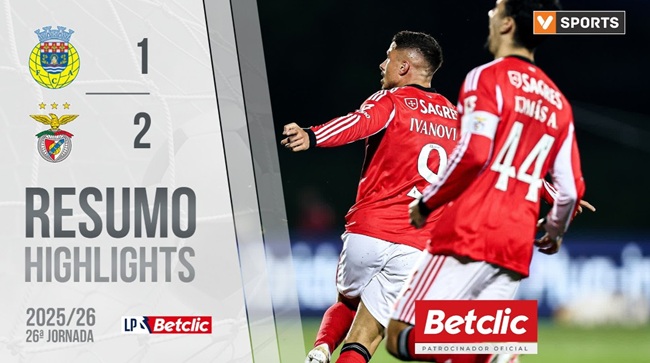
Benfica came from behind to beat Arouca thanks to a goal in the last minute of stoppage time by Franjo Ivanovic.
The hosts got off to the perfect start when they were awarded a penalty from their first attack, António Silva handling Barbero’s header. The Spanish striker confidently fired in the penalty.
Benfica reacted well to the setback and put Arouca under intense pressure, winning a series of corners, one of which resulted in a golden chance for Alexander Bah but the defender headed wide.
Arouca almost doubled their lead when Barbero headed wide from close range after a well-worked counter-attack.
The home team went close again at the start of the second half, Hynju’s shot kept out of the net by a last-ditch interception by Tomás Araújo.
Ríos equaliser
In an open game Benfica’s Dodi Lukebakio was denied by a brilliant save by Arruabarrena, but from the resulting corner the visitors equalised. Richard Ríos profited from slack marking by Arouca to head into the net without even having to jump.
Benfica surged forward in search of the go-ahead goal, Pavlidis and Schjelderup going close but the chances dried up for the Eagles.
Arouca were a whisker away from retaking the lead in the 84th minute with Dylan Nandín could not direct his header on target when he looked certain to score.
Benfica threw everything at Arouca in the final minutes, substitutes Gianluca Prestianni and Georgiy Sudakov close to scoring.
Just when it seemed José Mourinho’s team would have to settle for a draw, another substitute, Ivanovic, got on the end of a Prestianni cross and expertly executed a right-foot volley to give the three points to Benfica.
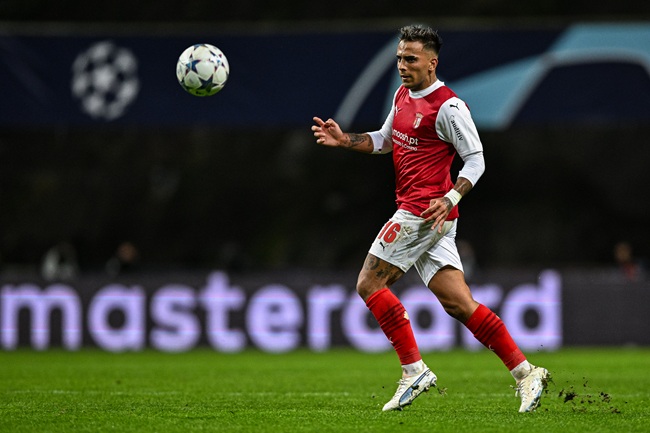
Rodrigo Zalazar has improved season on season at Braga to become arguably the most complete midfielder in Portugal. (Photo: Octavio Passos/Getty Images)
The PortuGOAL Figure of the Week series returns for the Liga Portugal Midfielder of the Month (February) and one of the top performers of the entire season.
From dispatching set-pieces with unflappable composure against Sporting Clube de Portugal…
… to the synergy created with modern day Braga legend Ricardo Horta, in the same match, with a phenomenal first-touch deserving of the emphatic finish.
The Uruguayan midfielder has been Liga Portugal’s most incisive and effective player in the final third for a significant stretch of this season.
PortuGOAL’s latest Figure of the Week is one of the best players in Portuguese football. Kevin Fernandes reports.
***
Like father like son
Rodrigo Zalazar Martínez was born in Albacete, Spain, as his father José Luis was capping off his professional career back at the Queso Mecánico in 1999.
Rodrigo, aged eight, joined the youth ranks of the club his father represented on 230 occasions. After seven years in the youth set-up of Albacete Balompié, spells at the prestigious academy of Málaga and later San Félix completed his footballing education before a move to Germany.
The services of Zalazar cost Eintracht Frankfurt around 50 thousand euros in a typical, surgical operation carried out by former Director of Football Ben Manga.
German journalist Christopher Michel told zerozero.pt: “The fans adored him, partly because of his unique emotive nature.” The son of El Oso (The Bear) embodies the same fiery spirit, seen repeatedly across his career, from controversial social media posts to bizarre interviews praising Braga’s competitors.
The rise of El Osito
Zalazar would never make it to the Frankfurt first team, heading to Polish outfit Korona Kielce before seriously kicking off his senior career at FC St. Pauli. Despite contributing to 11 goals in 35 appearances, current Crystal Palace head coach Oliver Glasner was not convinced, trusting more established senior names.
Zalazar’s ambitions were always crystal clear: to play regularly at the top level. Schalke offered that pathway when Frankfurt seemed skeptical, and Zalazar truly led the fallen giants back to the Bundesliga on a temporary deal subsequently made permanent.
Relegation may have become reality for Schalke once more, but it was always apparent that Zalazar would repeat the same storyline, only this time an opportunity to play in the Champions League presented itself.
Zalazar told Uruguayan radio station Carve Deportiva: “I’m doing really well at the moment, though it took me a while to settle in. Moving to a new country and a new league is tricky. Even so, when I joined SC Braga, I was really surprised by the league, because it’s very physical and demands everything from you in every match because the teams have some very good players.”
It’s safe to say that Zalazar has justified the six million euros spent – 61 goal contributions in 118 matches (and counting) – puts Zalazar amongst the best in Braga’s history and in an era of real promise for the northern club.
Zippy Zalazar
Recognised as Footballer of the Year at Braga’s annual Legião de Ouro awards, Zalazar has the mobility of a decently rounded box-to-box midfielder and the technique of a seasoned top-level winger, operating with an effortless grace while on the ball, despite being recognisably robust without it.
Able to fulfil deeper or more aggressive offensive midfield roles, on either side, and in multiple systems, the 26-year-old is mentally well-rounded, versatile and consistently displays an incredible instinct and incisive nature in the final-third.
Standing at 5’10” or 1.77m, El Osito is a receiver in progressive play who is mainly looking to provide decisive touches, despite being capable, resilient and direct when space arises to carry the ball. As mentioned earlier regarding his understanding with Horta, Zalazar is a protagonist of a fluid attack on the same wavelength, able to find teammates with ease and wreaking havoc with simple one-twos and short combinations.
However, he truly comes into his own when zoning in on the penalty area, mastering the art of exploring and manipulating space, technically impressive when operating in tight spaces and incredibly composed when assisting or taking responsibility for the final touch.
Braga president António Salvador has serious ambitions of breaking the hegemony of the commonly recognised Portuguese “Big 3”, which is closer to becoming reality with players of the quality of Rodrigo Zalazar.
However, reports suggest that the 50-million-euro release clause may not be enough to deter potential suitors in Rodrigo’s pursuit of reaching the top.
When questioned about his future, Zalazar admitted: “Right now I’m very focused on helping my team and very happy at Sp. Braga. In the summer we’ll see what happens with my future and with the World Cup, which I hope to be part of.”
(Side note: In the same unauthorised interview, Zalazar called Benfica “the Real Madrid of Portugal,” repeatedly praising the club and multiple players)
It was probably long overdue, but it’s a pleasure to recognise the brilliant talent that one could argue is the best midfielder in Liga Portugal. Wherever the future of the latest PortuGOAL Figure of the Week lies, Rodrigo Zalazar still has much to offer Braga and Portuguese football in the remaining months of the season.
***
Honourable mentions from Gameweek 25 (despite the six stalemates in nine matches):
Rodrigo Pinheiro - The difference maker for Famalicão with an impressive finish against Arouca.
Paulo Moreira - Estrela’s standout performer of the season contributes to Jovane Cabral’s goal with a touch of class.
Oskar Pietuszewski - 17 years of age and doing this to a World Cup winner at the Estadio da Luz.
Jalen Blesa - One of the January recruits breathing life back into Rio Ave’s season.