
It is strange, for a club that has won the European Cup trophy twice, that this final is still remembered today by many Portistas as the most spectacular match they ever experienced. It had everything to do with the mood. The expectations. The passion. Porto won the Champions League against Monaco in 2004, the pinnacle of the José Mourinho years.
They beat Braga in the Europa League final in 2011, the coronation of a memorable season for André Villas-Boas, and they famously came back in 1987 to claim the European Cup against a much-fancied Bayern Munich side. All great, memorable achievements. But the ins and outs of how they came to land the UEFA Cup win in 2003 still resonate higher in the heart of every Porto fan.
***
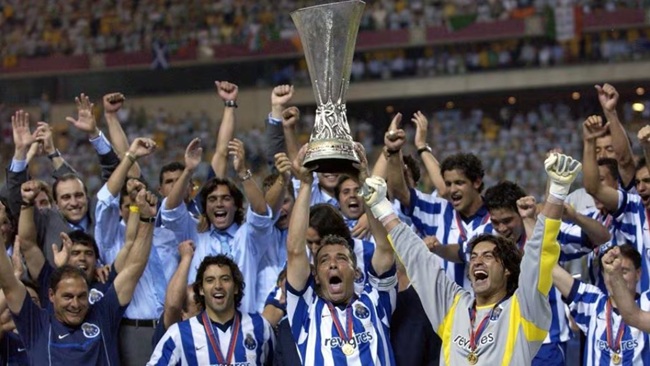
Maybe it was the heat. Or the venue. The events of the previous weeks or how that side played; a very different approach from what would become their modus operandi later on. The players, the manager, even the president. The idea that, after 1987, that feeling would never be experienced again. Maybe it was all of that. The fact is, the day Porto beat Celtic to claim the UEFA Cup trophy in Seville, Porto not only equalled Benfica’s number of continental trophies but also kickstarted a decade where they were, like never before, the most dominant side in Portuguese football.
And it had all started under huge criticism and low expectations, months before. In fact, the feeling of Porto being able to fight for continental honours had already been lost in time. After the 1987 win against Bayern, the closest they had come to playing a final was in 1994. Back then, the Champions League group stage ended in a single-match semi-final, at the home of the team that had won the group. Porto finished runners-up in their group behind AC Milan after a goalless draw at the Estádio das Antas in the final group game against the Italians, so they were forced to travel to the Camp Nou while Milan hosted AS Monaco. If that Ljubinko Drulovic shot had not rebounded off the crossbar but had gone in, history could have been different. But in Catalonia the Dragons were hammered by Cruyff’s Dream Team, who would be dismantled by Milan in the final.
Diminishing returns in Europe
The poor European results since Vienna – including defeats against PSV, Bayern, Tottenham, Real Madrid and the same AC Milan – had lowered the club’s expectations after two European finals in four seasons between 1983/84 and 1986/87, followed by the European Super Cup and Intercontinental trophy won in the following campaign. The next season they were beaten by Sampdoria on penalties to miss out on the Cup Winners’ Cup semis, then failed to progress from the group stage of the Champions League in 1995/96, 1997/98 and 1998/99. In 1999/2000 Porto reached the quarter-finals – the same result they had achieved in 1996/97 when they were soundly defeat by Manchester United – only to be beaten by Bayern Munich.
The bar was low and got lower in the following seasons so when José Mourinho’s men started the 2002/03 campaign in the UEFA Cup, expectations were low. More so because the side had only signed players on free transfers, Maniche, Pedro Emanuel and Bruno Fernandes, or from smaller sides, like Paulo and Marco Ferreira coming from Setúbal, Derlei, Tiago and Nuno Valente from Leiria, César Peixoto from Belenenses, while Edgaras Jankauskas came from Real Sociedad after a loan spell at Benfica a year before. It was not the fanciest transfer market the club had enjoyed but José Mourinho knew what he was doing and soon oiled the side to become the most memorable perhaps in the club’s modern history.
Mourinho’s alchemy
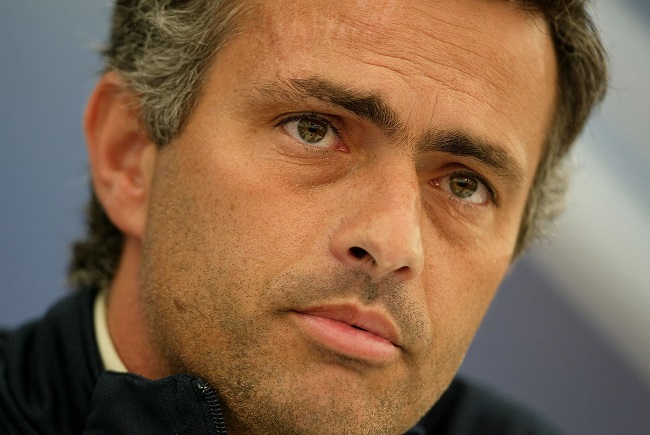
Playing essential in a 4-3-3 that pressed high and was quick on the break but could also control matches with some minor adjustments to move the tactical setup into a 4-4-2, Mourinho quickly found the right mix between the club’s longstanding veterans such as Vitor Baía, Jorge Costa, Nuno Capucho, the underperforming midfielders of the previous campaigns, particularly Costinha, Deco and Dimitri Alenichev, the newcomers and some youth prospects available, particularly Ricardo Carvalho and Hélder Postiga who had debuted in the previous season under Octávio Machado. As the side ran riot in the league, soon proving they were unstoppable and winning the domestic double with ease, Europe proved a different challenge for a side that was highly entertaining but flawed as well.
In the early rounds Porto’s hammering style seen in the league was replicated in Europe. Polonia Warsaw, Austria Vienna, RCD Lens and Denizlisport were all dispatched without great fuss. Panathinaikos were a different matter. Both sides had battled each other in the second group stage of the Champions League the previous campaign and the Greeks had in the Nigerian-Polish striker Emmanuel Olisadebe an attacking menace worthy of attention.
Still Porto were seen as favourites only to be surprised at home, with a goal from the rising striker in what become their sole European defeat of the entire campaign. As he went back to the dressing room Mourinho was quick to point out to the club’s ultras that everything was under control and they would do what nobody had ever done: score two goals to overturn the deficit in Greece. They did so in extra time, thanks to two efforts from Derlei, the competition’s top scorer.
Lazio masterclass
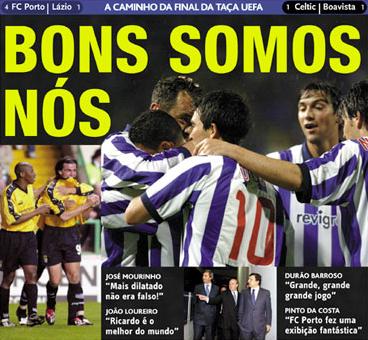
That booked a semi-final appearance to play Lazio, the heavy weight favourites to lift the trophy. It would become one of the greatest ever European nights at the old das Antas stadium, which was enjoying its last full season before being replaced by the Estádio do Dragão, undergoing construction next door.
The match was not shown live on TV due to disagreements between the state broadcaster RTP and Pinto da Costa and became the stuff of legends as thousands of supporters were forced to listen to the radio like the days of old as 50 thousand lucky ones were able to testify, live, how brutal that Mourinho side could be. Only they could overcome conceding an early away goal to an Italian side, at the late prime of the Serie A, and still come back at them and score four. It could have been much more, such was the quality of play of the Azuis-e-Brancos. The Porto 4-1 Lazio match in April 2003 is up there in the pantheon of Porto’s great European nights. A goaless draw away was enough to rubberstamp a return to a continental final were Celtic, who had just disposed of their city rivals Boavista, was waiting for them.
Sweltering Seville
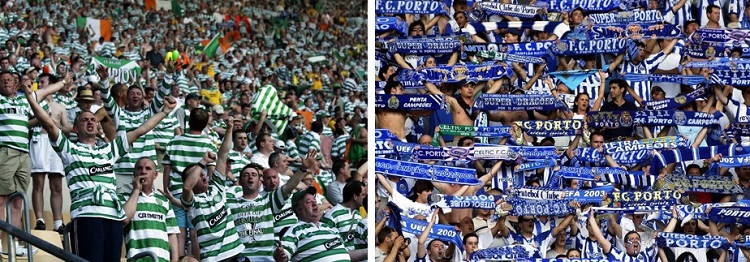
By the time the two sides arrived in Seville, it had been two weeks since Porto had lifted the league trophy with four matches to spare, and a Portuguese Cup final date against Leiria was still over three weeks away. Martin O’Neil’s side also claimed their league trophy so it was bound to be a clash of champions in the sweltering heat of the Andalusian capital in the newly inaugurated La Cartuja ground. The tarmac around the pitch stole part of its charm and the Celtic fans outnumbered Porto’s supporters two to one, but still, the Dragons believed in the aura Mourinho had installed in the side.
However, the lead-up had not been ideal. First, Hélder Postiga got himself suspended in the semis and was unavailable, as was fellow striker Edgaras Jankauskas, who had suffered an injury in the weeks prior the final. Costinha was also limited but was declared fit. As such, the rampaging Porto side of the semi-final gave way to a more controlling starting eleven, with Capucho partnering Derlei up front, as Alenitchev dropped in midfield to play alongside the trio of Costinha, Maniche and Deco. Paulo Ferreira and Nuno Valente operated on the flanks and Jorge Costa would be partnered by a young Ricardo Carvalho who had replaced Pedro Emanuel as a regular starter in central defence mid-season.
The main issue for Mourinho is that he did not have many options from the bench to change the course of events if need be. Marco Ferreira, Clayton and César Peixoto were the only attacking options available, with Ricardo Costa, Pedro Emanuel and Tiago joining Nuno Espirito Santo among the substitutes.
Henrik Larsson spearheads full-strength Celtic
Martin O’Neill, however, could call upon his best eleven, with Rob Douglas in goal, behind Joos Valgaaren, Bobo Baldé and John Mjallby in defence. Captain Paul Lambert, Didier Agathe, Neil Lennon, Stylian Petrov and Alan Thompson operated in a crowded midfield while goals were expected to come from the devastating attacking partnership of Chris Sutton and Henrik Larsson. On the bench the former Northern Ireland international had Magnus Hedman, Ulrik Laursen, Jack McNamara, Shaun Maloney, Momo Sylla, David Fernandez and Jim Smith. It was 21 May and football was about to gift both sets of supporters with a match they would remember for the ages.
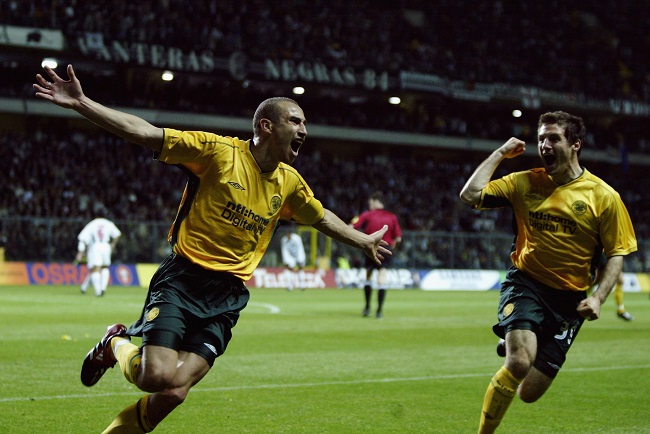
As the game started under a roar of excitement from the crowd, Porto experienced their first setback as Costinha threw himself to the ground, unable to go on any further. Ricardo Costa came on and Paulo Ferreira surprisingly moved into midfield. It was only the 9th minute of play, and although Celtic had started strongly, Porto soon started to dominate proceedings, having more of the ball and creating the first chances. Celtic looked for long throws to their attacking duo and were tackling hard from minute one.
Goal glut straddles the half-time interval
As both sides were preparing to go back to the dressing room after a very hard-fought first half, the first goal arrived. Derlei, who else, took advantage of a Douglas rebound after a perfectly crafted play between Deco and Alenichev, not for the last time. It could have been a huge blow for Celtic, but, surprisingly, Porto could not take advantage of it. Two minutes after the break, Henrik Larsson – also, who else – left criminally unmarked, headed in a perfect cross from the right to claim his share of glory in the afternoon. Not for the last time, either.
Any other side would be dumbstruck after that goal but Porto kept their composure, as they always did under Mourinho, and that self-assurance paid off. Six minutes later Deco, who was running the show like he had never done before, spotted Dimitri Alenichev sneaking into the box from the corner of his left eye and sent him the perfect pass for the Russian midfielder to score second goal for the Portuguese champions. It was perhaps Porto’s most joyous goal in their history of European finals as their fans exploded into ecstasy.
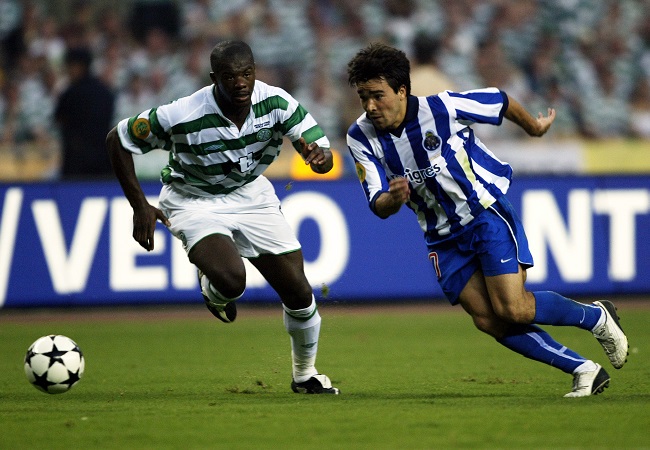
But it wasn’t enough. Three minutes later, once again Larsson came to the rescue and headed a second into Baia’s goal, to make it all square again. Minutes later Jorge Costa, like Costinha, was forced off with injury, making way for Pedro Emanuel while O’Neil had refreshed his side with Maloney and Laursen coming in for Lambert and Valgaeren, who was on a card.
Extra time: Celtic down to ten men against Porto’s walking wounded
By now both sides were exhausted as the match progressed inevitably to extra time. Porto had one substitution left but several players were at their physical limits. As the additional 30 minutes started, it was Capucho who came off with Marco Ferreira replacing him. Derlei, who had asked to leave the pitch after a harsh tackle by Baldé, who was duly sent-off, was requested to just move around to cause mayhem among the Celtic defence.
As the sides failed to break each other down for the next minutes, the penalty shootout menace started to become real when Marco Ferreira, fresh off the bench, took advantage of his speed as he tried to create havoc in the Celtic defence. As the ball rebounded from Douglas, the wandering Derlei found strength he didn’t know he had to net the decisive third. If the goal had come in the first half of extra time, it would have meant game over. With five minutes to go, there was still time for Porto to panic as Larsson tried once again to become the hero of the hour, but this time, Baía prevailed and secured the well-earned advantage. When Lubos Michel whistled for the last time, Porto had claimed the trophy.
|
Turning point for Porto and Portuguese club football
The historical win of that UEFA Cup cannot be underestimated. It not only broke a sixteen-year spell without any European triumphs for a Portuguese side but was also the first final played after a collectively poor decade in the 1990s for Portuguese clubs in continental play. It foreshadowed Porto’s golden hour. That same side, with some minor tweaks, cavalcaded to the Champions League triumph the following season, to general astonishment.
Winning in Seville also meant that historical president Pinto da Costa, who had started to be criticised after three trophyless years, was reinvigorated as his daring choice of manager and unusual transfer market policy enthused the club with new life. Porto would soon become one of the key players in the transfer market for the two decades to come, all on the back of that double win in Europe.
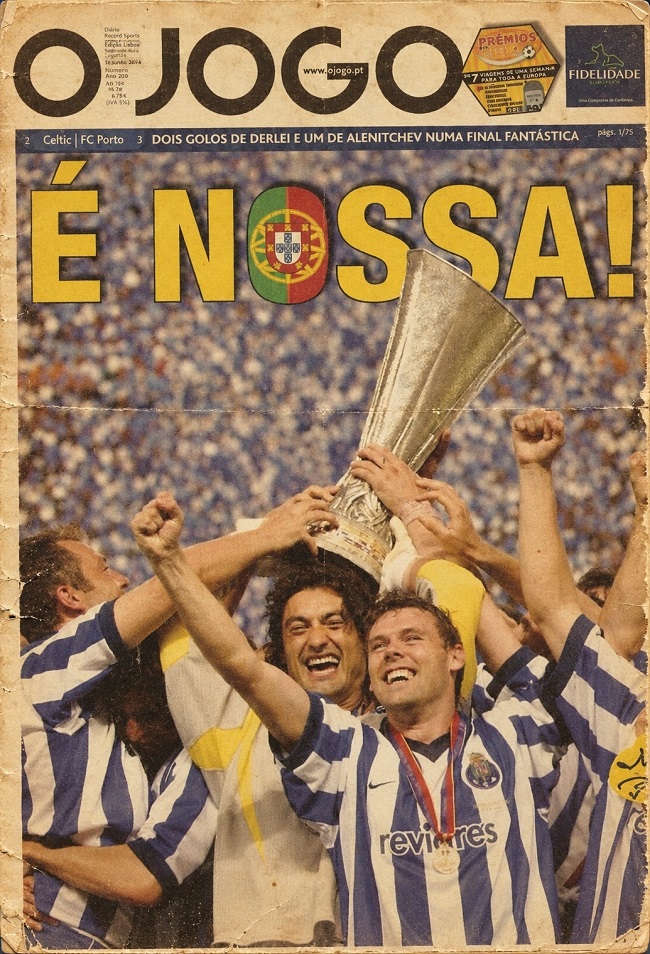
It also gave an aura to José Mourinho as he was moving towards his Special One tag and made earned Portuguese clubs respect again in European play. Porto’s back-to-back wins were followed by Sporting’s appearance in the UEFA Cup final of 2005 before an all-Portuguese final in 2011, and back-to-back Benfica finals in the 2010s. It was a key moment for Portuguese football and for FC Porto and, still today, for many of the club’s fans it remains the most intense and passionate football experience they have ever experienced. Surviving Seville meant they were ready to conquer the world. And so they did.
Related: For the bigger picture, see our at-a-glance history of Portuguese football.
